Cultic Studies Review, Vol. 3, Nos. 2 &3, 2004, Page 177
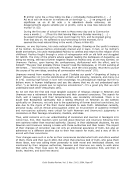
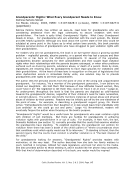
Peninsula Village
Woman Recalls Experience
Abigail Vona, daughter of a well-to-do but broken Connecticut family, tells of her experience
at Peninsula Village, a behavior modification facility in Tennessee. Her first three months
were spent entirely indoors with bunkmates who included a teenage prostitute, drug users,
self-mutilators, bulimics, a girl who had molested her three-year-old cousin, and a devil
worshipper.
―Silent Time‖ was spent ―sitting on your bed without uttering a word,‖ for hours. Telephone
calls to the outside world were not allowed, bathroom visits were timed. ―It was like being in
your mother‘s womb. You felt safe but you wanted to get the f--- out of the place.‖ Vona
later moved to a slightly more relaxed lifestyle, in a cabin. She was allowed outside, to
work. The sexes were still segregated. Groups of boys and girls had to bow their heads in
each others‘ presence to avoid eye contact.
Vona says of the experience: ―I‘m grateful that, somehow, I got my head screwed on. But I
learned more at the village than from my parents. That‘s a sad part of my life.‖ She now
lives in New York City and is writing a book entitled, ―Bad Girl, Confessions of a Teenage
Delinquent.‖ The book, and her breakup with her literary agent-boyfriend, have provided
copy for the tabloid press. (The Telegraph [UK], Internet, 8/24/04)
Polygamy
Green Admits Guilt
Tom Green, a polygamist convicted of first-degree felony rape for marrying his wife when
she was 13, has told the Utah parole board that he now realizes, after long reflection, that
what he did was wrong, and that he would certainly not let his young daughters enter into
such marriages. His wife, now 32, and the mother of seven children, previously maintained
that she had not been victimized by her early marriage. Now, she says Green‘s
imprisonment made him a better person and that she forgives him and wants to continue to
raise their family with him. (AP, Internet, 8/13/04)
Repressed Memories
Prosecutors Want Repressed Memories Recognized as Evidence
New Hampshire prosecutors are presenting testimony before a superior court judge and
arguing that a 1996 State Supreme Court decision finding repressed memories unreliable
as evidence of sexual abuse does not apply. They say the evidence they have in their
current case against an Exeter defendant meets the criteria stipulated in the state‘s
―Hungerford Law‖ — as the 1996 decision is termed — for such memories to be admissible.
The Supreme Court said in 1996 that evidence regarding repressed memories should be
evaluated on a case-by-case basis. The state then established criteria for admissibility.
Several criteria relate to the reliability of the science involved and several to the nature of
the person whose memories are in question: age at the time of the alleged abuse, the time
lapse before recovery of the memories, and the context of the recovery.
Massachusetts psychologist Dan Brown, an educator who served as an expert for repressed
trauma memories on the Yugoslav war crimes tribunal, told the court that recent studies
show ―there‘s no significant decrease in accuracy because (a memory) was repressed.‖
Having reviewed the case at hand — a daughter accuses a father of long-ago sexual abuse
— Brown said her recall is the result of memory-retrieval therapy, a specialized and still
controversial mode that focuses especially on repressed memories. Equally credentialed
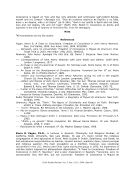
experts are expected to refute Brown‘s claims that memory recovery is measurably reliable,
Peninsula Village
Woman Recalls Experience
Abigail Vona, daughter of a well-to-do but broken Connecticut family, tells of her experience
at Peninsula Village, a behavior modification facility in Tennessee. Her first three months
were spent entirely indoors with bunkmates who included a teenage prostitute, drug users,
self-mutilators, bulimics, a girl who had molested her three-year-old cousin, and a devil
worshipper.
―Silent Time‖ was spent ―sitting on your bed without uttering a word,‖ for hours. Telephone
calls to the outside world were not allowed, bathroom visits were timed. ―It was like being in
your mother‘s womb. You felt safe but you wanted to get the f--- out of the place.‖ Vona
later moved to a slightly more relaxed lifestyle, in a cabin. She was allowed outside, to
work. The sexes were still segregated. Groups of boys and girls had to bow their heads in
each others‘ presence to avoid eye contact.
Vona says of the experience: ―I‘m grateful that, somehow, I got my head screwed on. But I
learned more at the village than from my parents. That‘s a sad part of my life.‖ She now
lives in New York City and is writing a book entitled, ―Bad Girl, Confessions of a Teenage
Delinquent.‖ The book, and her breakup with her literary agent-boyfriend, have provided
copy for the tabloid press. (The Telegraph [UK], Internet, 8/24/04)
Polygamy
Green Admits Guilt
Tom Green, a polygamist convicted of first-degree felony rape for marrying his wife when
she was 13, has told the Utah parole board that he now realizes, after long reflection, that
what he did was wrong, and that he would certainly not let his young daughters enter into
such marriages. His wife, now 32, and the mother of seven children, previously maintained
that she had not been victimized by her early marriage. Now, she says Green‘s
imprisonment made him a better person and that she forgives him and wants to continue to
raise their family with him. (AP, Internet, 8/13/04)
Repressed Memories
Prosecutors Want Repressed Memories Recognized as Evidence
New Hampshire prosecutors are presenting testimony before a superior court judge and
arguing that a 1996 State Supreme Court decision finding repressed memories unreliable
as evidence of sexual abuse does not apply. They say the evidence they have in their
current case against an Exeter defendant meets the criteria stipulated in the state‘s
―Hungerford Law‖ — as the 1996 decision is termed — for such memories to be admissible.
The Supreme Court said in 1996 that evidence regarding repressed memories should be
evaluated on a case-by-case basis. The state then established criteria for admissibility.
Several criteria relate to the reliability of the science involved and several to the nature of
the person whose memories are in question: age at the time of the alleged abuse, the time
lapse before recovery of the memories, and the context of the recovery.
Massachusetts psychologist Dan Brown, an educator who served as an expert for repressed
trauma memories on the Yugoslav war crimes tribunal, told the court that recent studies
show ―there‘s no significant decrease in accuracy because (a memory) was repressed.‖
Having reviewed the case at hand — a daughter accuses a father of long-ago sexual abuse
— Brown said her recall is the result of memory-retrieval therapy, a specialized and still
controversial mode that focuses especially on repressed memories. Equally credentialed
experts are expected to refute Brown‘s claims that memory recovery is measurably reliable,