Cultic Studies Review, Vol. 3, Nos. 2 &3, 2004, Page 55
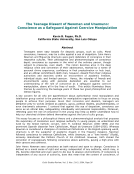
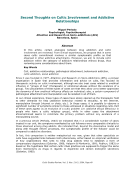
Illegal Missionary Work Lawsuits and Exit Counseling for
Unification Church Members
Sakurai Yoshihide, Ph.D.
Abstract
This paper studies the recent cult controversy exemplified by the lawsuits
filed by self-proclaimed ―victims‖ damaged by the Unification Church and in
reverse by so-called ―cult‖ members who were also proclaimed ―sufferers‖
whose personal right of religious freedom had been violated in
deprogramming. To consider the contents of these rulings demonstrates the
Japanese religious consciousness in reference to the recent cult controversy,
because judges tend to consider in controversial cases of religious troubles
the extent to which they deviate from socially accepted norms.
In this paper I first will briefly explain the history of the Unification Church of Japan and
introduce legal trials against this religion. Second, I will consider the lawsuits charging the
Unification Church with illegal missionary activities, especially the ruling of the Sapporo
District Court. And last, I will look at recent lawsuits against deprogrammers filed by ex-
members of so-called ―cults‖.
This paper's research methodology is based on 1) document analysis of the referenced
cases 2) interviews with ex-members, the plaintiffs of these lawsuits, and parents and
pastors accused by ―cult‖ members and 3) observation in the Sapporo District courtroom
over a period of three years. I must add that I did not have the opportunity to talk with the
referenced ―cult‖ members of these lawsuits rather I carefully read preparatory pleadings
written by their attorneys to understand their claims.
Introduction: Cult Controversy and the Public Sphere in Japanese religious
consciousness
Cult problems in Japan have been much debated since the Aum Supreme Truth Cult carried
out the sarin gas attack in 1995, an event that popularized the concepts of cult and mind
control (Nishida, 1995). Since the 1980s and before the Aum incidents, several new
religions such as the Unification Church and the Jehovah‘s Witnesses had been criticized for
their activities and attitudes. The Unification Church had recruited new members without
revealing the group's name and actual activities and raised vast sums of money through
fraudulent sales of spiritual goods (Masaki, 1993 Yamaguchi, 1993). The Jehovah‘s
Witnesses had drawn Japanese attention to their refusal of blood transfusion, which in one
instance caused a child‘s death in a traffic accident. Contrary to a general cultural
acceptance of a child‘s subservience to their parents‘ authority in terms of freedom of
religion, mass media and medical workers insisted that a child‘s right to live should not be
entrusted to parents. However, at that time, there was no comprehensive perspective that
criticized those controversial religions.
The word cult, used by Dr. Margaret Singer when she named Aum as a doomsday cult in
Kyodo News Service report on March 24th, 1995 fed into the public anxiety and anger
toward those religions. The public considered Aum believers, especially criminals of
indiscriminate terrorism, to be insane and ―mind controlled‖ by the group‘s founder,
Asahara.
The attorneys of ex-members also introduced the concept of ―mind control‖ in the early
1990s when they filed a lawsuit against the Unification Church, claiming that the church had
Illegal Missionary Work Lawsuits and Exit Counseling for
Unification Church Members
Sakurai Yoshihide, Ph.D.
Abstract
This paper studies the recent cult controversy exemplified by the lawsuits
filed by self-proclaimed ―victims‖ damaged by the Unification Church and in
reverse by so-called ―cult‖ members who were also proclaimed ―sufferers‖
whose personal right of religious freedom had been violated in
deprogramming. To consider the contents of these rulings demonstrates the
Japanese religious consciousness in reference to the recent cult controversy,
because judges tend to consider in controversial cases of religious troubles
the extent to which they deviate from socially accepted norms.
In this paper I first will briefly explain the history of the Unification Church of Japan and
introduce legal trials against this religion. Second, I will consider the lawsuits charging the
Unification Church with illegal missionary activities, especially the ruling of the Sapporo
District Court. And last, I will look at recent lawsuits against deprogrammers filed by ex-
members of so-called ―cults‖.
This paper's research methodology is based on 1) document analysis of the referenced
cases 2) interviews with ex-members, the plaintiffs of these lawsuits, and parents and
pastors accused by ―cult‖ members and 3) observation in the Sapporo District courtroom
over a period of three years. I must add that I did not have the opportunity to talk with the
referenced ―cult‖ members of these lawsuits rather I carefully read preparatory pleadings
written by their attorneys to understand their claims.
Introduction: Cult Controversy and the Public Sphere in Japanese religious
consciousness
Cult problems in Japan have been much debated since the Aum Supreme Truth Cult carried
out the sarin gas attack in 1995, an event that popularized the concepts of cult and mind
control (Nishida, 1995). Since the 1980s and before the Aum incidents, several new
religions such as the Unification Church and the Jehovah‘s Witnesses had been criticized for
their activities and attitudes. The Unification Church had recruited new members without
revealing the group's name and actual activities and raised vast sums of money through
fraudulent sales of spiritual goods (Masaki, 1993 Yamaguchi, 1993). The Jehovah‘s
Witnesses had drawn Japanese attention to their refusal of blood transfusion, which in one
instance caused a child‘s death in a traffic accident. Contrary to a general cultural
acceptance of a child‘s subservience to their parents‘ authority in terms of freedom of
religion, mass media and medical workers insisted that a child‘s right to live should not be
entrusted to parents. However, at that time, there was no comprehensive perspective that
criticized those controversial religions.
The word cult, used by Dr. Margaret Singer when she named Aum as a doomsday cult in
Kyodo News Service report on March 24th, 1995 fed into the public anxiety and anger
toward those religions. The public considered Aum believers, especially criminals of
indiscriminate terrorism, to be insane and ―mind controlled‖ by the group‘s founder,
Asahara.
The attorneys of ex-members also introduced the concept of ―mind control‖ in the early
1990s when they filed a lawsuit against the Unification Church, claiming that the church had