Cultic Studies Review, Vol. 3, Nos. 2 &3, 2004, Page 33
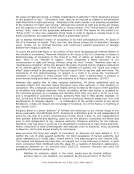
Shinrikyo, Apocalyptic Violence, and the New Global Terrorism (New York: Metropolitan Books, 1999)
11.
13 This assessment corresponds with the observation that among ‗lay activists and professionals
concerned about people caught up in cultic groups … there was … a consensus that whatever ―cult‖
referred to, the term embraced nonreligious as well as religious groups, although a large majority
were religious‘, Michael D Langone, 'The Two "Camps" of Cultic Studies: Time for a Dialogue', Cultic
Studies Review 1, no. 1 (2001): 2 of 16.
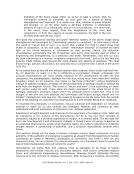
14 This view is endorsed by the distinguished jurist Geoffrey Robertson QC, who notes that the
definition derived from Church of the New Faith ‗includes nonsense like scientology, and that in theory
―cults‖ enjoy the same international law protection as the great faiths, subject always to the State‘s
duty to curtail such of their activities as may damage the general welfare‘, Geoffrey Robertson, Crimes
against Humanity -the Struggle for Global Justice, 2nd ed. (London: Penguin Books, 2000) 110.
15 Regina v. Registrar General, Ex Parte Segerdal and Another (1970) 3 WLR 479
16 Ibid. 486 Per Winn LJ.
17 Charity Commission Decision: Church of Scientology Application for Registration as a Charity (1999)
http:www.charity-commission.gov.uk/ Accessed 29 November 2001, 49 pages) Charity
Commission for England and Wales. 1
18 Ibid. 41
19 The most obvious being ‗the clear biblical imperative found in Leviticus 19:18, ―You shall love your
neighbour as yourself‖‘, a sentiment derived from the Jewish bible, Charles Kimball, When Religion
Becomes Evil (San Francisco: HarperCollins, 2002) 131. Similar philanthropic injunctions are also to
be found in the Koran.
20 H R Sorensen and A K Thompson, 'The Advancement of Religion Is Still a Valid Charitable Object in
2001' (paper presented at the Centre of Philanthropy and Nonprofit Studies, QUT Charity Law in the
Pacific Rim Conference, Brisbane, August 2002).
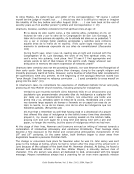
21 It has been recommended in Australia that the category of religious institution be removed,
Sheppard, Inquiry into the Definition of Charities 262-3.Recommendation 22.
22 Centrepoint Community Growth Trust v Commissioner of Inland Revenue (1985) 1 NZLR 673
23 This seemed to boil down, in the absence of evidence of harm, to a minimal requirement that
members accepted ‗total honesty in their relationships with each other and their commitment to Mr.
Potter and his teachings‘, Ibid. 698 Per Tompkins J.
24 Ibid. 687
25 Michael Chesterman, Charities, Trusts and Social Welfare (London: Weidenfeld &Nicolson, 1979) 35.
26 Thornton v Howe (1862) 31 Beav 14. 20
27 An Act designed to prohibit testamentary bequests of land to religious charities, which it was feared
was contributing to the break-up of landed estates, rendering them commercially unviable.
28 Chesterman, Charities, Trusts 35.
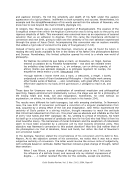
29 Later, after the introduction of taxation laws and charitable exemptions thereto, the wide definition
of religion emanating from Thornton v Howe ultimately worked to the benefit of those groups which
claimed religious status. See Pemsel (1891)
30 See for example United States v Seeger (1965) 380 US 163 13 L. ed. 2nd 733
31 Although it is possible that public policy makers might wish to retain discretion to disqualify some
groups. A religious group with a neo-Nazi philosophy might be a case in point.
32 Stephen Mutch, 'Cults, Religion and Public Policy' (Submitted PhD thesis, unpublished UNSW, 2004)
411 Ch V 3 -Section 116 of the Australian Constitution and the Definition of Religion.
33 Charity Commission, Section 8 Inquiry into Kinloss School (London, Charity Commission for England
and Wales, 2002).
Shinrikyo, Apocalyptic Violence, and the New Global Terrorism (New York: Metropolitan Books, 1999)
11.
13 This assessment corresponds with the observation that among ‗lay activists and professionals
concerned about people caught up in cultic groups … there was … a consensus that whatever ―cult‖
referred to, the term embraced nonreligious as well as religious groups, although a large majority
were religious‘, Michael D Langone, 'The Two "Camps" of Cultic Studies: Time for a Dialogue', Cultic
Studies Review 1, no. 1 (2001): 2 of 16.
14 This view is endorsed by the distinguished jurist Geoffrey Robertson QC, who notes that the
definition derived from Church of the New Faith ‗includes nonsense like scientology, and that in theory
―cults‖ enjoy the same international law protection as the great faiths, subject always to the State‘s
duty to curtail such of their activities as may damage the general welfare‘, Geoffrey Robertson, Crimes
against Humanity -the Struggle for Global Justice, 2nd ed. (London: Penguin Books, 2000) 110.
15 Regina v. Registrar General, Ex Parte Segerdal and Another (1970) 3 WLR 479
16 Ibid. 486 Per Winn LJ.
17 Charity Commission Decision: Church of Scientology Application for Registration as a Charity (1999)
http:www.charity-commission.gov.uk/ Accessed 29 November 2001, 49 pages) Charity
Commission for England and Wales. 1
18 Ibid. 41
19 The most obvious being ‗the clear biblical imperative found in Leviticus 19:18, ―You shall love your
neighbour as yourself‖‘, a sentiment derived from the Jewish bible, Charles Kimball, When Religion
Becomes Evil (San Francisco: HarperCollins, 2002) 131. Similar philanthropic injunctions are also to
be found in the Koran.
20 H R Sorensen and A K Thompson, 'The Advancement of Religion Is Still a Valid Charitable Object in
2001' (paper presented at the Centre of Philanthropy and Nonprofit Studies, QUT Charity Law in the
Pacific Rim Conference, Brisbane, August 2002).
21 It has been recommended in Australia that the category of religious institution be removed,
Sheppard, Inquiry into the Definition of Charities 262-3.Recommendation 22.
22 Centrepoint Community Growth Trust v Commissioner of Inland Revenue (1985) 1 NZLR 673
23 This seemed to boil down, in the absence of evidence of harm, to a minimal requirement that
members accepted ‗total honesty in their relationships with each other and their commitment to Mr.
Potter and his teachings‘, Ibid. 698 Per Tompkins J.
24 Ibid. 687
25 Michael Chesterman, Charities, Trusts and Social Welfare (London: Weidenfeld &Nicolson, 1979) 35.
26 Thornton v Howe (1862) 31 Beav 14. 20
27 An Act designed to prohibit testamentary bequests of land to religious charities, which it was feared
was contributing to the break-up of landed estates, rendering them commercially unviable.
28 Chesterman, Charities, Trusts 35.
29 Later, after the introduction of taxation laws and charitable exemptions thereto, the wide definition
of religion emanating from Thornton v Howe ultimately worked to the benefit of those groups which
claimed religious status. See Pemsel (1891)
30 See for example United States v Seeger (1965) 380 US 163 13 L. ed. 2nd 733
31 Although it is possible that public policy makers might wish to retain discretion to disqualify some
groups. A religious group with a neo-Nazi philosophy might be a case in point.
32 Stephen Mutch, 'Cults, Religion and Public Policy' (Submitted PhD thesis, unpublished UNSW, 2004)
411 Ch V 3 -Section 116 of the Australian Constitution and the Definition of Religion.
33 Charity Commission, Section 8 Inquiry into Kinloss School (London, Charity Commission for England
and Wales, 2002).