Cultic Studies Review, Vol. 3, Nos. 2 &3, 2004, Page 31
Model English and European Community Protection Provisions Which Might be
Adapted for the Disqualification of Nonconforming Entities
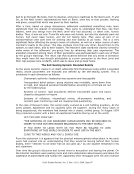
Nevertheless, it seems feasible to suggest the establishment of an adjudicative tribunal in
Australia to determine the entitlements, applicable under Commonwealth legislation, of third
sector entities including religious bodies. A great deal can be learnt from the approach of
the Charity Commission for England and Wales, which along with its initial gate keeping
function has powers to investigate misconduct within registered charities and can suspend,
remove and replace office bearers. Charities can also be removed from the register if they
are deemed by the Commissioners to be no longer fulfilling a charitable purpose. Grounds
for disqualification can be established if an organisation causes such harm that it violates
public policy.
It is not inconceivable, albeit improbable, that a charity in England and Wales could be
removed from the register if a pattern of cover-up of sexual abuse was found to be the
policy of a charity, or if abuse occurred as a result of the negligence of the charity, rather
than as an isolated case of individual misconduct. In at least two cases, involving a school34
and a children‘s trust35, where decisions have been published by the Commission, sexual
abuse and its effect on the proper functioning of the charities was one of the issues
considered in inquiries under s. 8 of the Charities Act 1993. Removal would be on the basis
that the charity was no longer fulfilling a charitable purpose, although it does seem to be
the policy of the Commission to facilitate the continuation of charities wherever possible,
making this scenario implausible under the present approach.
Provisions similar to the s. 18 ‗misconduct or mismanagement‘ provisions of the UK
Charities Act 199336 might be applied in Australia to the behaviour, not only of individuals
employed by third sector entities seeking fiscal entitlements, but to the conduct of the
entity itself.37 It is interesting to note that the Church of Scientology of Toronto, as an
entity, was convicted in 1992 in Canada for ‗criminal breaches of trust involving espionage
activities‘ within government offices. The Church itself was fined $250,000.00 and
individual officers of the Church were fined a total of $9,000.00. Justice Southey of the
Ontario Court‘s General Division found that ‗illegal activities … had been carried out at the
direction of senior Scientology officers‘, even though the Church had attempted to place the
blame on individuals.38 The same sort of determination might be made with respect to third
sector entities accessing fiscal privileges, which might be disqualified on the basis of
corporate responsibility for the actions of oligarchs in the running of the organisation.
Indeed, conduct not amounting to strict illegality, but nevertheless deemed to be harmful
misconduct, might form the basis for non-entitlement or disqualification.
In addition to these grounds for disqualification, a clear statement setting out the public
policy grounds for disqualification of an entity should be incorporated into any prospective
legislation establishing a third sector entitlements tribunal in Australia. These might include
grounds of public safety, the protection of public order, the protection of health or morals
and the protection of the rights and freedoms of others. All these community protections
have found authoritative exposition in Article 9 (2) of the European Convention on Human
Rights and Fundamental Freedoms 1950,39 as legitimate exceptions to the Article 9 (1)
freedom of religion. Indeed, special provisions might be included to allow disqualification of
organisations that encourage, for example, inappropriate punishment of children, or
deliberately isolate them, to their detriment, from normal social contact, whether this be
strictly illegal or not.
Conclusion
Freedom of religion might be a cherished principle, and rightly invoked to protect minority
groups or individuals from persecution. But that doesn‘t mean the community should
subsidize, in blanket fashion, the harmful practices of some groups qualifying for fiscal
Model English and European Community Protection Provisions Which Might be
Adapted for the Disqualification of Nonconforming Entities
Nevertheless, it seems feasible to suggest the establishment of an adjudicative tribunal in
Australia to determine the entitlements, applicable under Commonwealth legislation, of third
sector entities including religious bodies. A great deal can be learnt from the approach of
the Charity Commission for England and Wales, which along with its initial gate keeping
function has powers to investigate misconduct within registered charities and can suspend,
remove and replace office bearers. Charities can also be removed from the register if they
are deemed by the Commissioners to be no longer fulfilling a charitable purpose. Grounds
for disqualification can be established if an organisation causes such harm that it violates
public policy.
It is not inconceivable, albeit improbable, that a charity in England and Wales could be
removed from the register if a pattern of cover-up of sexual abuse was found to be the
policy of a charity, or if abuse occurred as a result of the negligence of the charity, rather
than as an isolated case of individual misconduct. In at least two cases, involving a school34
and a children‘s trust35, where decisions have been published by the Commission, sexual
abuse and its effect on the proper functioning of the charities was one of the issues
considered in inquiries under s. 8 of the Charities Act 1993. Removal would be on the basis
that the charity was no longer fulfilling a charitable purpose, although it does seem to be
the policy of the Commission to facilitate the continuation of charities wherever possible,
making this scenario implausible under the present approach.
Provisions similar to the s. 18 ‗misconduct or mismanagement‘ provisions of the UK
Charities Act 199336 might be applied in Australia to the behaviour, not only of individuals
employed by third sector entities seeking fiscal entitlements, but to the conduct of the
entity itself.37 It is interesting to note that the Church of Scientology of Toronto, as an
entity, was convicted in 1992 in Canada for ‗criminal breaches of trust involving espionage
activities‘ within government offices. The Church itself was fined $250,000.00 and
individual officers of the Church were fined a total of $9,000.00. Justice Southey of the
Ontario Court‘s General Division found that ‗illegal activities … had been carried out at the
direction of senior Scientology officers‘, even though the Church had attempted to place the
blame on individuals.38 The same sort of determination might be made with respect to third
sector entities accessing fiscal privileges, which might be disqualified on the basis of
corporate responsibility for the actions of oligarchs in the running of the organisation.
Indeed, conduct not amounting to strict illegality, but nevertheless deemed to be harmful
misconduct, might form the basis for non-entitlement or disqualification.
In addition to these grounds for disqualification, a clear statement setting out the public
policy grounds for disqualification of an entity should be incorporated into any prospective
legislation establishing a third sector entitlements tribunal in Australia. These might include
grounds of public safety, the protection of public order, the protection of health or morals
and the protection of the rights and freedoms of others. All these community protections
have found authoritative exposition in Article 9 (2) of the European Convention on Human
Rights and Fundamental Freedoms 1950,39 as legitimate exceptions to the Article 9 (1)
freedom of religion. Indeed, special provisions might be included to allow disqualification of
organisations that encourage, for example, inappropriate punishment of children, or
deliberately isolate them, to their detriment, from normal social contact, whether this be
strictly illegal or not.
Conclusion
Freedom of religion might be a cherished principle, and rightly invoked to protect minority
groups or individuals from persecution. But that doesn‘t mean the community should
subsidize, in blanket fashion, the harmful practices of some groups qualifying for fiscal