Cultic Studies Review, Vol. 3, Nos. 2 &3, 2004, Page 154
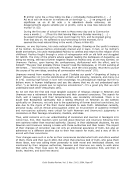
Chapter Four focuses on messianic leadership, providing a linguistic, historical and
theological analysis of Messianic features, in both Western and Middle East cultures. It also
deals with the issue of cultural perceptions and what might be called ―perceived or
functional Messianism,‖ both in individuals as well as in organizational structures.
The phenomenon of unconditional obedience is addressed with a concise and clear
explanation of the manipulative psychological and physiological processes by which
followers of messianic leaders or entities can have their critical judgment impaired and their
prior moral values distorted so as to allow leaders to act unchecked. Dr. Erdely enriches this
remarkable chapter with examples extracted from texts of Sun Myung Moon and Mormon
and Jehovah‘s Witnesses leaders‘ teachings, as well as with an analysis of the letters left
behind by Mohammed Atta and other 9/11 hijackers. Chapter Six discusses how a suicide-
inducing discourse is just part of the trigger event, which could arise one day or another
without warning signs, once the other two factors are present. The author points out the
element of surprise always present in past ritual suicide episodes to support this assertion,
thus preventing us from rejecting that possibility in the absence of a suicide-inducing
discourse. At this point, his primary emphasis is placed on prevention, providing indicators
that could help us better understand the ―process‖ and circumstances under which these
actions take form, instead of merely analyzing the end results.
Chapter Seven is an easy-to-read description of the ―Islamic World,‖ useful to inform
readers unfamiliar with the very basics of this religion. With the stated purpose of
preventing misperceptions, the topic of Islamic pluralism is introduced, as well as basic
definitions of faith and creed. To compensate for our adaptive, but sometimes inappropriate,
human tendency to generate simple labels and generalize them to describe different
realities, the author of Terrorismo Religioso explains the differences between the ―Islamic
world‖ and the ―Arabic world‖ and acknowledges the diverse ethnical origins and varied
religious expressions within the different geographical locations where Islam is a dominant
faith. He even reminds the reader that ―not all of those who consider themselves Arabs
practice the Islamic faith,‖ underlining what he thinks to be a common generalization of
Westerners talking about ―Arabs‖ when they really mean ―Muslims.‖
Chapter Eight explains basic Muslim doctrine in relation to the primary concept of Jihad or
Islamic holy religious war. It concludes that the West is currently facing a distorted,
expansionist version of classic Jihad, what Dr. Erdely calls ―the new Jihad‖ carried out by
Islamic sectarian groups that have radicalized and redefined ahistorically many of their core
religious concepts. Citing several of these groups and giving details of their beliefs and
behaviors, he talks about the several training camps where new generations of suicidal
terrorists are indoctrinated and provided with a rationale for mass murder. Accordingly,
violent actions are divinely sanctioned means and ―holy warriors‖ who give their lives away
for an allegedly transcendent cause as martyrs acquire the direct right to enter paradise,
bypassing Judgement Day. They perceive the ―Western world,‖ especially the United States,
as a morally perverted and corrupting entity that with its hedonism and crass materialism
threatens to defile the ―Muslim world,‖ enticing Muslims to become religiously and morally
lax. Dr. Erdely asserts that the enemy in the ―twenty-first century war‖ is not Islam, ―but
destructive cults that do not represent Muslims.‖ His conclusions could be summarized citing
Zimbardo‘s (2001) call to acknowledge ―how religiously-based value systems can be
perverted to justify and reward the most horrendous of human deeds‖.
In a particularly impressive postscript, Dr. Erdely notes how 9/11 and subsequent events
have impacted our own security concerns and perceptions of the value of human life and
compares the attack on the Twin Towers in New York to those daily, insidious and equally
brutal acts that have affected and continue to affect since long ago anonymous people in
underprivileged countries and places that are far away from our attention, places like
southern Sudan or the Malaccan Islands. He states that both kinds of brutality have similar
Chapter Four focuses on messianic leadership, providing a linguistic, historical and
theological analysis of Messianic features, in both Western and Middle East cultures. It also
deals with the issue of cultural perceptions and what might be called ―perceived or
functional Messianism,‖ both in individuals as well as in organizational structures.
The phenomenon of unconditional obedience is addressed with a concise and clear
explanation of the manipulative psychological and physiological processes by which
followers of messianic leaders or entities can have their critical judgment impaired and their
prior moral values distorted so as to allow leaders to act unchecked. Dr. Erdely enriches this
remarkable chapter with examples extracted from texts of Sun Myung Moon and Mormon
and Jehovah‘s Witnesses leaders‘ teachings, as well as with an analysis of the letters left
behind by Mohammed Atta and other 9/11 hijackers. Chapter Six discusses how a suicide-
inducing discourse is just part of the trigger event, which could arise one day or another
without warning signs, once the other two factors are present. The author points out the
element of surprise always present in past ritual suicide episodes to support this assertion,
thus preventing us from rejecting that possibility in the absence of a suicide-inducing
discourse. At this point, his primary emphasis is placed on prevention, providing indicators
that could help us better understand the ―process‖ and circumstances under which these
actions take form, instead of merely analyzing the end results.
Chapter Seven is an easy-to-read description of the ―Islamic World,‖ useful to inform
readers unfamiliar with the very basics of this religion. With the stated purpose of
preventing misperceptions, the topic of Islamic pluralism is introduced, as well as basic
definitions of faith and creed. To compensate for our adaptive, but sometimes inappropriate,
human tendency to generate simple labels and generalize them to describe different
realities, the author of Terrorismo Religioso explains the differences between the ―Islamic
world‖ and the ―Arabic world‖ and acknowledges the diverse ethnical origins and varied
religious expressions within the different geographical locations where Islam is a dominant
faith. He even reminds the reader that ―not all of those who consider themselves Arabs
practice the Islamic faith,‖ underlining what he thinks to be a common generalization of
Westerners talking about ―Arabs‖ when they really mean ―Muslims.‖
Chapter Eight explains basic Muslim doctrine in relation to the primary concept of Jihad or
Islamic holy religious war. It concludes that the West is currently facing a distorted,
expansionist version of classic Jihad, what Dr. Erdely calls ―the new Jihad‖ carried out by
Islamic sectarian groups that have radicalized and redefined ahistorically many of their core
religious concepts. Citing several of these groups and giving details of their beliefs and
behaviors, he talks about the several training camps where new generations of suicidal
terrorists are indoctrinated and provided with a rationale for mass murder. Accordingly,
violent actions are divinely sanctioned means and ―holy warriors‖ who give their lives away
for an allegedly transcendent cause as martyrs acquire the direct right to enter paradise,
bypassing Judgement Day. They perceive the ―Western world,‖ especially the United States,
as a morally perverted and corrupting entity that with its hedonism and crass materialism
threatens to defile the ―Muslim world,‖ enticing Muslims to become religiously and morally
lax. Dr. Erdely asserts that the enemy in the ―twenty-first century war‖ is not Islam, ―but
destructive cults that do not represent Muslims.‖ His conclusions could be summarized citing
Zimbardo‘s (2001) call to acknowledge ―how religiously-based value systems can be
perverted to justify and reward the most horrendous of human deeds‖.
In a particularly impressive postscript, Dr. Erdely notes how 9/11 and subsequent events
have impacted our own security concerns and perceptions of the value of human life and
compares the attack on the Twin Towers in New York to those daily, insidious and equally
brutal acts that have affected and continue to affect since long ago anonymous people in
underprivileged countries and places that are far away from our attention, places like
southern Sudan or the Malaccan Islands. He states that both kinds of brutality have similar