Cultic Studies Review, Vol. 3, Nos. 2 &3, 2004, Page 97
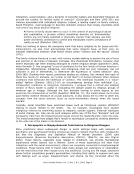
gradually changing which positions, attitudes and behaviors were deemed prototypical for
group members --a strategy identified by Hogg (2001) as a tactic used by leaders to
maintain their position as prototypic individuals. This tactic is presumed to rely on the fact
that by changing the group prototype, the leader assures that he more than anyone else
continues to best embody this prototypic standard.
However, Jones was never viewed as a prototypic group member of the Peoples Temple by
his followers. From the outset he was viewed as unique and superior. Nor did his
leadership emerge because his attitudes and behaviors happened to coincide with the
group‘s protoyptic norms. Rather, Jones established what the norms would be by dint of his
own opinions. In addition, while group members undoubtedly inflated Jones exceptional
characteristics, his charisma was not just a function of this attributional bias. Rather it
stemmed from exceptional skill at public speaking, identifying meaningful goals (e.g., racial
equality), and his supreme confidence. It is true that Jones used increasing degrees of
coercive control over time, but this seems primarily due to his psychological deterioration
(Layton, 1998) rather than to his gradually being perceived as a ―non-group‖ member.
Transformational Theory
Bass‘s (1998) construct of pseudo-transformational leadership provides a better description
of leadership within the Peoples Temple. Members certainly derived a number of the
psychological benefits we mention above from their group affiliation while Jones certainly
accrued multiple benefits as well. Thus, both Jones and his followers could be viewed as
being in the type of exchange relationship emphasized by a transactional approach. Jones
also captured a good many of the charismatic features stressed by Bass, such as
inspirational leadership (messianic goals, dynamic style, etc.), individual consideration of
group members' needs and abilities, and an innovative, self-actualizing agenda for group
members. On the other hand, Jones was intolerant of dissent, reveled in public criticism of
members, was highly manipulative and deceptive relating to members (healings were
staged, clairvoyant abilities faked, etc.), and clearly emphasized his own self-interest and
privileges when governing the group. In addition, his own moral sense appeared twisted
and abnormal. Jones would seem to be a prime example of the pseudo-transformational
leader. This form of leadership is thought to be both ineffective and a source of stress for
group members. It is not hard to make this case when considering the history and sad
demise of this group.
Synanon
Background
Synanon was a residential drug treatment group founded in California by Chuck Dederich, in
1958. Synanon‘s treatment was based on the ―Game,‖ a confrontational group session
during which participants critically considered the defenses and illusions that sustained their
substance abuse. Within months, Synanon claimed to be an effective means of controlling
not only alcoholism but drug addiction, as well. Between 1958 and 1968, the group
processed over 5000 individuals (Gerstel, 1982).
The purported success of this program as a treatment for drug addiction was based
primarily on unsubstantiated reports in the press (Ofshe, 1980). While it is likely that
members did remain drug free and sober while in residence (given the no-nonsense,
confrontational Synanon approach), there is little formal documentation that Synanon
provided a successful cure for individuals who moved to non-resident status (Ofshe, 1980).
In time, such graduation ceased to be a goal of the organization. Its fame as a successful
drug program led to donations, grants and expansion that permitted it to open businesses
staffed by (unpaid) Synanon members (Gerstel, 1984). By 1967 Synanon had over 800
members in various residence facilities and had begun to admit non-addicted individuals
gradually changing which positions, attitudes and behaviors were deemed prototypical for
group members --a strategy identified by Hogg (2001) as a tactic used by leaders to
maintain their position as prototypic individuals. This tactic is presumed to rely on the fact
that by changing the group prototype, the leader assures that he more than anyone else
continues to best embody this prototypic standard.
However, Jones was never viewed as a prototypic group member of the Peoples Temple by
his followers. From the outset he was viewed as unique and superior. Nor did his
leadership emerge because his attitudes and behaviors happened to coincide with the
group‘s protoyptic norms. Rather, Jones established what the norms would be by dint of his
own opinions. In addition, while group members undoubtedly inflated Jones exceptional
characteristics, his charisma was not just a function of this attributional bias. Rather it
stemmed from exceptional skill at public speaking, identifying meaningful goals (e.g., racial
equality), and his supreme confidence. It is true that Jones used increasing degrees of
coercive control over time, but this seems primarily due to his psychological deterioration
(Layton, 1998) rather than to his gradually being perceived as a ―non-group‖ member.
Transformational Theory
Bass‘s (1998) construct of pseudo-transformational leadership provides a better description
of leadership within the Peoples Temple. Members certainly derived a number of the
psychological benefits we mention above from their group affiliation while Jones certainly
accrued multiple benefits as well. Thus, both Jones and his followers could be viewed as
being in the type of exchange relationship emphasized by a transactional approach. Jones
also captured a good many of the charismatic features stressed by Bass, such as
inspirational leadership (messianic goals, dynamic style, etc.), individual consideration of
group members' needs and abilities, and an innovative, self-actualizing agenda for group
members. On the other hand, Jones was intolerant of dissent, reveled in public criticism of
members, was highly manipulative and deceptive relating to members (healings were
staged, clairvoyant abilities faked, etc.), and clearly emphasized his own self-interest and
privileges when governing the group. In addition, his own moral sense appeared twisted
and abnormal. Jones would seem to be a prime example of the pseudo-transformational
leader. This form of leadership is thought to be both ineffective and a source of stress for
group members. It is not hard to make this case when considering the history and sad
demise of this group.
Synanon
Background
Synanon was a residential drug treatment group founded in California by Chuck Dederich, in
1958. Synanon‘s treatment was based on the ―Game,‖ a confrontational group session
during which participants critically considered the defenses and illusions that sustained their
substance abuse. Within months, Synanon claimed to be an effective means of controlling
not only alcoholism but drug addiction, as well. Between 1958 and 1968, the group
processed over 5000 individuals (Gerstel, 1982).
The purported success of this program as a treatment for drug addiction was based
primarily on unsubstantiated reports in the press (Ofshe, 1980). While it is likely that
members did remain drug free and sober while in residence (given the no-nonsense,
confrontational Synanon approach), there is little formal documentation that Synanon
provided a successful cure for individuals who moved to non-resident status (Ofshe, 1980).
In time, such graduation ceased to be a goal of the organization. Its fame as a successful
drug program led to donations, grants and expansion that permitted it to open businesses
staffed by (unpaid) Synanon members (Gerstel, 1984). By 1967 Synanon had over 800
members in various residence facilities and had begun to admit non-addicted individuals