Cultic Studies Review, Vol. 3, Nos. 2 &3, 2004, Page 152
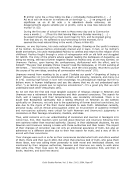
found to contain lethal explosives. There was an oversupply of every kind of assistance,
professional and unskilled, to such a degree that a great number of potential volunteers
were excluded from helping. As in the case of September 11, the sacrifice, courage and
moving demonstrations of solidarity of so many different people from around the world,
reminded us of the human individuals' capacity to act as moral agents and carry out what
they consider a humane duty, even at their own peril (Bandura, 2002). It reminded us, as
well, of the collective human capacity to generate spontaneously new patterns of behavior,
including new definitions for such a confusing situation, instead of being guided by irrational
chain reactions (Rodríguez-Carballeira &Javaloy, 2003).
Inevitably, several questions arise when trying to cope with the consequences of such acts
and attempting to understand the nature of the ―sick‖ or ―perverted‖ minds which have
perpetrated so much indiscriminate destruction. Further details of the lives of the bombers
prior to the attacks, describing normal behaviors and interactions with their targeted society
members, led us to describe those voluntary executioners (Goldhagen, 1998) as ―hidden
abnormal people‖ (Cadena Ser Radio, May 14, 2004), although previous literature
evidenced how ―disturbingly normal‖ most terrorists seem when interviewed (Hoffman,
1999 Juergensmeyer, 2001).
In such times and scenarios, we, as social scientists, are particularly responsible for
addressing these seemingly incomprehensible paradoxes, for describing phenomena and
offering explanations and, in this way, giving back to society as a whole what we have
learned thanks to its support (Cialdini, 1997). This is especially important if we are to avoid
biased responses and formulas that could lead us to buy into simple solutions to complex
situations, disregarding the effects of the actions we take or support and thus perpetuating
the cycle of violence.
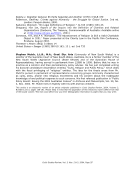
Dr. Erdely‘s book Terrorismo Religioso provides a prompt and competent response to this
need for information. Written shortly after the 9/11 tragedy, the book‘s stated goal is to
bring us closer to a coherent explanation, and it certainly provides tools to understand the
growing incidence of fanatic religious behavior and ritual suicides. According to the author,
9/11 was not an isolated event that took place in a vacuum, but has a historical context and
a contemporary global dimension that antedates both 9/11 and the more recent Madrid
bombings. Hence, he argues, such a topic needs to be addressed from a multidisciplinary
approach if proper understanding of its causes is to be achieved.
Although many of the abundant essays written on terrorism and 9/11 talked about
―programmed.‖ Indoctrinated, or deceived suicidal terrorists, most of them do so
superficially and sometimes in a sensationalist way due, from my point of view, to low skills
on cult-related issues. The author of Terrorismo Religioso is a person whose focus over the
last years has been the study of religious manipulation in totalitarian groups. Dr. Erdely
avoids repeating many of the descriptions of 9/11 widely spread by commercial media,
focusing instead on relevant aspects to achieve the above mentioned purpose, as well as
explain the foundations of such behaviors.
Dr. Erdely is a member in good standing of the Latin American Association for the Study of
Religions, the regional chapter of the International Association for the History of Religion
(IAHR). His academic credentials include a degree in Biological Sciences with a
concentration in Psychology. He also holds a Ph.D. in Philosophy and a three year graduate
specialization in Semitic languages. In 2001-2002 he was a postdoctoral Research Fellow in
Theology at Oxford University in the United Kingdom. He is the author of several books and
research papers on cult-related topics and edits Revista Académica para el Estudio de las
Religiones, an indexed, peer-reviewed journal focused on the study of religious globalization
and human rights in Latin America.
found to contain lethal explosives. There was an oversupply of every kind of assistance,
professional and unskilled, to such a degree that a great number of potential volunteers
were excluded from helping. As in the case of September 11, the sacrifice, courage and
moving demonstrations of solidarity of so many different people from around the world,
reminded us of the human individuals' capacity to act as moral agents and carry out what
they consider a humane duty, even at their own peril (Bandura, 2002). It reminded us, as
well, of the collective human capacity to generate spontaneously new patterns of behavior,
including new definitions for such a confusing situation, instead of being guided by irrational
chain reactions (Rodríguez-Carballeira &Javaloy, 2003).
Inevitably, several questions arise when trying to cope with the consequences of such acts
and attempting to understand the nature of the ―sick‖ or ―perverted‖ minds which have
perpetrated so much indiscriminate destruction. Further details of the lives of the bombers
prior to the attacks, describing normal behaviors and interactions with their targeted society
members, led us to describe those voluntary executioners (Goldhagen, 1998) as ―hidden
abnormal people‖ (Cadena Ser Radio, May 14, 2004), although previous literature
evidenced how ―disturbingly normal‖ most terrorists seem when interviewed (Hoffman,
1999 Juergensmeyer, 2001).
In such times and scenarios, we, as social scientists, are particularly responsible for
addressing these seemingly incomprehensible paradoxes, for describing phenomena and
offering explanations and, in this way, giving back to society as a whole what we have
learned thanks to its support (Cialdini, 1997). This is especially important if we are to avoid
biased responses and formulas that could lead us to buy into simple solutions to complex
situations, disregarding the effects of the actions we take or support and thus perpetuating
the cycle of violence.
Dr. Erdely‘s book Terrorismo Religioso provides a prompt and competent response to this
need for information. Written shortly after the 9/11 tragedy, the book‘s stated goal is to
bring us closer to a coherent explanation, and it certainly provides tools to understand the
growing incidence of fanatic religious behavior and ritual suicides. According to the author,
9/11 was not an isolated event that took place in a vacuum, but has a historical context and
a contemporary global dimension that antedates both 9/11 and the more recent Madrid
bombings. Hence, he argues, such a topic needs to be addressed from a multidisciplinary
approach if proper understanding of its causes is to be achieved.
Although many of the abundant essays written on terrorism and 9/11 talked about
―programmed.‖ Indoctrinated, or deceived suicidal terrorists, most of them do so
superficially and sometimes in a sensationalist way due, from my point of view, to low skills
on cult-related issues. The author of Terrorismo Religioso is a person whose focus over the
last years has been the study of religious manipulation in totalitarian groups. Dr. Erdely
avoids repeating many of the descriptions of 9/11 widely spread by commercial media,
focusing instead on relevant aspects to achieve the above mentioned purpose, as well as
explain the foundations of such behaviors.
Dr. Erdely is a member in good standing of the Latin American Association for the Study of
Religions, the regional chapter of the International Association for the History of Religion
(IAHR). His academic credentials include a degree in Biological Sciences with a
concentration in Psychology. He also holds a Ph.D. in Philosophy and a three year graduate
specialization in Semitic languages. In 2001-2002 he was a postdoctoral Research Fellow in
Theology at Oxford University in the United Kingdom. He is the author of several books and
research papers on cult-related topics and edits Revista Académica para el Estudio de las
Religiones, an indexed, peer-reviewed journal focused on the study of religious globalization
and human rights in Latin America.