Cultic Studies Review, Vol. 3, Nos. 2 &3, 2004, Page 149
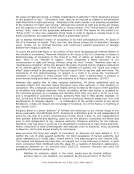
The ethics of hiring exit-counselors are always worthy of reasoned discussion. I have rarely
known a family to engage an exit-counselor except in near desperation and after
considerable moral struggle. O‘Meara and Koehler would have done better to stick with
their ethical concerns. Instead, however, they resort to ad hominem attacks and
undocumented claims. At various points, the authors suggest that opinions about groups
should not be based on second-hand experiences, or strictly on the research of ―arm-chair
critic[s]‖ whose findings are based on ―interviewing only people with negative opinions
[about a group]‖ (p. 35). This is good advice, and I wish the authors had taken it when
they wrote this section. They seem to base their findings only on people with negative
opinions about their experiences during exit-counseling. The opinions of scores of people
who describe their exit-counseling experiences in highly positive terms are not mentioned,
let alone thoughtfully considered. Instead, exit-counselors are universally described in
TCATC as ―browbeating,‖ as withholding the truth about their ―very low success rate,‖ and
as contributing to ―mak[ing] the [family] situation worse than ever‖ (p. 45). I don‘t know
how many exit-counselings the authors have witnessed first hand, but as a researcher with
some expertise in this area (Dubrow-Eichel, 1989, 1990), I do not believe ―browbeating‖ is
an accurate description of the process I experienced and wrote about. In fact, the exit-
counselors I know strongly advise against any kind of ―browbeating,‖ if only because it is
highly counterproductive. I will admit that I do not have objective data across a good
sample of exit-counselings to state categorically that they never involve ―browbeating.‖ But
neither do O‘Meara and Koehler. The same holds true with their claim of a ―very low
success rate.‖ The authors do not provide data backing this claim. The only
deprogramming/exit-counseling outcome data I‘m aware of (which is seriously outdated)
suggested a success rate of about 60-67%, which was comparable to the success rates
reported in hundreds of therapy outcome studies.
TCATC focuses a great deal on the need to respect unusual and unconventional beliefs.
Again, I am in full agreement. (As I wrote this, I was reminded of a time when I was
chastised by a Church of Scientology President for belonging to a profession that is
intolerant of unconventional or dissenting beliefs. I replied that anyone who believes
psychologists are coercive mind manipulators who are intolerant of unconventional beliefs
has clearly never been to a meeting of the American Psychological Association, where
practically any and all opinions about human behavior may be heard. If anything,
psychologists are typically accused of being too liberal and overly tolerant of lifestyles and
beliefs that most of society finds alien.) True, there are families and friends whose
objections to groups labeled ―cults‖ seem to be based primarily on the ―incorrectness‖ of
their beliefs. However, this is typically not what motivates families or friends to take action.
Parents come to see me because their sons or daughters who could always be trusted have
suddenly begun to lie a lot, or they have spent their college tuition on a group‘s ―courses‖
(without their parents‘ knowledge). Spouses come because a husband or wife has abruptly
left their marriage and their children, or has suddenly refused medical care. One person
contacted me because his wife began ―channeling‖ entities while driving. One of my most
recent cases involves a young woman who has just announced she will not see her family
again, ever, and that she will not visit her sister who is about to give birth. In another case,
a family contacted me because their daughter gave a group that advocates ―detachment
from materialism‖ her entire $350,000 inheritance. (The leader is presumably ―immune‖
from materialism.) Most concerned families and friends who have sought my help have
done so because of highly unusual behaviors, not controversial beliefs. O‘Meara and
Koehler do not address what to do when a loved one‘s behavior suddenly and drastically
becomes upsetting, hurtful, unscrupulous, or potentially harmful after becoming involved
with a group.
The third section closes with a strongly worded invective about the ―hoax of brainwashing
and mind control.‖ This review is not the place to address this complicated debate in detail.
The ethics of hiring exit-counselors are always worthy of reasoned discussion. I have rarely
known a family to engage an exit-counselor except in near desperation and after
considerable moral struggle. O‘Meara and Koehler would have done better to stick with
their ethical concerns. Instead, however, they resort to ad hominem attacks and
undocumented claims. At various points, the authors suggest that opinions about groups
should not be based on second-hand experiences, or strictly on the research of ―arm-chair
critic[s]‖ whose findings are based on ―interviewing only people with negative opinions
[about a group]‖ (p. 35). This is good advice, and I wish the authors had taken it when
they wrote this section. They seem to base their findings only on people with negative
opinions about their experiences during exit-counseling. The opinions of scores of people
who describe their exit-counseling experiences in highly positive terms are not mentioned,
let alone thoughtfully considered. Instead, exit-counselors are universally described in
TCATC as ―browbeating,‖ as withholding the truth about their ―very low success rate,‖ and
as contributing to ―mak[ing] the [family] situation worse than ever‖ (p. 45). I don‘t know
how many exit-counselings the authors have witnessed first hand, but as a researcher with
some expertise in this area (Dubrow-Eichel, 1989, 1990), I do not believe ―browbeating‖ is
an accurate description of the process I experienced and wrote about. In fact, the exit-
counselors I know strongly advise against any kind of ―browbeating,‖ if only because it is
highly counterproductive. I will admit that I do not have objective data across a good
sample of exit-counselings to state categorically that they never involve ―browbeating.‖ But
neither do O‘Meara and Koehler. The same holds true with their claim of a ―very low
success rate.‖ The authors do not provide data backing this claim. The only
deprogramming/exit-counseling outcome data I‘m aware of (which is seriously outdated)
suggested a success rate of about 60-67%, which was comparable to the success rates
reported in hundreds of therapy outcome studies.
TCATC focuses a great deal on the need to respect unusual and unconventional beliefs.
Again, I am in full agreement. (As I wrote this, I was reminded of a time when I was
chastised by a Church of Scientology President for belonging to a profession that is
intolerant of unconventional or dissenting beliefs. I replied that anyone who believes
psychologists are coercive mind manipulators who are intolerant of unconventional beliefs
has clearly never been to a meeting of the American Psychological Association, where
practically any and all opinions about human behavior may be heard. If anything,
psychologists are typically accused of being too liberal and overly tolerant of lifestyles and
beliefs that most of society finds alien.) True, there are families and friends whose
objections to groups labeled ―cults‖ seem to be based primarily on the ―incorrectness‖ of
their beliefs. However, this is typically not what motivates families or friends to take action.
Parents come to see me because their sons or daughters who could always be trusted have
suddenly begun to lie a lot, or they have spent their college tuition on a group‘s ―courses‖
(without their parents‘ knowledge). Spouses come because a husband or wife has abruptly
left their marriage and their children, or has suddenly refused medical care. One person
contacted me because his wife began ―channeling‖ entities while driving. One of my most
recent cases involves a young woman who has just announced she will not see her family
again, ever, and that she will not visit her sister who is about to give birth. In another case,
a family contacted me because their daughter gave a group that advocates ―detachment
from materialism‖ her entire $350,000 inheritance. (The leader is presumably ―immune‖
from materialism.) Most concerned families and friends who have sought my help have
done so because of highly unusual behaviors, not controversial beliefs. O‘Meara and
Koehler do not address what to do when a loved one‘s behavior suddenly and drastically
becomes upsetting, hurtful, unscrupulous, or potentially harmful after becoming involved
with a group.
The third section closes with a strongly worded invective about the ―hoax of brainwashing
and mind control.‖ This review is not the place to address this complicated debate in detail.