Cultic Studies Review, Vol. 3, Nos. 2 &3, 2004, Page 92
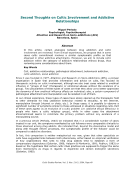
Aberrations of Power: Leadership in Totalist Groups
Robert S. Baron, Ph.D.
Department of Psychology
University of Iowa
Kevin Crawley
Iowa City, Iowa
Diana Paulina
Iowa City, Iowa
Abstract
In this chapter, several theoretical perspectives are used to analyze the
leadership tactics utilized within three manipulative groups the Peoples‘
Temple, Synanon and the Children of God. This case study approach
illustrates a number of common features of such leadership. These features
include the means by which emotional and cognitive fatigue are used to
amplify various categories of leader power, the manner in which assaults on
self confidence and self esteem heighten dependence upon group leaders and
the tendency of such leaders to initiate transformations of group purpose and
group norms. Such transformation provides a means of testing member
loyalty, evoking cognitive dissonance among followers and creating a sense
of mystery and drama that serves to excite and intrigue group members.
Few phenomena provoke more interest in the concept of leadership than the power exerted
by leaders in totalist groups. Whether we consider such cult behavior as mass marriages,
mass suicides, or voluntary castrations, the power of such leaders to induce their members
to ignore logic, self-interest and the entreaties of family members is undeniable. This
chapter offers a number of suggestions regarding the basis of such power using three
groups as highly typical examples of cult indoctrination. In such groups, members exhibit
remarkable levels of obedience to authority following a period of systematic and intense
indoctrination. It is this feature that marks the totalist group in our view (Baron, 2000).
These case study descriptions will provide us with a vehicle for considering the factors that
contribute to the unique nature of leadership in totalist groups.
Relevant Theories of Leadership
French and Raven’s Power Model
One defining aspect of leadership in totalist groups is the unilateral power of the group
leader. Checks and balances of power are rarely present in totalist groups. Indeed, purges
frequently remove anyone who might challenge the leader‘s power (e.g., Davis, 1984
Ofshe, 1980). Thus, French and Raven‘s (1959) model is quite relevant to our discussion
given the multidimensional nature of leader power in such groups (Forsyth, 1999).
Typically such leaders are adept at controlling most dimensions of power identified by this
model. Public humiliation and corporal punishment (i.e., coercive power) is common. These
leaders generally have high reward power, controlling most of the financial, social and
sexual resources of the group (e.g., Reavis, 1998). The expert-informational power of such
leaders is high due to such factors as education, status as seer-guru or media-based
reputation. In the three groups we spotlight, informational and coercive power was
amplified by encouraging mutual spying among group members (e.g. Layton, 1998). Thus,
these leaders could appear omniscient regarding member actions and feelings an ―ability‖
Aberrations of Power: Leadership in Totalist Groups
Robert S. Baron, Ph.D.
Department of Psychology
University of Iowa
Kevin Crawley
Iowa City, Iowa
Diana Paulina
Iowa City, Iowa
Abstract
In this chapter, several theoretical perspectives are used to analyze the
leadership tactics utilized within three manipulative groups the Peoples‘
Temple, Synanon and the Children of God. This case study approach
illustrates a number of common features of such leadership. These features
include the means by which emotional and cognitive fatigue are used to
amplify various categories of leader power, the manner in which assaults on
self confidence and self esteem heighten dependence upon group leaders and
the tendency of such leaders to initiate transformations of group purpose and
group norms. Such transformation provides a means of testing member
loyalty, evoking cognitive dissonance among followers and creating a sense
of mystery and drama that serves to excite and intrigue group members.
Few phenomena provoke more interest in the concept of leadership than the power exerted
by leaders in totalist groups. Whether we consider such cult behavior as mass marriages,
mass suicides, or voluntary castrations, the power of such leaders to induce their members
to ignore logic, self-interest and the entreaties of family members is undeniable. This
chapter offers a number of suggestions regarding the basis of such power using three
groups as highly typical examples of cult indoctrination. In such groups, members exhibit
remarkable levels of obedience to authority following a period of systematic and intense
indoctrination. It is this feature that marks the totalist group in our view (Baron, 2000).
These case study descriptions will provide us with a vehicle for considering the factors that
contribute to the unique nature of leadership in totalist groups.
Relevant Theories of Leadership
French and Raven’s Power Model
One defining aspect of leadership in totalist groups is the unilateral power of the group
leader. Checks and balances of power are rarely present in totalist groups. Indeed, purges
frequently remove anyone who might challenge the leader‘s power (e.g., Davis, 1984
Ofshe, 1980). Thus, French and Raven‘s (1959) model is quite relevant to our discussion
given the multidimensional nature of leader power in such groups (Forsyth, 1999).
Typically such leaders are adept at controlling most dimensions of power identified by this
model. Public humiliation and corporal punishment (i.e., coercive power) is common. These
leaders generally have high reward power, controlling most of the financial, social and
sexual resources of the group (e.g., Reavis, 1998). The expert-informational power of such
leaders is high due to such factors as education, status as seer-guru or media-based
reputation. In the three groups we spotlight, informational and coercive power was
amplified by encouraging mutual spying among group members (e.g. Layton, 1998). Thus,
these leaders could appear omniscient regarding member actions and feelings an ―ability‖