Cultic Studies Review, Vol. 3, Nos. 2 &3, 2004, Page 63
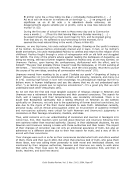
the Jehovah‘s Witness case, $3,000 for seventeen days. He cited the Jason Scott case in the
United States, which ordered a professional ―deprogrammer‖ and his alleged conspirator,
Cult Awareness Network, to pay $4,875,000 in punitive damages for just ten days.
Antal questioned why only Unification Church members, ―integrationist multi-racial‖ project
participants in mass ―Marriage Blessing,‖ were segregated in Japan. He found the answer in
―a general state hostility towards a number of new religions, among them the Unification
Church,‖ and denounced Japan's attempting ―to characterize religious groups as subversive
pseudo-religions (hence) that Japan must come under scrutiny by the international
community.‖ Actually, as he stated, the Annual Report on International Religious Freedom
for 2003 referred to it as a case of ―Restriction of Religious Freedom.‖
(http://www.state.gov/g/drl/rls/irf/2003/23831.htm)
His question is very suggestive. We must scrutinize why the state officials, judges, and
general public in Japan were critical of the Unification Church. Antal is wrong when he
assumes that the Japanese have an ungrounded prejudice against the Unification Church.
He intentionally did not mention even once how the Unification Church conducted
controversial activities in Japan for 40 years. According to the rulings in the Unification
Church cases, this religion has been recruiting members and raising funds in illegal ways. As
for the fraudulent sales of spiritual goods by their members, the Unification Church has
inflicted approximately $700 million in damage among ordinary Japanese citizens. Therefore
parents and deprogrammers opposed the church for involving their children in illegal
activities. These fraudulent activities are quite unique in exploiting Japanese religiosity and
family structure, so we would be misled if we compared Japanese cases with those limited
to religious activities in Europe, the United States, and Korea.
In addition, contrary to Antal‘s understanding of state agencies, Japanese police and judges
had not been cooperative with anti-Unification Church movements to intervene in religious
matters until the end of the 1990s when ex-members and attorneys produced sufficient
evidence to win verdicts against the Unification Church. The Unification Church has been
viewed with suspicion because of their illegal activities in the past.
Historically, Japanese religiosity has been a mixture of several historic religions and
indigenous ancestor worship. The Japanese are tolerant of new religions, whether they ,
originated in Japan, in the East, or the West. Nevertheless, the Japanese cannot ignore the
problems attributed to the Unification Church.
Thus, it is reasonable to claim that some Japanese parents had no other choice than to
conduct ―controversial‖ deprogrammings to rescue their children, even if they knew that
their children were over 20 years of age and legally regarded as having the capability of
decision-making and free-will.
Conclusion
In the 1990s, religious problems, such as deceitful recruitment and fund-raising by the
Unification Church and criminal activities by Aum and other ―cults,‖ provoked a cult
controversy and a cautious attitude towards religion among ordinary Japanese citizen. An
Anti-cult movement, composed of ex-members of such groups, and families concerned with
enlisting the help of professionals such as pastors, attorneys, and psychiatrists, severely
criticized particular controversial religions for violating human rights. Courts judged certain
activities of the so-called ―cults‖ as illegal, separating their social actions from their
arguments of sacred rights of religious freedom. In addition, the Sapporo District Court
ruling added that in their missionary activities, religions should explain their teachings as
religious dogma that is different from scientific truth and historical evidence so as to protect
individuals‘ decision-making capabilities in choosing their religions. Some religious persons
and scholars probably regard this ruling as exceeding religious authority, which sets
the Jehovah‘s Witness case, $3,000 for seventeen days. He cited the Jason Scott case in the
United States, which ordered a professional ―deprogrammer‖ and his alleged conspirator,
Cult Awareness Network, to pay $4,875,000 in punitive damages for just ten days.
Antal questioned why only Unification Church members, ―integrationist multi-racial‖ project
participants in mass ―Marriage Blessing,‖ were segregated in Japan. He found the answer in
―a general state hostility towards a number of new religions, among them the Unification
Church,‖ and denounced Japan's attempting ―to characterize religious groups as subversive
pseudo-religions (hence) that Japan must come under scrutiny by the international
community.‖ Actually, as he stated, the Annual Report on International Religious Freedom
for 2003 referred to it as a case of ―Restriction of Religious Freedom.‖
(http://www.state.gov/g/drl/rls/irf/2003/23831.htm)
His question is very suggestive. We must scrutinize why the state officials, judges, and
general public in Japan were critical of the Unification Church. Antal is wrong when he
assumes that the Japanese have an ungrounded prejudice against the Unification Church.
He intentionally did not mention even once how the Unification Church conducted
controversial activities in Japan for 40 years. According to the rulings in the Unification
Church cases, this religion has been recruiting members and raising funds in illegal ways. As
for the fraudulent sales of spiritual goods by their members, the Unification Church has
inflicted approximately $700 million in damage among ordinary Japanese citizens. Therefore
parents and deprogrammers opposed the church for involving their children in illegal
activities. These fraudulent activities are quite unique in exploiting Japanese religiosity and
family structure, so we would be misled if we compared Japanese cases with those limited
to religious activities in Europe, the United States, and Korea.
In addition, contrary to Antal‘s understanding of state agencies, Japanese police and judges
had not been cooperative with anti-Unification Church movements to intervene in religious
matters until the end of the 1990s when ex-members and attorneys produced sufficient
evidence to win verdicts against the Unification Church. The Unification Church has been
viewed with suspicion because of their illegal activities in the past.
Historically, Japanese religiosity has been a mixture of several historic religions and
indigenous ancestor worship. The Japanese are tolerant of new religions, whether they ,
originated in Japan, in the East, or the West. Nevertheless, the Japanese cannot ignore the
problems attributed to the Unification Church.
Thus, it is reasonable to claim that some Japanese parents had no other choice than to
conduct ―controversial‖ deprogrammings to rescue their children, even if they knew that
their children were over 20 years of age and legally regarded as having the capability of
decision-making and free-will.
Conclusion
In the 1990s, religious problems, such as deceitful recruitment and fund-raising by the
Unification Church and criminal activities by Aum and other ―cults,‖ provoked a cult
controversy and a cautious attitude towards religion among ordinary Japanese citizen. An
Anti-cult movement, composed of ex-members of such groups, and families concerned with
enlisting the help of professionals such as pastors, attorneys, and psychiatrists, severely
criticized particular controversial religions for violating human rights. Courts judged certain
activities of the so-called ―cults‖ as illegal, separating their social actions from their
arguments of sacred rights of religious freedom. In addition, the Sapporo District Court
ruling added that in their missionary activities, religions should explain their teachings as
religious dogma that is different from scientific truth and historical evidence so as to protect
individuals‘ decision-making capabilities in choosing their religions. Some religious persons
and scholars probably regard this ruling as exceeding religious authority, which sets