Cultic Studies Review, Vol. 3, Nos. 2 &3, 2004, Page 28
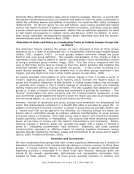
the wheat from the chaff. There is discretion to enable the adjudicators to entitle what are
considered to be publicly beneficial groups and to disqualify (or disentitle) immoral, harmful
or non-beneficial groups.
Definitional Disqualification in Non-Charity Law and Charity Law Contexts
With respect to privileges provided to groups superficially qualifying as religions but not
entitled to charitable status, the situation is more obscure. The judiciary have resorted to a
form of definitional disqualification to exclude groups which might seem to fit the definition
but which are probably disapproved of. Hence, in the UK, where the definition of religion is
‗belief in a supreme being and an expression of the belief through worship‘, it might or
might not be conceded that a group believes in a deity, but even if it does, the form of
worship adopted might not pass muster. The group is not by definition a religion if it fails to
pass through either or both of these hoops.
In Ex parte Segerdal (1970)16 Scientology failed the definitional requirement to obtain
registration of its chapel at Saint Hill Manor as a place of meeting for religious worship.
While the court did not reveal any overt hostility to Scientology, one suspects that nice
distinctions were made to disqualify a group disapproved of. It is interesting that one judge
noted ‗without feeling that I am really able to understand the subject-matter of this appeal,
I have formed, for what it may be worth, a possibly irrational, possibly ill-founded, but very
definite opinion‘.17
Definitional disqualification is also to be found in charity law cases. For example, in 1999
Scientology failed to convince the Charity Commissioners that the practices of auditing and
training constituted the ‗reverence and veneration for a supreme being … necessary to
constitute worship in English charity law‘.18 Although the Commissioners examined
additional questions, including public benefit, they did so only for ‗completeness‘, the
application having already failed by definition.
Where there is no explicit requirement that the group involved must benefit the public, or
where the judiciary have not explicitly invoked public policy parameters, as in Segerdal, the
extent to which such parameters might be invoked (or indeed have been invoked) to
disqualify an applicant group is inscrutable. However, exhibiting a more open approach in
their 1999 Charity Commission decision, the Commissioners published reasons why they
would have rebutted the presumption of public benefit normally allowed religious
organisations, even if they had not found that Scientology failed the ‗worship‘ test, being
the second prong of the English definition of religion. The reasons advanced included the
newness of the ‗religion‘, which provided little basis on which to form a judgement about
public benefit, public concern expressed through unsolicited objections to registration,
adverse press coverage and some unfavourable expressions of judicial concern.19 These
reasons indicated a willingness by the Charity Commissioners to introduce broad public
policy considerations into the adjudicative process, along with a welcome propensity to
transparency.
It seems therefore that there are alternative approaches to the disqualification of
questionable groups from privileges generally afforded to religious organisations, definitional
disqualification or prima facie inclusiveness and subsequent disqualification on transparent
grounds of public policy. In a case like Segerdal, where Scientology failed the definitional
tests laid out in England, the former clearly applied. In so doing the judges exhibited a very
British reserve in not revealing underlying public policy concerns.
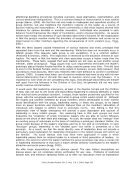
A further way to implement a form of definitional disqualification, but based on explicit
public policy considerations, would be to require the existence of mandatory ethical values
to qualify as a legally recognised religion for the purpose of fiscal entitlements.20 Indeed, it
is arguable that the propagation of ethics is an implicit requirement in the public benefit
the wheat from the chaff. There is discretion to enable the adjudicators to entitle what are
considered to be publicly beneficial groups and to disqualify (or disentitle) immoral, harmful
or non-beneficial groups.
Definitional Disqualification in Non-Charity Law and Charity Law Contexts
With respect to privileges provided to groups superficially qualifying as religions but not
entitled to charitable status, the situation is more obscure. The judiciary have resorted to a
form of definitional disqualification to exclude groups which might seem to fit the definition
but which are probably disapproved of. Hence, in the UK, where the definition of religion is
‗belief in a supreme being and an expression of the belief through worship‘, it might or
might not be conceded that a group believes in a deity, but even if it does, the form of
worship adopted might not pass muster. The group is not by definition a religion if it fails to
pass through either or both of these hoops.
In Ex parte Segerdal (1970)16 Scientology failed the definitional requirement to obtain
registration of its chapel at Saint Hill Manor as a place of meeting for religious worship.
While the court did not reveal any overt hostility to Scientology, one suspects that nice
distinctions were made to disqualify a group disapproved of. It is interesting that one judge
noted ‗without feeling that I am really able to understand the subject-matter of this appeal,
I have formed, for what it may be worth, a possibly irrational, possibly ill-founded, but very
definite opinion‘.17
Definitional disqualification is also to be found in charity law cases. For example, in 1999
Scientology failed to convince the Charity Commissioners that the practices of auditing and
training constituted the ‗reverence and veneration for a supreme being … necessary to
constitute worship in English charity law‘.18 Although the Commissioners examined
additional questions, including public benefit, they did so only for ‗completeness‘, the
application having already failed by definition.
Where there is no explicit requirement that the group involved must benefit the public, or
where the judiciary have not explicitly invoked public policy parameters, as in Segerdal, the
extent to which such parameters might be invoked (or indeed have been invoked) to
disqualify an applicant group is inscrutable. However, exhibiting a more open approach in
their 1999 Charity Commission decision, the Commissioners published reasons why they
would have rebutted the presumption of public benefit normally allowed religious
organisations, even if they had not found that Scientology failed the ‗worship‘ test, being
the second prong of the English definition of religion. The reasons advanced included the
newness of the ‗religion‘, which provided little basis on which to form a judgement about
public benefit, public concern expressed through unsolicited objections to registration,
adverse press coverage and some unfavourable expressions of judicial concern.19 These
reasons indicated a willingness by the Charity Commissioners to introduce broad public
policy considerations into the adjudicative process, along with a welcome propensity to
transparency.
It seems therefore that there are alternative approaches to the disqualification of
questionable groups from privileges generally afforded to religious organisations, definitional
disqualification or prima facie inclusiveness and subsequent disqualification on transparent
grounds of public policy. In a case like Segerdal, where Scientology failed the definitional
tests laid out in England, the former clearly applied. In so doing the judges exhibited a very
British reserve in not revealing underlying public policy concerns.
A further way to implement a form of definitional disqualification, but based on explicit
public policy considerations, would be to require the existence of mandatory ethical values
to qualify as a legally recognised religion for the purpose of fiscal entitlements.20 Indeed, it
is arguable that the propagation of ethics is an implicit requirement in the public benefit