Cultic Studies Review, Vol. 3, Nos. 2 &3, 2004, Page 159
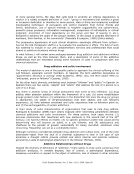
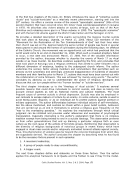
found five occupations most seen as ―honest‖ are pharmacists, clergy, medical doctors,
college teachers, and police. The five seen as least honest are car sales, advertisers,
insurance sales, lawyers, and real estate sales.
Chapter 3 describes the influence of a free gift and reciprocity. Getting something for
nothing has appeal. Gifts don‘t have to be material. Told you‘re ―just looking,‖ a
salesperson follows anyway. As time passes the feeling of obligation increases, pay for the
salesperson‘s gift of time. The longer a door-to-door or phone persuader talks to you, the
more likely you are to submit. Examples are given of techniques used to increase a need to
reciprocate: the good cop – bad cop interrogation method and the ―love bomb‖ used by
Moonies to shower a recruit with attention and recognition. The chapter ends describing
―creditors,‖ experts at manipulating gift-giving and reciprocity.
Chapter 4 focuses on the use of contrast and context. Products are advertised in a context.
Often the context is a nature or action scene with distinctive colors. Animals, children, or
target age people add to the appeal. Reverse psychology avoids product features and sells
a mood or attitude. Key marketing concepts are ―product differentiation, positioning, and
finding a niche‖ (96). A unique ―ingredient X‖ and container and package color and shape
differentiate products. Being first to satisfy a need, real or imagined, finds a niche.
Changing expectations (anchor point) enable sellers to increase prices by contrast: ―Rumors
about your basic monthly cable rate going up $10 is not going to happen. The great news is
the rate is increasing only $2 a month‖ (101). ―The decoy‖ technique is showing something
at a lower or higher price than requested. Quoting cost per day lessens the impact of the
full amount, a technique often used by charities or phone companies.
Chapter 5 explores ―stupid mental arithmetic‖ and how to avoid it. Asking versus the actual
selling price such as in real estate and cars is another example of movable anchor points.
We pay more on vacation than at home for the same items. A dollar is not always a dollar.
Listing high and selling low appeals, though both prices may be inflated. There is more
happiness in winning two or more prizes than the same amount in one prize. Car rebates
are taxable and cost us more than the same amount as a discount. We prefer payroll
deductions to one ―big check for the year‖ (119). There is more pain from a loss than
happiness from a gain. We buy now, pay later because ―we hate giving up what we
possess‖ (122).
Chapter 6 explains the dangers of ―mental shortcuts.‖ We resort to oversimplification when
faced with too many choices, such as the dazzling array of foods in supermarkets. We buy
on impulse when stressed, drowning in data, uncertain, the purchase is seen as
unimportant, ―everybody‘s doing it,‖ or you trust the seller. Perceiving a purchase as ―for a
good cause‖ or ―a good buy‖ increases sales as does slogans and repetitive ads. Strong
imagery with few facts favors mental shortcuts. Clever ads are aimed at specific groups ―by
age, gender, race, ethnicity, education, social class, and many other characteristics‖ (157).
Direct mail catalogs can differ by zip code as it correlates to buyer income.
Chapter 7 describes the power of ―escalating commitments.‖ The author attended a sales
seminar and experienced deceptive techniques of ―triggers to engage trust, framing with
contrast, and toying with mental accounting‖ (162) and ―a hidden agenda six hours into the
program‖ (163). Most car dealers require a lock-step sales process that begins with
befriending by personal greeting, a handshake and first name basis. A high trade-in (―high
ball‖), low new car price (―low ball‖), or ―bait and switch‖ from striped to costlier model
commits the buyer to the process. If detected the seller makes an excuse and turns you
over to a colleague who makes a more realistic but not final adjustment. Questions are
worded as choices, avoiding ―no‖ answers and reinforcing ―yes‖ responses: ―Do you prefer
the economy of the 4-cylinder or the power of the 6?‖ (167). ―The walk‖ through the lot
and cars of interest marks power transfer from buyer to seller. Seller leads, buyer follows.
found five occupations most seen as ―honest‖ are pharmacists, clergy, medical doctors,
college teachers, and police. The five seen as least honest are car sales, advertisers,
insurance sales, lawyers, and real estate sales.
Chapter 3 describes the influence of a free gift and reciprocity. Getting something for
nothing has appeal. Gifts don‘t have to be material. Told you‘re ―just looking,‖ a
salesperson follows anyway. As time passes the feeling of obligation increases, pay for the
salesperson‘s gift of time. The longer a door-to-door or phone persuader talks to you, the
more likely you are to submit. Examples are given of techniques used to increase a need to
reciprocate: the good cop – bad cop interrogation method and the ―love bomb‖ used by
Moonies to shower a recruit with attention and recognition. The chapter ends describing
―creditors,‖ experts at manipulating gift-giving and reciprocity.
Chapter 4 focuses on the use of contrast and context. Products are advertised in a context.
Often the context is a nature or action scene with distinctive colors. Animals, children, or
target age people add to the appeal. Reverse psychology avoids product features and sells
a mood or attitude. Key marketing concepts are ―product differentiation, positioning, and
finding a niche‖ (96). A unique ―ingredient X‖ and container and package color and shape
differentiate products. Being first to satisfy a need, real or imagined, finds a niche.
Changing expectations (anchor point) enable sellers to increase prices by contrast: ―Rumors
about your basic monthly cable rate going up $10 is not going to happen. The great news is
the rate is increasing only $2 a month‖ (101). ―The decoy‖ technique is showing something
at a lower or higher price than requested. Quoting cost per day lessens the impact of the
full amount, a technique often used by charities or phone companies.
Chapter 5 explores ―stupid mental arithmetic‖ and how to avoid it. Asking versus the actual
selling price such as in real estate and cars is another example of movable anchor points.
We pay more on vacation than at home for the same items. A dollar is not always a dollar.
Listing high and selling low appeals, though both prices may be inflated. There is more
happiness in winning two or more prizes than the same amount in one prize. Car rebates
are taxable and cost us more than the same amount as a discount. We prefer payroll
deductions to one ―big check for the year‖ (119). There is more pain from a loss than
happiness from a gain. We buy now, pay later because ―we hate giving up what we
possess‖ (122).
Chapter 6 explains the dangers of ―mental shortcuts.‖ We resort to oversimplification when
faced with too many choices, such as the dazzling array of foods in supermarkets. We buy
on impulse when stressed, drowning in data, uncertain, the purchase is seen as
unimportant, ―everybody‘s doing it,‖ or you trust the seller. Perceiving a purchase as ―for a
good cause‖ or ―a good buy‖ increases sales as does slogans and repetitive ads. Strong
imagery with few facts favors mental shortcuts. Clever ads are aimed at specific groups ―by
age, gender, race, ethnicity, education, social class, and many other characteristics‖ (157).
Direct mail catalogs can differ by zip code as it correlates to buyer income.
Chapter 7 describes the power of ―escalating commitments.‖ The author attended a sales
seminar and experienced deceptive techniques of ―triggers to engage trust, framing with
contrast, and toying with mental accounting‖ (162) and ―a hidden agenda six hours into the
program‖ (163). Most car dealers require a lock-step sales process that begins with
befriending by personal greeting, a handshake and first name basis. A high trade-in (―high
ball‖), low new car price (―low ball‖), or ―bait and switch‖ from striped to costlier model
commits the buyer to the process. If detected the seller makes an excuse and turns you
over to a colleague who makes a more realistic but not final adjustment. Questions are
worded as choices, avoiding ―no‖ answers and reinforcing ―yes‖ responses: ―Do you prefer
the economy of the 4-cylinder or the power of the 6?‖ (167). ―The walk‖ through the lot
and cars of interest marks power transfer from buyer to seller. Seller leads, buyer follows.