Cultic Studies Review, Vol. 3, Nos. 2 &3, 2004, Page 51
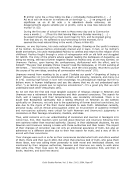
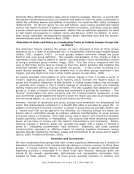
In the field of cultic involvement, once the addictive relationship is established in the current
member, it is possible to observe a particular set of symptoms. Regarding the symptoms
that would allow for the presence of ―cultic addiction‖ to be determined, the following
criteria have been tentatively proposed (Cubero, 2001) these have been extracted from
clinical records of the patients that have sought out our services, which at the present
moment add up to 1,170 cases.
1. Excessive time dedicated to group (at least one of the following criteria): a) the time
dedicated to the group tends to increase progressively b) time dedicated to the
family, work, or social relationships decreases excessively.
2. The subject reacts with great irritability and/or anxiety when unable to attend
meetings or group activities.
3. Subject manifests intense affiliation feelings toward the group and its members.
4. Changes in attitude toward people in his previous environment (at least two of the
following): a) cold and distant attitude, b) lies, c) fear, and d) hostility.
5. Unmeasured self-criticism of his pre-cult past.
6. Conceding excessive importance to the group, this does not adjust to reality.
7. Tolerates and justifies personal exploitation in different areas for example, work,
economic, or sexual.
8. Increase of daily activities as a consequence of the growing dedication to the group.
9. Experiences of great euphoria or enthusiasm.
10. Tendency to a monothematic discourse.
11. Behavioral changes that stand out that are in accordance with group norms or habits
(at least two of the following criteria): a) in dressing or personal care, b) in
language, c) in hobbies, d) in sexual behavior.
Addictive Relationships
Addiction is a psychiatric concept. It is not a psychopathological entity that we can find
within psychoanalytical conceptions neither is cultism a problem that has elicited great
interest among psychoanalysts.
In Freud‘s work we cannot find any specific text dedicated to the study of addiction,
although there are isolated or brief references in several of his writings. Some of his
observations merit our attention. This is the case of the possibility of addictions without
drugs. In fact, Freud was the first psychoanalyst to highlight that there was a certain
relationship between drug addictions and those without drugs, especially in relation to the
problem of pathological gambling, as a result of his study of Dostoevsky (Freud, 1928).
In his first writings, after the period in which he experimented with cocaine as an analgesic,
Freud suggested that compulsory masturbation would be the first addiction and that the rest
of addictions (to alcohol, tobacco, morphine, etc.) came as substituting formations (Freud,
1897). He observed, as well, that under the influence of toxic effects the adult regresses
behaviorally to a childish mental functioning, weakening the barrier of repression and super-
ego self criticism (Freud, 1912, 1928).
Moreover, among the effects of the toxic object, Freud emphasized suppressing repression,
manic triumph, decrease of self-criticism, and destruction of sublimation processes. He
established interesting parallelisms between intoxication and other manic states, where
intoxication allows the triumph of the pleasure principle over the reality principle (Freud,
1912, 1928).
In the field of cultic involvement, once the addictive relationship is established in the current
member, it is possible to observe a particular set of symptoms. Regarding the symptoms
that would allow for the presence of ―cultic addiction‖ to be determined, the following
criteria have been tentatively proposed (Cubero, 2001) these have been extracted from
clinical records of the patients that have sought out our services, which at the present
moment add up to 1,170 cases.
1. Excessive time dedicated to group (at least one of the following criteria): a) the time
dedicated to the group tends to increase progressively b) time dedicated to the
family, work, or social relationships decreases excessively.
2. The subject reacts with great irritability and/or anxiety when unable to attend
meetings or group activities.
3. Subject manifests intense affiliation feelings toward the group and its members.
4. Changes in attitude toward people in his previous environment (at least two of the
following): a) cold and distant attitude, b) lies, c) fear, and d) hostility.
5. Unmeasured self-criticism of his pre-cult past.
6. Conceding excessive importance to the group, this does not adjust to reality.
7. Tolerates and justifies personal exploitation in different areas for example, work,
economic, or sexual.
8. Increase of daily activities as a consequence of the growing dedication to the group.
9. Experiences of great euphoria or enthusiasm.
10. Tendency to a monothematic discourse.
11. Behavioral changes that stand out that are in accordance with group norms or habits
(at least two of the following criteria): a) in dressing or personal care, b) in
language, c) in hobbies, d) in sexual behavior.
Addictive Relationships
Addiction is a psychiatric concept. It is not a psychopathological entity that we can find
within psychoanalytical conceptions neither is cultism a problem that has elicited great
interest among psychoanalysts.
In Freud‘s work we cannot find any specific text dedicated to the study of addiction,
although there are isolated or brief references in several of his writings. Some of his
observations merit our attention. This is the case of the possibility of addictions without
drugs. In fact, Freud was the first psychoanalyst to highlight that there was a certain
relationship between drug addictions and those without drugs, especially in relation to the
problem of pathological gambling, as a result of his study of Dostoevsky (Freud, 1928).
In his first writings, after the period in which he experimented with cocaine as an analgesic,
Freud suggested that compulsory masturbation would be the first addiction and that the rest
of addictions (to alcohol, tobacco, morphine, etc.) came as substituting formations (Freud,
1897). He observed, as well, that under the influence of toxic effects the adult regresses
behaviorally to a childish mental functioning, weakening the barrier of repression and super-
ego self criticism (Freud, 1912, 1928).
Moreover, among the effects of the toxic object, Freud emphasized suppressing repression,
manic triumph, decrease of self-criticism, and destruction of sublimation processes. He
established interesting parallelisms between intoxication and other manic states, where
intoxication allows the triumph of the pleasure principle over the reality principle (Freud,
1912, 1928).