Cultic Studies Review, Vol. 3, Nos. 2 &3, 2004, Page 44
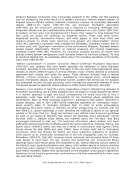
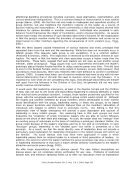
So at the time of their religious crisis, both writers reject a blind, irrational faith in religious
authority. Newman would write in a work intimately involved in his later ―great change‖ to
Catholicism: ―An argument is needed, unless Christianity is to abandon the province of
argument‖ (Development 31). From Mayers‘ letter above, we note the pupil did not comply
without reservation to the principles instilled in him with such great insistence and concern.
The ―absolute obedience‖ rejected later in the ―Letter to the Duke of Norfolk‖ is
unacceptable from Newman‘s first conversion, however emotional and salutary (Difficulties
243).
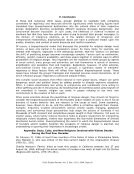
However, Newman, though not ―absolute,‖ renders obedience, unto Mayers, as Unamuno
critically appraised Catholicism, though their ideas were constantly attuned. Newman read
the recommended devotional books: Beveridge, Doddridge, Law, and Romaine, ―all of the
school of Calvin.‖ He listened to the sermons that led him towards predestination and
efficacious grace. He even scribbled some writings, one of them drawn clearly from the
Calvinistic inspiration: ―These will be punished with eternal punishment.‖ (Letters and
Correspondence 1:21). More and more, the problem of predestination took possession of his
spirit and an obsession with eternal salvation accompanied it. Newman questioned whether
his teenage conversion really was the ―second birth‖ described by the books and an all too
impressive master. Later when his inner life grew strong, the realities of pastoral ministry
showed him the inconsistency of this ―detestable doctrine‖ of predestination (Apologia 17).
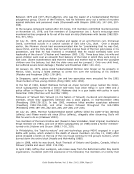
Throughout his life Unamuno had a problem with a simplistic faith, a ―coal-worker‘s faith‖ as
he often described it. Indeed, he wished to live and die in his Christian faith, but in the
historical Christ and his message, as each one understands it, not in Church dogmas and
authorities. Likewise, rejecting both the intellectualism of the irrational and the simplistic
faith of the coal-worker, Unamuno insists on trust, not belief, as the essence of faith.
Unamuno further explains the simplistic faith as a ―vicious‖ illogical circle, in which Church
doctrine and popular faith explain away each another:
¡Terrible fe la del carbonero! Porque ¿a qué viene a reducirse la fe del
carbonero?
--¿Qué crees?
--Lo que cree y enseña nuestra Santa Madre la Iglesia.
--¿Y qué cree y enseña nuestra Santa Madre la Iglesia?
--Lo que yo creo.
Y el círculo vicioso continúa. (La fe 1:266)
The terrible faith of the charcoal-maker! Why, what is the reduction of the
faith of the charcoal-maker?
--What do you believe?
--Whatever Holy Mother Church believes and teaches.
--And what does Holy Mother Church believe and teach?
--What I believe.
And the vicious circle goes on! (Faith 155)
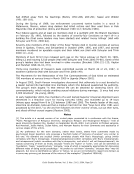
Unamuno also obviously had difficulties with family authorities due to his new religious
convictions. In Paz en la guerra—Peace in War—Pachico, a character in the novel clearly
modeled on Unamuno himself, gives up his religious practice in Madrid. For a time, he
attended Church services regularly, then only on feast-days, and finally gave up altogether,
seeing he no longer found any meaning in the act:
So at the time of their religious crisis, both writers reject a blind, irrational faith in religious
authority. Newman would write in a work intimately involved in his later ―great change‖ to
Catholicism: ―An argument is needed, unless Christianity is to abandon the province of
argument‖ (Development 31). From Mayers‘ letter above, we note the pupil did not comply
without reservation to the principles instilled in him with such great insistence and concern.
The ―absolute obedience‖ rejected later in the ―Letter to the Duke of Norfolk‖ is
unacceptable from Newman‘s first conversion, however emotional and salutary (Difficulties
243).
However, Newman, though not ―absolute,‖ renders obedience, unto Mayers, as Unamuno
critically appraised Catholicism, though their ideas were constantly attuned. Newman read
the recommended devotional books: Beveridge, Doddridge, Law, and Romaine, ―all of the
school of Calvin.‖ He listened to the sermons that led him towards predestination and
efficacious grace. He even scribbled some writings, one of them drawn clearly from the
Calvinistic inspiration: ―These will be punished with eternal punishment.‖ (Letters and
Correspondence 1:21). More and more, the problem of predestination took possession of his
spirit and an obsession with eternal salvation accompanied it. Newman questioned whether
his teenage conversion really was the ―second birth‖ described by the books and an all too
impressive master. Later when his inner life grew strong, the realities of pastoral ministry
showed him the inconsistency of this ―detestable doctrine‖ of predestination (Apologia 17).
Throughout his life Unamuno had a problem with a simplistic faith, a ―coal-worker‘s faith‖ as
he often described it. Indeed, he wished to live and die in his Christian faith, but in the
historical Christ and his message, as each one understands it, not in Church dogmas and
authorities. Likewise, rejecting both the intellectualism of the irrational and the simplistic
faith of the coal-worker, Unamuno insists on trust, not belief, as the essence of faith.
Unamuno further explains the simplistic faith as a ―vicious‖ illogical circle, in which Church
doctrine and popular faith explain away each another:
¡Terrible fe la del carbonero! Porque ¿a qué viene a reducirse la fe del
carbonero?
--¿Qué crees?
--Lo que cree y enseña nuestra Santa Madre la Iglesia.
--¿Y qué cree y enseña nuestra Santa Madre la Iglesia?
--Lo que yo creo.
Y el círculo vicioso continúa. (La fe 1:266)
The terrible faith of the charcoal-maker! Why, what is the reduction of the
faith of the charcoal-maker?
--What do you believe?
--Whatever Holy Mother Church believes and teaches.
--And what does Holy Mother Church believe and teach?
--What I believe.
And the vicious circle goes on! (Faith 155)
Unamuno also obviously had difficulties with family authorities due to his new religious
convictions. In Paz en la guerra—Peace in War—Pachico, a character in the novel clearly
modeled on Unamuno himself, gives up his religious practice in Madrid. For a time, he
attended Church services regularly, then only on feast-days, and finally gave up altogether,
seeing he no longer found any meaning in the act: