Cultic Studies Journal, Vol. 12, No. 1, 1995, page 68
colleague of the counter-cult movement which should welcome and employ the gifts of one
of its newest comrades.
Richard Dowhower
All Saints Lutheran Church
More Revealed: A Critical Analysis of Alcoholics Anonymous and the Twelve
Steps. K. Ragge. Alert Publishing, Henderson, NV, 1991, 250 pages.
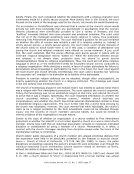
This book is a critique of Alcoholics Anonymous and its 12-step recovery program. There is
no table of contents or subject index and no chapters designated as such, only one-line
bold-print subject headings. There are 243 footnotes and six pages of references. Books
recommended in Appendix C reflect the author‟s bias (e.g., Lifton, Schein, Hassan, Milgram,
Szasz).
The author‟s preface states he “made every effort to be fair” and “to stay as close as
possible to original, universal sources of AA doctrine” but concedes it is “not a scientific
work per se.” This is evident in unclear, incomplete footnotes such as on page 27 where it is
reported that certain AA members had a “pathetic outcome” to “two important MMPI
scales,” such as “the Finney Addiction Scale.” The Finney is a subscale, not routinely given,
and therefore cannot be regarded as “important.” Such half truths weaken the book.
Elsewhere there is excessive, useless detail --for example, footnote 1 (“Horace, book 1, Ep.
VI, cited from Harrison ,1934”), referring to the quote on page 1 (“The worst of madmen is
a saint run wild” --Pope). How could Horace quote Alexander Pope (if that‟s the “Pope” in
question) who lived centuries later? Did Pope quote Horace or did Harrison in 1934 think he
did? The reader is left with a quote hanging somewhere among three sources.
Three appendices are devoted to “finding assistance,” the SAP subtest (Substance Abuse
Proclivity Profile) from the MMPI (from the outdated original MMPI, now replaced by MMPI-
2), and “further reading” of books dating from a very old 1932 through the 1960s and
1970s.
Ragge considers AA to be more like a cult than a self-help group. He questions recovery
statistics and the disease and addiction models. He refers to AA as “the 12-step religion.”
Ragge recommends terminating treatment if a therapist suggests attending AA meetings (p.
230), considers the word spiritual a “danger sign,” and “self pity a gross misnomer of scant
value” (p. 234). He charges that the SAP test is used to validate AA “doctrine” and to Again
acceptability.” The AA program is more like indoctrination, “manipulation through fear” (p.
31).
The book devotes much space to minor details, little space to more important subjects.
Robert Jay Lifton is referred to as “the world‟s foremost authority on totalitarian
organizations” (p. 10). The “subconscious mind” is described (p. 59) when the more precise
preferred term is the “unconscious.” Broad generalizations are made from limited data such
as “three times as many alcoholics moderate drinking as abstain ...treatment sabotages the
ability to moderate ...teaches learned helplessness,” and “for most problem drinkers
abstinence is an unrealistic goal” (pp. 97B99).
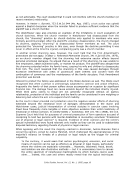
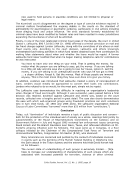
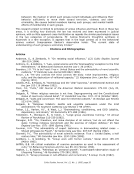
A basic problem, Ragge maintains, is when AA becomes the sole source of credible
information about oneself (p. 134). He contends that moderation may be a better
alternative and a more attainable goal than total abstinence, which flatly contradicts AA
doctrine of “one drink, one drunk.” He worries about increased suicide risk if the drinker
sees AA as “the last house on the block” for help (p. 175) and cites three persons who
attempted suicide in an AA group of 12.
colleague of the counter-cult movement which should welcome and employ the gifts of one
of its newest comrades.
Richard Dowhower
All Saints Lutheran Church
More Revealed: A Critical Analysis of Alcoholics Anonymous and the Twelve
Steps. K. Ragge. Alert Publishing, Henderson, NV, 1991, 250 pages.
This book is a critique of Alcoholics Anonymous and its 12-step recovery program. There is
no table of contents or subject index and no chapters designated as such, only one-line
bold-print subject headings. There are 243 footnotes and six pages of references. Books
recommended in Appendix C reflect the author‟s bias (e.g., Lifton, Schein, Hassan, Milgram,
Szasz).
The author‟s preface states he “made every effort to be fair” and “to stay as close as
possible to original, universal sources of AA doctrine” but concedes it is “not a scientific
work per se.” This is evident in unclear, incomplete footnotes such as on page 27 where it is
reported that certain AA members had a “pathetic outcome” to “two important MMPI
scales,” such as “the Finney Addiction Scale.” The Finney is a subscale, not routinely given,
and therefore cannot be regarded as “important.” Such half truths weaken the book.
Elsewhere there is excessive, useless detail --for example, footnote 1 (“Horace, book 1, Ep.
VI, cited from Harrison ,1934”), referring to the quote on page 1 (“The worst of madmen is
a saint run wild” --Pope). How could Horace quote Alexander Pope (if that‟s the “Pope” in
question) who lived centuries later? Did Pope quote Horace or did Harrison in 1934 think he
did? The reader is left with a quote hanging somewhere among three sources.
Three appendices are devoted to “finding assistance,” the SAP subtest (Substance Abuse
Proclivity Profile) from the MMPI (from the outdated original MMPI, now replaced by MMPI-
2), and “further reading” of books dating from a very old 1932 through the 1960s and
1970s.
Ragge considers AA to be more like a cult than a self-help group. He questions recovery
statistics and the disease and addiction models. He refers to AA as “the 12-step religion.”
Ragge recommends terminating treatment if a therapist suggests attending AA meetings (p.
230), considers the word spiritual a “danger sign,” and “self pity a gross misnomer of scant
value” (p. 234). He charges that the SAP test is used to validate AA “doctrine” and to Again
acceptability.” The AA program is more like indoctrination, “manipulation through fear” (p.
31).
The book devotes much space to minor details, little space to more important subjects.
Robert Jay Lifton is referred to as “the world‟s foremost authority on totalitarian
organizations” (p. 10). The “subconscious mind” is described (p. 59) when the more precise
preferred term is the “unconscious.” Broad generalizations are made from limited data such
as “three times as many alcoholics moderate drinking as abstain ...treatment sabotages the
ability to moderate ...teaches learned helplessness,” and “for most problem drinkers
abstinence is an unrealistic goal” (pp. 97B99).
A basic problem, Ragge maintains, is when AA becomes the sole source of credible
information about oneself (p. 134). He contends that moderation may be a better
alternative and a more attainable goal than total abstinence, which flatly contradicts AA
doctrine of “one drink, one drunk.” He worries about increased suicide risk if the drinker
sees AA as “the last house on the block” for help (p. 175) and cites three persons who
attempted suicide in an AA group of 12.