Cultic Studies Journal, Vol. 12, No. 1, 1995, page 66
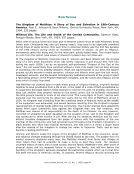
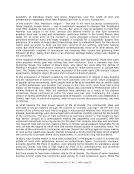
government was in theory democratic, Noyes usually had the final say in all decisions.
Dissent, while not actually prohibited, was strongly discouraged. Few dared oppose “Father
Noyes,” and those who did usually left the community. Sexual freedom was more theoretical
than actual, with Noyes‟s sister keeping careful track of who was sleeping with whom to
ensure that couplings conformed to the rules, and to use sexual frustration as a punishment
for those who challenged group norms. The practice of complex marriage required sexual
initiation by their elders of young people who had attained puberty, something which would
be regarded as abusive today. Access to some documents relating to sexual politics at
Oneida, and particularly accusations of sexual misconduct brought against Noyes, is still
restricted, leading one to wonder what dark secrets may be thus concealed.
Bible Communism did not survive the second generation at Oneida. Despite the careful
breeding intended to create a race of spiritually superior individuals, the children of the
founders were less than enthusiastic about their parents‟ way of life. In 1879, after a
lengthy struggle over leadership and a rumored plot by a group of clergymen to arrest him
on unspecified criminal charges, Noyes secretly left Oneida for Canada, where he would
remain with a few faithful followers until his death seven years later. Shortly after Noyes‟s
departure, the practice of complex marriage and eventually communism itself were dropped
by the community. At the end of 1880, Oneida became a joint-stock company which
continues to this day as one of the world‟s leading manufacturers of tableware.
Cultic deviations from orthodoxy need to be examined in the social, as well as religious,
contexts in which they arise if we are to have any hope of understanding them. The authors
of The Kingdom of Matthias and Without Sin have done cult observers a service in providing
balanced, well-written accounts of two very different groups with a common origin in the
religious ferment of their time, groups which have more than a few parallels to those of our
own time.
James C. Moyers, M.A., M.F.C.C.
Berkeley, California
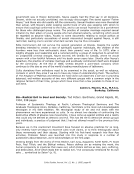
Sin--Radical Evil in Soul and Society. Ted Peters. Eerdmans, Grand Rapids, MI,
1994, 338 pages.
Professor of Systematic Theology at Pacific Lutheran Theological Seminary and The
Graduate Theological Union, Berkeley, California, Ted Peters is the most cult-knowledgeable
theologian in my faith tradition. His theological study of sin and evil deals with the
phenomenon we have experienced as cults. In my almost two decades of confronting the
destructive effects of abusive new movements, I have come up against entities and a reality
that could only be defined as demonic and evil. This has led me to demonize certain groups
and individuals, a practice of judgment that I had not allowed myself in the previous forty
years.
Because we in the countercult movement have focused on abusive practices for so long,
only recently have we begun to examine cultic truth claims, or to think theologically about
these movements and their abuses. Starting with his first-hand research into New Age
activities, Professor Peters was launched into this study in response to a number of
questioners about Satanism, as he acknowledges on the first page.
Drawing deeply from the works of Ernst Becker, Carl Jung, Augustine, Karth Barth, M. Scott
Peck, Paul Tillich, and the Biblical writers, Peters defines sin as missing the mark, the
human propensity to injustices that cause evil, which Peters defines as loss, pain, suffering,
and destruction. All of which leads him to radical evil, “evil consciously embraced for its own
sake ...symbolized by Satan” (p. 9).
government was in theory democratic, Noyes usually had the final say in all decisions.
Dissent, while not actually prohibited, was strongly discouraged. Few dared oppose “Father
Noyes,” and those who did usually left the community. Sexual freedom was more theoretical
than actual, with Noyes‟s sister keeping careful track of who was sleeping with whom to
ensure that couplings conformed to the rules, and to use sexual frustration as a punishment
for those who challenged group norms. The practice of complex marriage required sexual
initiation by their elders of young people who had attained puberty, something which would
be regarded as abusive today. Access to some documents relating to sexual politics at
Oneida, and particularly accusations of sexual misconduct brought against Noyes, is still
restricted, leading one to wonder what dark secrets may be thus concealed.
Bible Communism did not survive the second generation at Oneida. Despite the careful
breeding intended to create a race of spiritually superior individuals, the children of the
founders were less than enthusiastic about their parents‟ way of life. In 1879, after a
lengthy struggle over leadership and a rumored plot by a group of clergymen to arrest him
on unspecified criminal charges, Noyes secretly left Oneida for Canada, where he would
remain with a few faithful followers until his death seven years later. Shortly after Noyes‟s
departure, the practice of complex marriage and eventually communism itself were dropped
by the community. At the end of 1880, Oneida became a joint-stock company which
continues to this day as one of the world‟s leading manufacturers of tableware.
Cultic deviations from orthodoxy need to be examined in the social, as well as religious,
contexts in which they arise if we are to have any hope of understanding them. The authors
of The Kingdom of Matthias and Without Sin have done cult observers a service in providing
balanced, well-written accounts of two very different groups with a common origin in the
religious ferment of their time, groups which have more than a few parallels to those of our
own time.
James C. Moyers, M.A., M.F.C.C.
Berkeley, California
Sin--Radical Evil in Soul and Society. Ted Peters. Eerdmans, Grand Rapids, MI,
1994, 338 pages.
Professor of Systematic Theology at Pacific Lutheran Theological Seminary and The
Graduate Theological Union, Berkeley, California, Ted Peters is the most cult-knowledgeable
theologian in my faith tradition. His theological study of sin and evil deals with the
phenomenon we have experienced as cults. In my almost two decades of confronting the
destructive effects of abusive new movements, I have come up against entities and a reality
that could only be defined as demonic and evil. This has led me to demonize certain groups
and individuals, a practice of judgment that I had not allowed myself in the previous forty
years.
Because we in the countercult movement have focused on abusive practices for so long,
only recently have we begun to examine cultic truth claims, or to think theologically about
these movements and their abuses. Starting with his first-hand research into New Age
activities, Professor Peters was launched into this study in response to a number of
questioners about Satanism, as he acknowledges on the first page.
Drawing deeply from the works of Ernst Becker, Carl Jung, Augustine, Karth Barth, M. Scott
Peck, Paul Tillich, and the Biblical writers, Peters defines sin as missing the mark, the
human propensity to injustices that cause evil, which Peters defines as loss, pain, suffering,
and destruction. All of which leads him to radical evil, “evil consciously embraced for its own
sake ...symbolized by Satan” (p. 9).