Cultic Studies Journal, Vol. 12, No. 1, 1995, page 31
Expanding the Groupthink Explanation
to the Study of Contemporary Cults
Mark N. Wexler, Ph.D.*
Simon Fraser University
Burnaby, British Columbia
Abstract
Janis‟s groupthink model is the most frequently used model in studying group
decision making. This paper critically reviews Janis‟s model and seeks to evaluate
its applicability to the study of decision making in cults. Janis‟s model is found
wanting. It fails to look at (1) how cult leaders, through the use of ordeals, draws a
loyal, elite group of decision makers about them, (2) how the decision elite within a
cult use a mechanism of social control based on guilt, fear, or shame to create
deindividuation in cult members, (3) how the decision elite are imbued with the
virtue of infallibility and how this is used to create enthusiastic conformity in cult
members, and (4) how the wild premises and erratic decision making in the cult are
facilitated by the awe in which the cult members hold the charismatic leader.
Cults and their leaders have often engaged in risky, low-quality, and even pathological
decision-making processes. Students of destructive and psychologically manipulative cults
need go no further than the decision by members of the Aum Shinri Kyo (Supreme Truth)
cult to release poisonous gas in the Tokyo subway system, the mass suicide in Jonestown,
or the decision by David Koresh and his followers to remain behind their barricaded
compound in Waco, Texas, to realize that decision making within and by cults often departs
from the canons of rationality. In psychology and the policy sciences, Janis (1971, 1972,
1982) has coined the “groupthink” concept to explain a particular kind of group pathology
that he believes contributed to U.S. foreign policy fiascoes such as the Bay of Pigs invasion,
the invasion of North Korea, and the escalation of the Vietnam War. Janis and those who
followed in the study of decision pathologies within group contexts (Aldag &Fuller, 1993
Cline, 1990 Hart, 1990, 1991) have expanded and modified the initial groupthink
explanation beyond the scrutiny of political policy analysts (Esser &Lindoerfer, 1989
Huseman &Driver, 1979 Moorhead, Ference, &Neck, 1991). As a result, the stage has
been set for a model of how and why the decision-making process engaged in by cults and
their members tends to be unreliable.
My purpose here is to clarify and expand the groupthink model in order to aid students of
cults and cultlike processes in portraying the manner in which cults engage in faulty
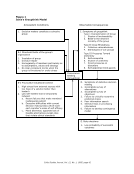
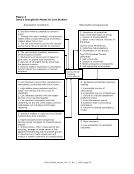
decision-making processes. To accomplish this, I will (1) review Janis‟s original model of
groupthink, (2) point out the difficulties in applying Janis‟s model to decision making in
cults, (3) modify the model, particularly the antecedents, to make it relevant to cultic
studies, and (4) conclude with some suggestions for future research on groupthink in cultic
studies.
Janis’s Groupthink Model
Groupthink refers to a restrictive mode of thinking pursued by a group that emphasizes
consensus rather than a careful and realistic analysis of the decision alternatives. The
*I would like to thank Jean Last for her assistance.
Expanding the Groupthink Explanation
to the Study of Contemporary Cults
Mark N. Wexler, Ph.D.*
Simon Fraser University
Burnaby, British Columbia
Abstract
Janis‟s groupthink model is the most frequently used model in studying group
decision making. This paper critically reviews Janis‟s model and seeks to evaluate
its applicability to the study of decision making in cults. Janis‟s model is found
wanting. It fails to look at (1) how cult leaders, through the use of ordeals, draws a
loyal, elite group of decision makers about them, (2) how the decision elite within a
cult use a mechanism of social control based on guilt, fear, or shame to create
deindividuation in cult members, (3) how the decision elite are imbued with the
virtue of infallibility and how this is used to create enthusiastic conformity in cult
members, and (4) how the wild premises and erratic decision making in the cult are
facilitated by the awe in which the cult members hold the charismatic leader.
Cults and their leaders have often engaged in risky, low-quality, and even pathological
decision-making processes. Students of destructive and psychologically manipulative cults
need go no further than the decision by members of the Aum Shinri Kyo (Supreme Truth)
cult to release poisonous gas in the Tokyo subway system, the mass suicide in Jonestown,
or the decision by David Koresh and his followers to remain behind their barricaded
compound in Waco, Texas, to realize that decision making within and by cults often departs
from the canons of rationality. In psychology and the policy sciences, Janis (1971, 1972,
1982) has coined the “groupthink” concept to explain a particular kind of group pathology
that he believes contributed to U.S. foreign policy fiascoes such as the Bay of Pigs invasion,
the invasion of North Korea, and the escalation of the Vietnam War. Janis and those who
followed in the study of decision pathologies within group contexts (Aldag &Fuller, 1993
Cline, 1990 Hart, 1990, 1991) have expanded and modified the initial groupthink
explanation beyond the scrutiny of political policy analysts (Esser &Lindoerfer, 1989
Huseman &Driver, 1979 Moorhead, Ference, &Neck, 1991). As a result, the stage has
been set for a model of how and why the decision-making process engaged in by cults and
their members tends to be unreliable.
My purpose here is to clarify and expand the groupthink model in order to aid students of
cults and cultlike processes in portraying the manner in which cults engage in faulty
decision-making processes. To accomplish this, I will (1) review Janis‟s original model of
groupthink, (2) point out the difficulties in applying Janis‟s model to decision making in
cults, (3) modify the model, particularly the antecedents, to make it relevant to cultic
studies, and (4) conclude with some suggestions for future research on groupthink in cultic
studies.
Janis’s Groupthink Model
Groupthink refers to a restrictive mode of thinking pursued by a group that emphasizes
consensus rather than a careful and realistic analysis of the decision alternatives. The
*I would like to thank Jean Last for her assistance.