Cultic Studies Journal, Vol. 12, No. 1, 1995, page 39
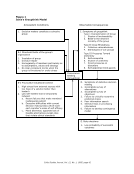
Deindividuation, the second major modification of Janis‟s groupthink model, replaces the
structural faults (see Fig. 1) as an antecedent to concurrence thinking. According to
Zimbardo (1970), deindividuation is an intrapsychic state characterized by an absence of
self-awareness and a tendency to engage in uninhibited activities. Within the framework of
explanations of collective behavior (Rose, 1982 Turner &Killian, 1987), deindividuation is
seen as arising when individuals become full-fledged members of a new group, ideology, or
belief system, shedding old behavior guidelines and adopting a new set of emerging norms.
These new fledgling norms enable the individuals, within the context of the new group,
ideology, or belief system, to engage in behaviors otherwise precluded by their conformity
to their previously held norms.
Deindividuation, in Janis‟s advisory policy-making groups, is not discussed. Janis attempts
to explain the concurrence seeking as a gradual evolution of conformity to group norms
without making clear what happened to diminish the integrity of an individual‟s norms of
criticality and care-to-detail. It is assumed in Janis‟s work that the emergence of a
provocative situational context replete with stress and a high likelihood of moral quandaries
and incidence of low self-esteem works to threaten individuals and cower them into
submission to the group. This process is aided by the fact that Janis‟s group included
specialists in the same area of expertise, drawn from the same social class, and often
educated to act in the same political and social contexts.
In cults, deindividuation is rooted deeply in the raison d‟être of the cult. It is not a by-
product of situational, contextual, or social factors that happen to coalesce. Cults exist to
provide individuals with a change in their belief systems, behaviors, and locus of control.
Cults cut new members off from contact with their families and earlier friends focus
attention on noncult members as dupes, lesser beings, or even, at times, the enemy and
move new members about geographically in order to minimize social anchors. The cult, it is
clear, practices social control over its members. It does so by mobilizing knowledge of the
individual‟s past --the tools are guilt, fear, and shame --to create the image of a far more
attractive future. This future, so the true believer is convinced, can only be attained by
submitting to the norms of the group as a whole.
These norms are set by the decision-making elite. Here is where we locate the third major
modification to Janis‟s groupthink model. Once deindividuation has been achieved, the
individual can be trusted to make decisions for the group as a whole. The key here is that
trust is extended to individuals once they have proven that they no longer merely comply
with the norms of the cult but enthusiastically conform to the group‟s agenda. Monitoring
and close supervision of new members diminish as this conformist enthusiasm flowers. The
growth of conformity moves along a continuum from desire to attain the proposed goals of
the cult, to fear of punishment for transgressing the norms of the cult, to compliance with
the norms and, finally, to enthusiastic conformity to the infallible virtues of the cult‟s elite
and, of course, its leader.
In Janis‟s model, the continuum from compliance to enthusiastic conformity is not made
explicit. This is because Janis is interested solely in the premature group consensus that
emerges in groupthink. This consensus is a by-product of dysfunctional social influences
that distort and lower the quality of what, in Janis‟s eye, is the true function of the group:
making high-quality rational decisions.
In cults, the premature consensus is more complex because the student who utilizes the
cult as a decision-making group fails to make explicit that it is consensus that is the goal of
the cult and decision making is the by-product. The continuum from early member
compliance to, in time, enthusiastic conformity can be called the socialization process of
successful cults. In cults there is an insistence upon a correct and singularly clear path that
all members progress along in order to become more central to the cult. This single path
Deindividuation, the second major modification of Janis‟s groupthink model, replaces the
structural faults (see Fig. 1) as an antecedent to concurrence thinking. According to
Zimbardo (1970), deindividuation is an intrapsychic state characterized by an absence of
self-awareness and a tendency to engage in uninhibited activities. Within the framework of
explanations of collective behavior (Rose, 1982 Turner &Killian, 1987), deindividuation is
seen as arising when individuals become full-fledged members of a new group, ideology, or
belief system, shedding old behavior guidelines and adopting a new set of emerging norms.
These new fledgling norms enable the individuals, within the context of the new group,
ideology, or belief system, to engage in behaviors otherwise precluded by their conformity
to their previously held norms.
Deindividuation, in Janis‟s advisory policy-making groups, is not discussed. Janis attempts
to explain the concurrence seeking as a gradual evolution of conformity to group norms
without making clear what happened to diminish the integrity of an individual‟s norms of
criticality and care-to-detail. It is assumed in Janis‟s work that the emergence of a
provocative situational context replete with stress and a high likelihood of moral quandaries
and incidence of low self-esteem works to threaten individuals and cower them into
submission to the group. This process is aided by the fact that Janis‟s group included
specialists in the same area of expertise, drawn from the same social class, and often
educated to act in the same political and social contexts.
In cults, deindividuation is rooted deeply in the raison d‟être of the cult. It is not a by-
product of situational, contextual, or social factors that happen to coalesce. Cults exist to
provide individuals with a change in their belief systems, behaviors, and locus of control.
Cults cut new members off from contact with their families and earlier friends focus
attention on noncult members as dupes, lesser beings, or even, at times, the enemy and
move new members about geographically in order to minimize social anchors. The cult, it is
clear, practices social control over its members. It does so by mobilizing knowledge of the
individual‟s past --the tools are guilt, fear, and shame --to create the image of a far more
attractive future. This future, so the true believer is convinced, can only be attained by
submitting to the norms of the group as a whole.
These norms are set by the decision-making elite. Here is where we locate the third major
modification to Janis‟s groupthink model. Once deindividuation has been achieved, the
individual can be trusted to make decisions for the group as a whole. The key here is that
trust is extended to individuals once they have proven that they no longer merely comply
with the norms of the cult but enthusiastically conform to the group‟s agenda. Monitoring
and close supervision of new members diminish as this conformist enthusiasm flowers. The
growth of conformity moves along a continuum from desire to attain the proposed goals of
the cult, to fear of punishment for transgressing the norms of the cult, to compliance with
the norms and, finally, to enthusiastic conformity to the infallible virtues of the cult‟s elite
and, of course, its leader.
In Janis‟s model, the continuum from compliance to enthusiastic conformity is not made
explicit. This is because Janis is interested solely in the premature group consensus that
emerges in groupthink. This consensus is a by-product of dysfunctional social influences
that distort and lower the quality of what, in Janis‟s eye, is the true function of the group:
making high-quality rational decisions.
In cults, the premature consensus is more complex because the student who utilizes the
cult as a decision-making group fails to make explicit that it is consensus that is the goal of
the cult and decision making is the by-product. The continuum from early member
compliance to, in time, enthusiastic conformity can be called the socialization process of
successful cults. In cults there is an insistence upon a correct and singularly clear path that
all members progress along in order to become more central to the cult. This single path