Cultic Studies Journal, Vol. 12, No. 1, 1995, page 32
fundamental problem underlying groupthink is the manner in which the group concedes to
pressure to conform. Conformity in and of itself is not harmful however, when it subverts
the meaningful pursuit of issues and opinions relevant to the problem at hand, conformity
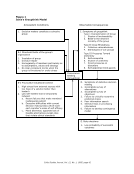
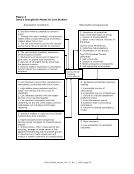
can produce disastrous results. Janis calls this conformity concurrence seeking (see Fig. 1 at
end of article). “Groupthink” is “a mode of thinking that people engage in when they are
deeply involved in a cohesive group, when the members‟ striving for unanimity overrides
their motivation to realistically appraise alternative courses of action.... Groupthink refers to
a deterioration of mental efficiencies, reality testing, and moral judgment that results from
in-group pressures” (Janis, 1982, p. 9).
As an example of the groupthink phenomenon, consider an historical instance used by Janis
(1982): the Kennedy administration‟s decision to invade Cuba at the Bay of Pigs in 1963. As
a policy decision undertaken by a group, the Bay of Pigs fiasco ranks among the worst
blunders ever enacted by an American administration (Wynden, 1979). In detailing this and
other faulty group decisions, Janis singled out eight main symptoms of groupthink: the
group possession of (1) an illusion of invulnerability, (2) a faulty grasp of its own moral
principles, (3) the skills for intellectualization and rationalization, (4) advanced capabilities
in stereotyping others, (5) a willingness to self-censor, (6) desire to act with unanimity, (7)
the ability to put direct pressure on dissidents, and (8) reliance on self-appointed mind
guards to maintain the belief system of the group. These eight symptoms were used by
groups to sustain an esprit de corps during rough times but, as Janis was quick to point out,
also facilitated a rapid decline in the group‟s ability at reality testing. Consequently, decision
groups that possess characteristics of groupthink are highly cohesive yet extremely prone to
poor decision making.
The key to the problem at the root of Janis‟s notion of groupthink is the high degree of
group cohesiveness which leads to concurrence seeking or a selective and group-approved
version of reality. Within Janis‟s thinking, concurrence-seeking tendencies in groups are
dependent on three antecedent conditions (see Fig. 1, at end of article). The primary
condition necessary for concurrence thinking is the emergence of a highly cohesive group.
Group cohesion is defined as the result of all forces that work to hold group members
together (Deutsch &Krauss, 1965, p. 56). It is a measure of the members‟ desire to remain
together as a group. The group takes on an importance which in effect means that it can
make demands on the individuals who comprise it.
Janis notes that “when group cohesiveness is high, all members express solidarity, mutual
liking and positive feelings about attending meetings and carrying out the routine tasks of
the group” (Janis, 1982, p. 4). Janis reasoned that groups with this “high cohesiveness”
were more susceptible to pressures toward conformity. A critical consequence of high
cohesiveness seems to be a reduction in group conflict as the direct result of the members‟
desire not to rock the boat. Janis seemed to have intuited the growing importance of
“teams” and “teamwork” in contemporary organizations (Guzzo &Salas, 1995 Katzenbach
&Smith, 1993 Kinlaw, 1991). The very cohesiveness of these teams, while surely a virtue,
may in the long term result in organizations housing groups (teams) with a propensity
toward risky decisions with a low probability of successful outcomes.
The second antecedent condition (labeled B-1 in Fig. 1) relates to four structural
characteristics or failings in the organization housing the decision-making group. “These
structural features,” writes Janis, “can be regarded as moderating variables involving the
presence or absence of organizational constraints that could counteract the concurrence-
seeking tendency” (1982, p. 301). The existence of these structural flaws--group insularity,
directive leadership, group homogeneity, and a lack of clear norms--detracts from the
group‟s ability and desire to realistically search for information critical to the decision at
hand. All four work to isolate the group and provide it with a strong sense of its own
importance and centrality. This insularity is aided by a highly directive or charismatic leader
fundamental problem underlying groupthink is the manner in which the group concedes to
pressure to conform. Conformity in and of itself is not harmful however, when it subverts
the meaningful pursuit of issues and opinions relevant to the problem at hand, conformity
can produce disastrous results. Janis calls this conformity concurrence seeking (see Fig. 1 at
end of article). “Groupthink” is “a mode of thinking that people engage in when they are
deeply involved in a cohesive group, when the members‟ striving for unanimity overrides
their motivation to realistically appraise alternative courses of action.... Groupthink refers to
a deterioration of mental efficiencies, reality testing, and moral judgment that results from
in-group pressures” (Janis, 1982, p. 9).
As an example of the groupthink phenomenon, consider an historical instance used by Janis
(1982): the Kennedy administration‟s decision to invade Cuba at the Bay of Pigs in 1963. As
a policy decision undertaken by a group, the Bay of Pigs fiasco ranks among the worst
blunders ever enacted by an American administration (Wynden, 1979). In detailing this and
other faulty group decisions, Janis singled out eight main symptoms of groupthink: the
group possession of (1) an illusion of invulnerability, (2) a faulty grasp of its own moral
principles, (3) the skills for intellectualization and rationalization, (4) advanced capabilities
in stereotyping others, (5) a willingness to self-censor, (6) desire to act with unanimity, (7)
the ability to put direct pressure on dissidents, and (8) reliance on self-appointed mind
guards to maintain the belief system of the group. These eight symptoms were used by
groups to sustain an esprit de corps during rough times but, as Janis was quick to point out,
also facilitated a rapid decline in the group‟s ability at reality testing. Consequently, decision
groups that possess characteristics of groupthink are highly cohesive yet extremely prone to
poor decision making.
The key to the problem at the root of Janis‟s notion of groupthink is the high degree of
group cohesiveness which leads to concurrence seeking or a selective and group-approved
version of reality. Within Janis‟s thinking, concurrence-seeking tendencies in groups are
dependent on three antecedent conditions (see Fig. 1, at end of article). The primary
condition necessary for concurrence thinking is the emergence of a highly cohesive group.
Group cohesion is defined as the result of all forces that work to hold group members
together (Deutsch &Krauss, 1965, p. 56). It is a measure of the members‟ desire to remain
together as a group. The group takes on an importance which in effect means that it can
make demands on the individuals who comprise it.
Janis notes that “when group cohesiveness is high, all members express solidarity, mutual
liking and positive feelings about attending meetings and carrying out the routine tasks of
the group” (Janis, 1982, p. 4). Janis reasoned that groups with this “high cohesiveness”
were more susceptible to pressures toward conformity. A critical consequence of high
cohesiveness seems to be a reduction in group conflict as the direct result of the members‟
desire not to rock the boat. Janis seemed to have intuited the growing importance of
“teams” and “teamwork” in contemporary organizations (Guzzo &Salas, 1995 Katzenbach
&Smith, 1993 Kinlaw, 1991). The very cohesiveness of these teams, while surely a virtue,
may in the long term result in organizations housing groups (teams) with a propensity
toward risky decisions with a low probability of successful outcomes.
The second antecedent condition (labeled B-1 in Fig. 1) relates to four structural
characteristics or failings in the organization housing the decision-making group. “These
structural features,” writes Janis, “can be regarded as moderating variables involving the
presence or absence of organizational constraints that could counteract the concurrence-
seeking tendency” (1982, p. 301). The existence of these structural flaws--group insularity,
directive leadership, group homogeneity, and a lack of clear norms--detracts from the
group‟s ability and desire to realistically search for information critical to the decision at
hand. All four work to isolate the group and provide it with a strong sense of its own
importance and centrality. This insularity is aided by a highly directive or charismatic leader