Cultic Studies Journal, Vol. 12, No. 1, 1995, page 4
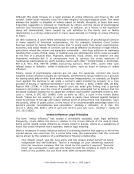
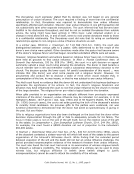
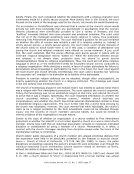
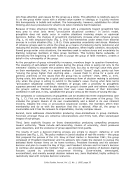
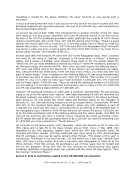
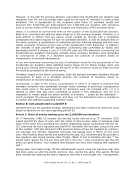
Although this study focuses on a legal analysis of undue influence and fraud in the cult
context, these issues naturally cross into other religious and psychological areas. The cases
address the legality or illegality of actions based on beliefs, thoughts, or fears that were
frequently suggested or imposed on individuals by others, and the issues of psychological
coercion and excessive psychological pressure. In addition, as a review of the significant
cases will demonstrate, harm caused by cult activities to the family unit or family
relationships is a strong undercurrent in many cases decided on findings of undue influence
or fraud.
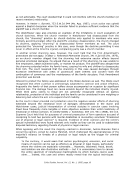
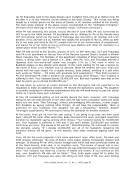
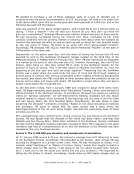
On rare occasions, a court refers sweepingly to the consideration of psychological coercion
in many aspects of American jurisprudence. So, for example, Supreme Court Justice
Brennan (joined by Justice Marshall) wrote that “it would seem that certain psychological,
economic, and social means of coercion can be just as effective as physical or legal means,
particularly where the victims are especially vulnerable.... And drug addiction or weakness
resulting from a lack of food, sleep, or medical care can eliminate the will to resist as readily
as the fear of a physical blow. Hypnosis, blackmail, fraud, deceit, and isolation are also
illustrative methods--but it is unnecessary here to canvass the entire spectrum of
nonphysical machinations by which humans coerce each other.” United States v. Kozminski,
487 U.S. 931, 953, 955-56 (1988) (concurring opinion). More often, courts treat such
related issues in isolation, under a particular rubric, such as fraud or duress or undue
influence.
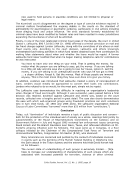
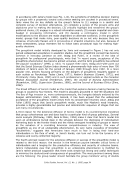
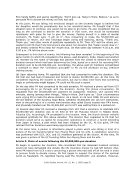
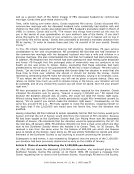
Finally, issues of psychological coercion are not new. For centuries, common law courts
weighed undue influence (usually by individuals, sometimes by group leaders) as a grounds
for setting aside gifts or wills. Even before American Independence, for example, an English
court applied the doctrine to set aside a woman‟s deed transferring property to a man
accused of having a “spiritual domination” over her. Norton v. Relly, 2 Eden 286, 28 Eng.
Reprint 908 (1764). A 19th-century English court set aside gifts finding that a spiritual
medium‟s domination over the mind of a wealthy widow persuaded her to believe that her
deceased husband wanted her to adopt the medium and transfer significant funds to him.
Lyon v. Home, 6 ERC 852 (1868). Even as early as 1821, a court in the United States
found: “Cases are not wanting, in which courts of equity have relieved against bargains
made by persons of full age and reason without proof of actual fraud and imposition, upon
the ground, either of public policy, or the notion of an unconscionable advantage taken of a
person‟s peculiar circumstances and necessities.” Harding v. Wheaton, 11 F. Cas. 491
(C.C.R.I. 1821) (No. 6051), aff’d in part and rev’d in part sub. nom., Harding v. Hardy,24
U.S. 103 (1826).
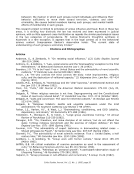
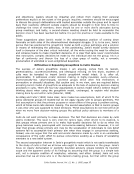
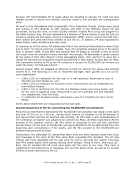
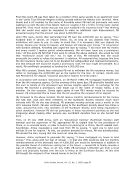
Undue Influence: Legal Principles
The term “undue influence” has eluded a universally accepted, clear legal definition.
Frequently, courts define the term in relation to the circum-stances of the case at hand.
Some courts regard undue influence as closely linked to duress, others as a subspecies of
fraud. But undue influence has a separate, distinct legal meaning.
What is necessary in undue influence actions is a showing that the free agency or will of the
injured person was overcome. For a prima facie case, the presumption that this occurred
can be shown by the existence of a confidential or fiduciary relationship.
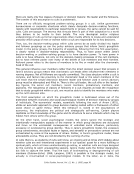
Your distant cousin, age 82, lives alone and has always prided herself on being
independent and self-sufficient. There’s a message on your answering machine
from her insurance company that her check for this quarter’s payment “bounced
twice” (as a precaution, years ago she listed you with the company to notify in the
event of any problem, but you have never been contacted before).
Although this study focuses on a legal analysis of undue influence and fraud in the cult
context, these issues naturally cross into other religious and psychological areas. The cases
address the legality or illegality of actions based on beliefs, thoughts, or fears that were
frequently suggested or imposed on individuals by others, and the issues of psychological
coercion and excessive psychological pressure. In addition, as a review of the significant
cases will demonstrate, harm caused by cult activities to the family unit or family
relationships is a strong undercurrent in many cases decided on findings of undue influence
or fraud.
On rare occasions, a court refers sweepingly to the consideration of psychological coercion
in many aspects of American jurisprudence. So, for example, Supreme Court Justice
Brennan (joined by Justice Marshall) wrote that “it would seem that certain psychological,
economic, and social means of coercion can be just as effective as physical or legal means,
particularly where the victims are especially vulnerable.... And drug addiction or weakness
resulting from a lack of food, sleep, or medical care can eliminate the will to resist as readily
as the fear of a physical blow. Hypnosis, blackmail, fraud, deceit, and isolation are also
illustrative methods--but it is unnecessary here to canvass the entire spectrum of
nonphysical machinations by which humans coerce each other.” United States v. Kozminski,
487 U.S. 931, 953, 955-56 (1988) (concurring opinion). More often, courts treat such
related issues in isolation, under a particular rubric, such as fraud or duress or undue
influence.
Finally, issues of psychological coercion are not new. For centuries, common law courts
weighed undue influence (usually by individuals, sometimes by group leaders) as a grounds
for setting aside gifts or wills. Even before American Independence, for example, an English
court applied the doctrine to set aside a woman‟s deed transferring property to a man
accused of having a “spiritual domination” over her. Norton v. Relly, 2 Eden 286, 28 Eng.
Reprint 908 (1764). A 19th-century English court set aside gifts finding that a spiritual
medium‟s domination over the mind of a wealthy widow persuaded her to believe that her
deceased husband wanted her to adopt the medium and transfer significant funds to him.
Lyon v. Home, 6 ERC 852 (1868). Even as early as 1821, a court in the United States
found: “Cases are not wanting, in which courts of equity have relieved against bargains
made by persons of full age and reason without proof of actual fraud and imposition, upon
the ground, either of public policy, or the notion of an unconscionable advantage taken of a
person‟s peculiar circumstances and necessities.” Harding v. Wheaton, 11 F. Cas. 491
(C.C.R.I. 1821) (No. 6051), aff’d in part and rev’d in part sub. nom., Harding v. Hardy,24
U.S. 103 (1826).
Undue Influence: Legal Principles
The term “undue influence” has eluded a universally accepted, clear legal definition.
Frequently, courts define the term in relation to the circum-stances of the case at hand.
Some courts regard undue influence as closely linked to duress, others as a subspecies of
fraud. But undue influence has a separate, distinct legal meaning.
What is necessary in undue influence actions is a showing that the free agency or will of the
injured person was overcome. For a prima facie case, the presumption that this occurred
can be shown by the existence of a confidential or fiduciary relationship.
Your distant cousin, age 82, lives alone and has always prided herself on being
independent and self-sufficient. There’s a message on your answering machine
from her insurance company that her check for this quarter’s payment “bounced
twice” (as a precaution, years ago she listed you with the company to notify in the
event of any problem, but you have never been contacted before).