Cultic Studies Journal, Vol. 12, No. 1, 1995, page 5
To succeed in an undue influence claim, one must prove that the free will of the person
injured was taken or destroyed and the will of another was substituted. The influence must
be of such a degree as to control the mental decision operations of the one influenced,
overcoming independent powers of resistance, and thereby resulting in effect in the
adoption of the will of the other. In addition, the undue influence must have caused the
influenced person to act (or desist from acting) as he would not otherwise have done. The
exact extent or degree of control is not particularly relevant, as long as the threshold level
to make the person act as another in the particular fraud situation is reached.
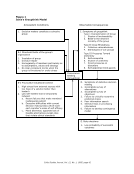
The four essential elements of undue influence are:
1. a person subject to influence
2. opportunity to exert undue influence
3. disposition to exert undue influence and
4. result indicating undue influence.
She says the insurance company or bank must have made a mistake, informing
you that an accountant from church has taken care of her finances through a free
program for elder members. She hasn’t had “to worry about bills for months.” She
gives you his name, but can’t show you any bank statements or financial records.
“He keeps all of that garbage.”
In determining whether undue influence existed, courts will often consider: the age,
physical condition, and mental condition of the person influenced whether independent and
disinterested advice was available any delay in making the questioned transaction known
to family or third parties the amount of consideration (if any) distress of the person
influenced the predisposition of the person to act the value of the transfer in relation to
the person‟s overall wealth the extent the transaction hinders the ability to provide for
family the methods of solicitation and persuasion used and the relationship between the
parties.
Frequently, age, mental condition, and physical condition are mentioned as factors in
determining whether undue influence occurred. Advanced age and physical infirmities,
alone, however, are often weak indicators. Mental weakness, on the contrary, often in itself
can raise a presumption of undue influence especially in transactions between individuals
with substantially different levels of mental ability.
The accountant is more than a little surprised to see you the next morning and
refuses to discuss your distant cousin’s finances “for professional confidentiality
reasons.”
The actual relationship between the parties is key in any undue influence action. When one
person is in control or in a position of authority over another by virtue of the relationship, it
is justified to assume that the other will not act inconsistent with his welfare. A transaction
induced by unfair persuasion in such circumstances is presumed to be produced by undue
influence. Undue influence is generally inferred in all cases of confidential or quasi-
confidential relationships where the person in control or power receives a benefit.
In the absence of a fiduciary relationship, there is no presumption of undue influence. But
where a fiduciary relationship exists, the presumption goes against the party with the
superior, dominant position or control, shifting to him the burden to prove that the
transaction was bona fide and not obtained by undue influence.
Mere friendship and confidence short of a trust relationship is not enough to establish the
requisite fiduciary relationship.
You convince your cousin to visit the bank with you on the pre-text of
“straightening out the bank’s error and not causing the accountant any additional
To succeed in an undue influence claim, one must prove that the free will of the person
injured was taken or destroyed and the will of another was substituted. The influence must
be of such a degree as to control the mental decision operations of the one influenced,
overcoming independent powers of resistance, and thereby resulting in effect in the
adoption of the will of the other. In addition, the undue influence must have caused the
influenced person to act (or desist from acting) as he would not otherwise have done. The
exact extent or degree of control is not particularly relevant, as long as the threshold level
to make the person act as another in the particular fraud situation is reached.
The four essential elements of undue influence are:
1. a person subject to influence
2. opportunity to exert undue influence
3. disposition to exert undue influence and
4. result indicating undue influence.
She says the insurance company or bank must have made a mistake, informing
you that an accountant from church has taken care of her finances through a free
program for elder members. She hasn’t had “to worry about bills for months.” She
gives you his name, but can’t show you any bank statements or financial records.
“He keeps all of that garbage.”
In determining whether undue influence existed, courts will often consider: the age,
physical condition, and mental condition of the person influenced whether independent and
disinterested advice was available any delay in making the questioned transaction known
to family or third parties the amount of consideration (if any) distress of the person
influenced the predisposition of the person to act the value of the transfer in relation to
the person‟s overall wealth the extent the transaction hinders the ability to provide for
family the methods of solicitation and persuasion used and the relationship between the
parties.
Frequently, age, mental condition, and physical condition are mentioned as factors in
determining whether undue influence occurred. Advanced age and physical infirmities,
alone, however, are often weak indicators. Mental weakness, on the contrary, often in itself
can raise a presumption of undue influence especially in transactions between individuals
with substantially different levels of mental ability.
The accountant is more than a little surprised to see you the next morning and
refuses to discuss your distant cousin’s finances “for professional confidentiality
reasons.”
The actual relationship between the parties is key in any undue influence action. When one
person is in control or in a position of authority over another by virtue of the relationship, it
is justified to assume that the other will not act inconsistent with his welfare. A transaction
induced by unfair persuasion in such circumstances is presumed to be produced by undue
influence. Undue influence is generally inferred in all cases of confidential or quasi-
confidential relationships where the person in control or power receives a benefit.
In the absence of a fiduciary relationship, there is no presumption of undue influence. But
where a fiduciary relationship exists, the presumption goes against the party with the
superior, dominant position or control, shifting to him the burden to prove that the
transaction was bona fide and not obtained by undue influence.
Mere friendship and confidence short of a trust relationship is not enough to establish the
requisite fiduciary relationship.
You convince your cousin to visit the bank with you on the pre-text of
“straightening out the bank’s error and not causing the accountant any additional