Cultic Studies Journal, Vol. 12, No. 1, 1995, page 38
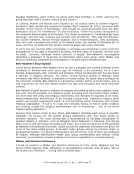
apparent that, although Janis leans heavily on the concept of group cohesiveness to make
his case, there is little in the analysis that explores how group cohesiveness works in
producing concurrence thinking and, most important, whether it works similarly in all
cohesive groups.
The vagueness of Janis‟s use of the group cohesiveness explanation becomes extremely
problematic when we come to cults. First, Janis assumes, based on his field studies, that the
actual decision-making group is easy to identify. After all, the group is extremely cohesive
and marks its boundaries well. This is problematic with cults. The cult is easy to identify, but
the group within it that has the power to make decisions for and in the name of the cult is
much more difficult to identify. In cults, asmall elite --one might say a power elite --
composed most typically of a charismatic leader and his or her selected advisors composes
the decision-making group. For reasons not unlike that of many political policy advisors,
secrecy is often utilized to protect the decision power elite from outside scrutiny.
Janis never focuses on the privilege and the power of being one of the selected members of
the power elite and how the privilege of restricted membership may go to the heads of
many individuals and aid them in subduing their critical impulses. In cults, the power elite
who make the key decisions are true believers. They have risen or been selected to their
central position because they have proven to other members of the elite decision group that
their central life interest is the cult and its pervasive belief system. The cohesiveness of the
decision elite is one acquired during tests of loyalty and typically a long and arduous
socialization period. The key to becoming an elite member in a restricted group rests in the
ability to pass “ordeals.” As Nock (1993) notes, an ordeal is a form of ritual used to
determine whether or not an individual is trustworthy and truthful in the ways of the group.
“Through an ordeal,” writes Nock, “people are able to validate their reputation, to garner
proof of the validity of their claims ...indeed by „passing‟ an ordeal, one establishes or
sustains a claim to membership in the group endorsing the ordeal” (Nock, 1993, p. 15).
Janis‟s neglect of the ordeal of becoming a part of the decision elite is rooted in two issues.
First, Janis is dealing with expert groups. These “policy advisors” utilize their credentials as
ordeal surrogates. These credentials, say from Harvard or the Sorbonne, establish the
reputations and trustworthiness of the advisors. Second, Janis fixes his attention on the
external crisis or “problem” that confronts the advisory group and not the “problem” of
becoming a member of the elite. These two issues must be modified in adapting the
orthodox groupthink model. The charismatic leader in cults uses ordeals to test the loyalty,
commitment, and resilience of the belief system of those who would be decision elites.
This is a far cry from the use of the credentials offered by someone from Harvard to the
person from the Sorbonne as a test of one‟s membership. The expert group develops a
clubbiness and internal worldview based upon its belief that it truly represents the best
thinking the world has to offer. This complacent, noncritical attribution of “world classness”
is, to a large degree, shared by the world. This is precisely why we are puzzled by policy
advisors who escalate bad decisions or throw good money after bad. It is why the policies
surrounding the Bay of Pigs, Watergate, Irangate, and the escalation of the Vietnam War
puzzle us.
In cults, the development of cohesiveness takes a different route. The ordeal is conferred
upon the individual by the cult in the direct name of the charismatic leader. The test or
ordeal is not that of Harvard or the Sorbonne, but that of the cult. It holds little of what
sociologists call universalistic criteria. Rather, it is particularistic. It bonds the individual to
the cult and only to the cult. It demands that the cult become the central life interest and
primary nexus of its members. This, of course, is intensified for those particular members
who seek access into the cult‟s decision elite.
apparent that, although Janis leans heavily on the concept of group cohesiveness to make
his case, there is little in the analysis that explores how group cohesiveness works in
producing concurrence thinking and, most important, whether it works similarly in all
cohesive groups.
The vagueness of Janis‟s use of the group cohesiveness explanation becomes extremely
problematic when we come to cults. First, Janis assumes, based on his field studies, that the
actual decision-making group is easy to identify. After all, the group is extremely cohesive
and marks its boundaries well. This is problematic with cults. The cult is easy to identify, but
the group within it that has the power to make decisions for and in the name of the cult is
much more difficult to identify. In cults, asmall elite --one might say a power elite --
composed most typically of a charismatic leader and his or her selected advisors composes
the decision-making group. For reasons not unlike that of many political policy advisors,
secrecy is often utilized to protect the decision power elite from outside scrutiny.
Janis never focuses on the privilege and the power of being one of the selected members of
the power elite and how the privilege of restricted membership may go to the heads of
many individuals and aid them in subduing their critical impulses. In cults, the power elite
who make the key decisions are true believers. They have risen or been selected to their
central position because they have proven to other members of the elite decision group that
their central life interest is the cult and its pervasive belief system. The cohesiveness of the
decision elite is one acquired during tests of loyalty and typically a long and arduous
socialization period. The key to becoming an elite member in a restricted group rests in the
ability to pass “ordeals.” As Nock (1993) notes, an ordeal is a form of ritual used to
determine whether or not an individual is trustworthy and truthful in the ways of the group.
“Through an ordeal,” writes Nock, “people are able to validate their reputation, to garner
proof of the validity of their claims ...indeed by „passing‟ an ordeal, one establishes or
sustains a claim to membership in the group endorsing the ordeal” (Nock, 1993, p. 15).
Janis‟s neglect of the ordeal of becoming a part of the decision elite is rooted in two issues.
First, Janis is dealing with expert groups. These “policy advisors” utilize their credentials as
ordeal surrogates. These credentials, say from Harvard or the Sorbonne, establish the
reputations and trustworthiness of the advisors. Second, Janis fixes his attention on the
external crisis or “problem” that confronts the advisory group and not the “problem” of
becoming a member of the elite. These two issues must be modified in adapting the
orthodox groupthink model. The charismatic leader in cults uses ordeals to test the loyalty,
commitment, and resilience of the belief system of those who would be decision elites.
This is a far cry from the use of the credentials offered by someone from Harvard to the
person from the Sorbonne as a test of one‟s membership. The expert group develops a
clubbiness and internal worldview based upon its belief that it truly represents the best
thinking the world has to offer. This complacent, noncritical attribution of “world classness”
is, to a large degree, shared by the world. This is precisely why we are puzzled by policy
advisors who escalate bad decisions or throw good money after bad. It is why the policies
surrounding the Bay of Pigs, Watergate, Irangate, and the escalation of the Vietnam War
puzzle us.
In cults, the development of cohesiveness takes a different route. The ordeal is conferred
upon the individual by the cult in the direct name of the charismatic leader. The test or
ordeal is not that of Harvard or the Sorbonne, but that of the cult. It holds little of what
sociologists call universalistic criteria. Rather, it is particularistic. It bonds the individual to
the cult and only to the cult. It demands that the cult become the central life interest and
primary nexus of its members. This, of course, is intensified for those particular members
who seek access into the cult‟s decision elite.