Cultic Studies Journal, Vol. 12, No. 1, 1995, page 33
who fixes attention upon issues for the group as a whole. This attention is relatively easy to
fix as the group either starts with a shared value system or ideology or it quickly evolves
this homogeneity in beliefs and outlook. The homogeneity, however, substitutes for critical
thinking and clear procedures for what to do when members feel threatened.
Because of these structural failings, the group with a propensity toward groupthink falls
easy prey to what Janis terms “provocative situational contexts.” In Janis‟s model,
groupthink does not easily occur in routine situations involving simple or equivocal
decisions. Rather, the chances of groupthink dramatically increase when cohesive groups
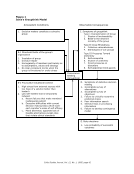
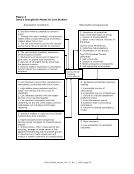
(Fig. 1, A) with structural faults (Fig. 1, B-1) find themselves under stress from external
sources in a crisis situation (Fig. 1, B-2). Crisis generates uncertainty and stress. Members
of cohesive groups seek to utilize the group as a means of producing clarity (solutions) and
reducing the anxiety associated with stressful situations. When highly cohesive, structurally
flawed groups enter crisis situations, the members seek to reduce stress and uncertainty by
blaming nongroup members or false group members. This turning blame outwards, or
alternatively the beginning of witch hunts to purge the group of false members, creates a
belief in the vulnerability of the group.
As the perception of group vulnerability increases, members begin to question themselves.
The lowering of self-esteem which arises during the group crisis is owing not only to the
members‟ inability to master the problems they face, but also to the high value they place
on their membership. Hart, in a recent analysis of Janis‟s “classic” study, points out how
“valuing the group higher than anything else.... causes them to strive for a quick and
painless unanimity on the issues that the group has to confront” (Hart, 1991, p. 247).
During crisis, this striving for a quick and unanimous form of decision making is achieved
only when the group is willing to submit to the leader‟s views. During what Janis terms
“provocative situational contexts,” members of groups with a proclivity to groupthink
suppress personal and moral doubts about the group‟s chosen path and adhere closely to
the group‟s wishes. Members suppress their own views because of their diminished
confidence in self and, in lieu, substitute the group‟s views as the means of saving the day.
The symptoms or consequences of groupthink can be divided into three characteristics (see
Fig. 1, C). First are those that produce an overestimation of the power of the group. This
includes the group‟s illusion of its own invulnerability and a belief in its own inherent
morality. Despite the crisis or provocative situational context, the members affirm their
membership and do so with the assertion that this is rational. After all, the group is
invulnerable and it has the answers to impenetrable, morally complex issues.
Second, Janis addresses characteristics producing close-mindedness in group members.
Foremost amongst these are collective rationalizations and firmly held, often stereotyped
images of out-groups.
Third, Janis explicitly focuses on those characteristics producing compelling pressures
toward uniformity. These include self-censorship, illusion of unanimity, direct pressures
upon dissenters, and the existence of group-appointed mind guards.
The results of such a decision-making process are simple to discern: defective or wild
decisions (see Fig. 1, D). The policy makers in Janis‟s studies of real-life events --the group
that prepared the policies of the U.S. Navy at Pearl Harbor in December 1941 the group
composed of President Eisenhower and his advisors who made the decision to pursue the
defeated North Korean Army on its home territory President Kennedy and his advisors‟
decision and plan to invade the Bay of Pigs and President Johnson and his team‟s decision
to continue and escalate the Vietnam War --are provided as evidence of decision-making
fiascoes caused by unbridled concurrence thinking. Close-minded, stereotyped,
overconfident, and morally exempt decision makers are, Janis illustrated, highly unlikely to
realistically deal with complex decision scenarios.
who fixes attention upon issues for the group as a whole. This attention is relatively easy to
fix as the group either starts with a shared value system or ideology or it quickly evolves
this homogeneity in beliefs and outlook. The homogeneity, however, substitutes for critical
thinking and clear procedures for what to do when members feel threatened.
Because of these structural failings, the group with a propensity toward groupthink falls
easy prey to what Janis terms “provocative situational contexts.” In Janis‟s model,
groupthink does not easily occur in routine situations involving simple or equivocal
decisions. Rather, the chances of groupthink dramatically increase when cohesive groups
(Fig. 1, A) with structural faults (Fig. 1, B-1) find themselves under stress from external
sources in a crisis situation (Fig. 1, B-2). Crisis generates uncertainty and stress. Members
of cohesive groups seek to utilize the group as a means of producing clarity (solutions) and
reducing the anxiety associated with stressful situations. When highly cohesive, structurally
flawed groups enter crisis situations, the members seek to reduce stress and uncertainty by
blaming nongroup members or false group members. This turning blame outwards, or
alternatively the beginning of witch hunts to purge the group of false members, creates a
belief in the vulnerability of the group.
As the perception of group vulnerability increases, members begin to question themselves.
The lowering of self-esteem which arises during the group crisis is owing not only to the
members‟ inability to master the problems they face, but also to the high value they place
on their membership. Hart, in a recent analysis of Janis‟s “classic” study, points out how
“valuing the group higher than anything else.... causes them to strive for a quick and
painless unanimity on the issues that the group has to confront” (Hart, 1991, p. 247).
During crisis, this striving for a quick and unanimous form of decision making is achieved
only when the group is willing to submit to the leader‟s views. During what Janis terms
“provocative situational contexts,” members of groups with a proclivity to groupthink
suppress personal and moral doubts about the group‟s chosen path and adhere closely to
the group‟s wishes. Members suppress their own views because of their diminished
confidence in self and, in lieu, substitute the group‟s views as the means of saving the day.
The symptoms or consequences of groupthink can be divided into three characteristics (see
Fig. 1, C). First are those that produce an overestimation of the power of the group. This
includes the group‟s illusion of its own invulnerability and a belief in its own inherent
morality. Despite the crisis or provocative situational context, the members affirm their
membership and do so with the assertion that this is rational. After all, the group is
invulnerable and it has the answers to impenetrable, morally complex issues.
Second, Janis addresses characteristics producing close-mindedness in group members.
Foremost amongst these are collective rationalizations and firmly held, often stereotyped
images of out-groups.
Third, Janis explicitly focuses on those characteristics producing compelling pressures
toward uniformity. These include self-censorship, illusion of unanimity, direct pressures
upon dissenters, and the existence of group-appointed mind guards.
The results of such a decision-making process are simple to discern: defective or wild
decisions (see Fig. 1, D). The policy makers in Janis‟s studies of real-life events --the group
that prepared the policies of the U.S. Navy at Pearl Harbor in December 1941 the group
composed of President Eisenhower and his advisors who made the decision to pursue the
defeated North Korean Army on its home territory President Kennedy and his advisors‟
decision and plan to invade the Bay of Pigs and President Johnson and his team‟s decision
to continue and escalate the Vietnam War --are provided as evidence of decision-making
fiascoes caused by unbridled concurrence thinking. Close-minded, stereotyped,
overconfident, and morally exempt decision makers are, Janis illustrated, highly unlikely to
realistically deal with complex decision scenarios.