Cultic Studies Review, Vol. 7, No. 3, 2008, Page 9
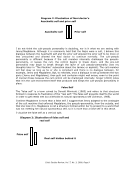
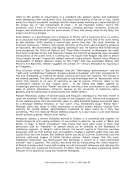
I do not think the cult-pseudo personality is doubling, nor is it what we are seeing with
Jenny/Magdalene. Although it is commonly held that the Nazis were a cult, I believe this
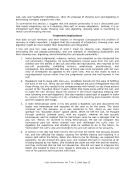
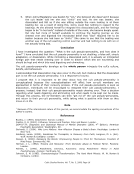
dialogue between the Auschwitz self and the prior self allowed the prior self to be more or
less untouched and allowed the Nazi doctor to continue normally. The cult-pseudo
personality is different because if the cult member internally challenges the pseudo-
personality, or leaves the cult, the control begins to break down, and the pre-cult
personality may begin to break through the layer of cult pseudo-personality (see my
thoughts later in ―The Machine‖ subsection about the tarmac or asphalt). The cult member
will feel okay so long as he or she is compliant and there is no dialogue between, for
example, Jenny and Magdalene. But, to reiterate, once a dialogue is set up between the two
parts (Jenny and Magdalene), then guilt and confusion might well ensue, even to the point
of mental illness because the cult control will be challenged internally. Singer (2003) notes
that it is the cult environment itself that produces and keeps the cult-pseudo personality in
place.
False Self
The ―false self‖ is a term coined by Donald Winnicott (1965) and refers to that structure
formed in response to frustration of the ―real self.‖ The false self presents itself to the world
in order to get needs met but withholds its natural spontaneous self (Johnson, 1985).
I believe Magdalene is more than a false self. I suggest that Jenny adapted to the onslaught
of the cult machine that enforced Magdalene, the pseudo-personality, from the outside, and
that she took it in. Magdalene is not a structure formed within her to present to a world that
was not meeting her natural spontaneous self, so it is more than a false self in this sense.
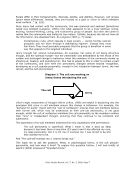
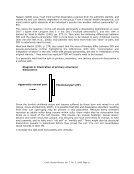
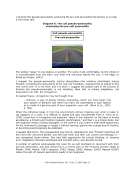
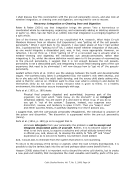
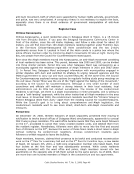
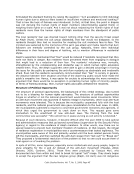
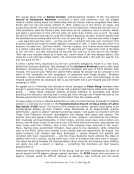
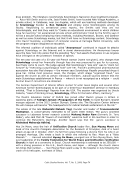
I visualise the false self as a vertical split.
Diagram 3: Illustration of false self and
real self
False self
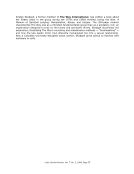
Auschwitz self Prior self
self
Diagram 2: Illustration of Nazi doctor’s
Auschwitz self and prior self
Real self hidden behind it