Cultic Studies Review, Vol. 7, No. 3, 2008, Page 3
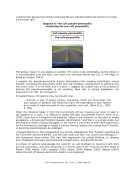
An Investigation into Cult Pseudo-Personality: What Is It
and How Does It Form?
Gillie Jenkinson, M.A.
Hope Valley Counselling
Hope Valley, United Kingdom1
Abstract
In this paper, I investigate some possible explanations for the development of
the cult pseudo-personality and how it forms. I investigate whether the cult
pseudo-personality is doubling (Lifton, 2000), false self (Winnicott, 1965),
simply adaptation, or dissociation. I argue that it is none of these and
propose that the concept of introjection is the most satisfying explanation.
The paper also briefly addresses some recovery issues in light of the proposed
view of pseudo-personality.
Definition of a Cult
As has been discussed within ICSA for many years, giving a helpful definition for groups
that cause harm is difficult. For the sake of simplicity, I shall use the term cult to describe
these groups, following Langone‘s (1993, p. 5) succinct definition:
A cult is a group or movement that, to a significant degree,
(a) Exhibits great or excessive devotion or dedication to some person, idea,
or thing,
(b) Uses a thought-reform program to persuade, control, and socialize
members (i.e., to integrate them into the group‘s unique pattern of
relationships, beliefs, values, and practices),
(c) Systematically induces states of psychological dependency in members,
(d) Exploits members to advance the leadership‘s goals, and
(e) Causes psychological harm to members, their families, and the
community.
Introduction to My Case Study—Jenny
To illustrate what I am saying, I shall introduce you to Jenny, a composite case study of an
ex-member. Whilst I have set her story in a Bible-based cult, these issues are applicable to
most other ―types‖ of cults.
Jenny is in her 40s. She came from a relatively prosperous family, was
intelligent, did well at school and as a young woman enjoyed both studying
and having fun. She had had a few boyfriends and had slept with one, but
since then felt she wanted to wait until she was in a long-term, stable
relationship before she slept with anyone again. In her 20s she became a
teacher, and by the age of 25 she became disillusioned with the system and
started to look for more meaning in her life.
She had attended her local church as a child but was disenchanted by the
sameness of it all. She heard about a new Christian community that had
started up a few miles away and although she heard it was a bit wacky and
An Investigation into Cult Pseudo-Personality: What Is It
and How Does It Form?
Gillie Jenkinson, M.A.
Hope Valley Counselling
Hope Valley, United Kingdom1
Abstract
In this paper, I investigate some possible explanations for the development of
the cult pseudo-personality and how it forms. I investigate whether the cult
pseudo-personality is doubling (Lifton, 2000), false self (Winnicott, 1965),
simply adaptation, or dissociation. I argue that it is none of these and
propose that the concept of introjection is the most satisfying explanation.
The paper also briefly addresses some recovery issues in light of the proposed
view of pseudo-personality.
Definition of a Cult
As has been discussed within ICSA for many years, giving a helpful definition for groups
that cause harm is difficult. For the sake of simplicity, I shall use the term cult to describe
these groups, following Langone‘s (1993, p. 5) succinct definition:
A cult is a group or movement that, to a significant degree,
(a) Exhibits great or excessive devotion or dedication to some person, idea,
or thing,
(b) Uses a thought-reform program to persuade, control, and socialize
members (i.e., to integrate them into the group‘s unique pattern of
relationships, beliefs, values, and practices),
(c) Systematically induces states of psychological dependency in members,
(d) Exploits members to advance the leadership‘s goals, and
(e) Causes psychological harm to members, their families, and the
community.
Introduction to My Case Study—Jenny
To illustrate what I am saying, I shall introduce you to Jenny, a composite case study of an
ex-member. Whilst I have set her story in a Bible-based cult, these issues are applicable to
most other ―types‖ of cults.
Jenny is in her 40s. She came from a relatively prosperous family, was
intelligent, did well at school and as a young woman enjoyed both studying
and having fun. She had had a few boyfriends and had slept with one, but
since then felt she wanted to wait until she was in a long-term, stable
relationship before she slept with anyone again. In her 20s she became a
teacher, and by the age of 25 she became disillusioned with the system and
started to look for more meaning in her life.
She had attended her local church as a child but was disenchanted by the
sameness of it all. She heard about a new Christian community that had
started up a few miles away and although she heard it was a bit wacky and