Cultic Studies Review, Vol. 7, No. 3, 2008, Page 30
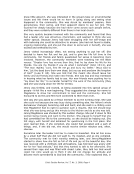
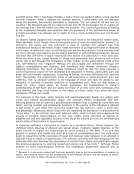
40). Surely, however, the most remarkable, and disturbing, parallel between the two
narcissists was the large organizations that operated fraudulently if not criminally to further
the leaders‘ respective deceptions.
In his prime, Rajneesh, along with a trusted assistant, oversaw an international corporate
structure with major financial concerns in the United States, India, Switzerland, and the
United Kingdom (see Carter 1990, 86 see 83–96), with small centers throughout most of
the industrialized world. In fact, an academic who studied the group concluded that one
could view it ―as a multilevel marketing device with central control in a charismatic core‖
(Carter 1990, 97). Broadly speaking, Alexander‘s operation has parallels. His bureaucracy of
―helpers, servants, questioners, oracle-writers, oracle-keepers, secretaries, sealers,
interpreters...‖ (Alex., 23) includes missionaries who travel ―abroad to spread reports of the
oracle among other nations, and to announce that he gave prophecies, found runaway
slaves, detected thieves and robbers, showed the way to buried treasure, healed the sick,
and sometimes even raised the dead‖ (Alex., 24 see 30). He even establishes what one set
of translators called ―an intelligence bureau‖ in Rome (see Alex., 37 in Fowler and Fowler
[trans.] 1905), whose ―spies‖ act as both monitors of public (and presumably political)
opinion, providing ―forewarning of the questions and the particular wishes of the
questioners...‖ coming from that important city (Alex., 37). In varying degrees, however,
both Rajneesh‘s and Alexander‘s operations used fraud, deception, and attempted murder
as standard procedures.
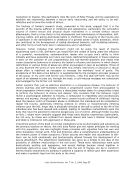
With the collapse of Rajneesh‘s Oregon community, at least sixty-three individuals were
charged with criminal offences, and an unspecified number of followers (including the leader
himself) were convicted and sentenced. The offences included lying to federal officials,
criminal conspiracy, racketeering, first- and second-degree assault, and attempted murder
(Carter 1990, 236). Looking at these offences within a comparative perspective, what is so
striking is how many of them resemble activities that Alexander and his bureaucracy also
perpetrate almost two thousand years earlier. He uses trickery and deception to establish a
new religion that offers the public fraudulent prophecies, ineffectual protection from a
serious public heath crisis [i.e., the plague (Alex., 36)], and questionable medical cures
(Alex., 25 cf. 22). It also interferes in the justice system of the era by claiming to detect
―thieves and robbers‖ and even identifies murderers who turned out to be innocent (Alex.,
44). It runs an extortion ring against influential citizens (Alex., 32), and—much like the
Ranjeesh organization—tries to assassinate its critics.
Among others, attorneys working against the Rajneeshees were targets of the Rajneesh
organization, which used poisoning and a planned (but never enacted) ambush (Carter
1990, 222). In two instances, Alexander‘s techniques are cruder, simply using (or trying to
incite) mobs to kill critical Epicureans but the murder plot against Lucian involves a
conspiracy between the leader and hired thugs that fails only because of the conscience of a
sea captain.
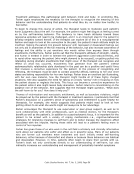
What these similarities suggest, however, is that narcissists creating and running religious
organizations can be dangerous, and the plans that they initiate can be deadly. These
insights transcend time, location, and culture, since persons with mental disorders often find
ways to create mischief, if not outright harm, in whichever societies or eras they live.20
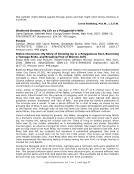
End Notes
1 Reprinted with permission from Ancient Narrative 6 (2007): 77-99, 161. The Author grants
permission for the free use of this article in classrooms.
2 Lucian refers to ―the late emperor Marcus‖ (Alexz., 48), and we know that Marcus Aurelius died in
180 (Sutherland 1949). I follow the standard method of citing Lucian‘s account of Alexander, referring
to Alexander or the False Prophet with the abbreviation, Alex., followed by a paragraph number. All
quotes come from the translation by Desmond Costa (2005, 129-151).
40). Surely, however, the most remarkable, and disturbing, parallel between the two
narcissists was the large organizations that operated fraudulently if not criminally to further
the leaders‘ respective deceptions.
In his prime, Rajneesh, along with a trusted assistant, oversaw an international corporate
structure with major financial concerns in the United States, India, Switzerland, and the
United Kingdom (see Carter 1990, 86 see 83–96), with small centers throughout most of
the industrialized world. In fact, an academic who studied the group concluded that one
could view it ―as a multilevel marketing device with central control in a charismatic core‖
(Carter 1990, 97). Broadly speaking, Alexander‘s operation has parallels. His bureaucracy of
―helpers, servants, questioners, oracle-writers, oracle-keepers, secretaries, sealers,
interpreters...‖ (Alex., 23) includes missionaries who travel ―abroad to spread reports of the
oracle among other nations, and to announce that he gave prophecies, found runaway
slaves, detected thieves and robbers, showed the way to buried treasure, healed the sick,
and sometimes even raised the dead‖ (Alex., 24 see 30). He even establishes what one set
of translators called ―an intelligence bureau‖ in Rome (see Alex., 37 in Fowler and Fowler
[trans.] 1905), whose ―spies‖ act as both monitors of public (and presumably political)
opinion, providing ―forewarning of the questions and the particular wishes of the
questioners...‖ coming from that important city (Alex., 37). In varying degrees, however,
both Rajneesh‘s and Alexander‘s operations used fraud, deception, and attempted murder
as standard procedures.
With the collapse of Rajneesh‘s Oregon community, at least sixty-three individuals were
charged with criminal offences, and an unspecified number of followers (including the leader
himself) were convicted and sentenced. The offences included lying to federal officials,
criminal conspiracy, racketeering, first- and second-degree assault, and attempted murder
(Carter 1990, 236). Looking at these offences within a comparative perspective, what is so
striking is how many of them resemble activities that Alexander and his bureaucracy also
perpetrate almost two thousand years earlier. He uses trickery and deception to establish a
new religion that offers the public fraudulent prophecies, ineffectual protection from a
serious public heath crisis [i.e., the plague (Alex., 36)], and questionable medical cures
(Alex., 25 cf. 22). It also interferes in the justice system of the era by claiming to detect
―thieves and robbers‖ and even identifies murderers who turned out to be innocent (Alex.,
44). It runs an extortion ring against influential citizens (Alex., 32), and—much like the
Ranjeesh organization—tries to assassinate its critics.
Among others, attorneys working against the Rajneeshees were targets of the Rajneesh
organization, which used poisoning and a planned (but never enacted) ambush (Carter
1990, 222). In two instances, Alexander‘s techniques are cruder, simply using (or trying to
incite) mobs to kill critical Epicureans but the murder plot against Lucian involves a
conspiracy between the leader and hired thugs that fails only because of the conscience of a
sea captain.
What these similarities suggest, however, is that narcissists creating and running religious
organizations can be dangerous, and the plans that they initiate can be deadly. These
insights transcend time, location, and culture, since persons with mental disorders often find
ways to create mischief, if not outright harm, in whichever societies or eras they live.20
End Notes
1 Reprinted with permission from Ancient Narrative 6 (2007): 77-99, 161. The Author grants
permission for the free use of this article in classrooms.
2 Lucian refers to ―the late emperor Marcus‖ (Alexz., 48), and we know that Marcus Aurelius died in
180 (Sutherland 1949). I follow the standard method of citing Lucian‘s account of Alexander, referring
to Alexander or the False Prophet with the abbreviation, Alex., followed by a paragraph number. All
quotes come from the translation by Desmond Costa (2005, 129-151).