Cultic Studies Review, Vol. 7, No. 3, 2008, Page 14
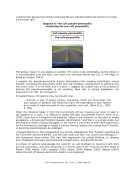
I shall discuss how this reconnection with the pre-cult personality occurs, and also look at
whether integration, or chewing over and digestion, are required for one to recover.
Recovery: Integration or Chewing Over and Digestion
Reber &Reber (2001) say that integration brings the person ―into a harmonious or
coordinated whole by rearranging, organizing, and occasionally adding or deleting elements
or parts‖ (p. 360). Van der Hart et al. (2006) note that integration is a bringing together of
a split whole.
One of the themes that came out of my unpublished M.A. research, What Helps Ex-cult
Members Recover from an Abusive Cult Experience?, was ―getting rid of the cult pseudo-
personality.‖ When I went back to my research, I was taken aback at how I had worded
this. I questioned the ‗‖getting rid of‖ bit I asked myself whether integration of that part,
as one would integrate a dissociated part, was, in fact, more appropriate. However, on
reflection, I do not think so. I think ―getting rid of‖ in a nonviolent way is actually what is
needed—chewing and digesting the introjected cult pseudo-personality rather than
integrating it. So, whilst the above definition would seem to fit the process of reconnecting
to the pre-cult personality, I suggest that it is not enough because the cult pseudo-
personality is not a dissociated part, and integrating it would entail keeping parts of the cult
experience that need to be eliminated. I will now discuss how to ―get rid of‖ the pseudo-
personality.
Gestalt writers Perls et al. (1951) use the analogy between the teeth and developmental
stages. The toothless baby takes in predigested food the toddler‘s milk teeth develop, and
he or she eats soft food the adult teeth develop, and the young child starts asking why,
what is that for, and so on. Children want to chew over what is coming in and decide for
themselves (they do not want to simply introject what is given to them). In a healthy
environment, this behaviour occurs increasingly with age.
Perls et al. (1951, p. 189) state:
Physical food properly digested and assimilated, becomes part of the
organism but food which ―rests heavy on the stomach‖ is an introject
[emphasis added]. You are aware of it and want to throw it up. If you do so
you get it ―out of the system.‖ Suppose, instead, you suppress your
discomfort, nausea, and tendency to spew it forth. Then you ―keep it down‖
and either succeed, finally, in painfully digesting it or else it poisons you.
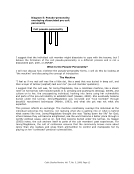
I suggest that, with the cult-pseudo personality (Magdalene), the individual is unaware of
the poison and discomfort. The discomfort is suppressed within the pre-cult personality
(Jenny).
Perls et al. (1951, p. 189) go on to suggest that to
eliminate introjects from your personality the problem is not to accept and
integrate dissociated parts of yourself. Rather, it is to become aware of
what is not truly yours, to acquire a selective and critical attitude toward what
is offered you, and, above all, to develop the ability to ―bite off‖ and ―chew‖
experience so as to extract its healthy nourishment. [bold added]
And, I would add, to eliminate from the system that which is not nourishing.
To return to the analogy of the tarmac or asphalt, when the road is finally disintegrated, it is
possible to dig the tarmac back into the soil and perhaps obtain some benefit from it.
Hassan (2000) states that it is important not to discard the entire cult identity, but to create
a new post-cult identity that incorporates the most valuable and healthy parts of the pre-
I shall discuss how this reconnection with the pre-cult personality occurs, and also look at
whether integration, or chewing over and digestion, are required for one to recover.
Recovery: Integration or Chewing Over and Digestion
Reber &Reber (2001) say that integration brings the person ―into a harmonious or
coordinated whole by rearranging, organizing, and occasionally adding or deleting elements
or parts‖ (p. 360). Van der Hart et al. (2006) note that integration is a bringing together of
a split whole.
One of the themes that came out of my unpublished M.A. research, What Helps Ex-cult
Members Recover from an Abusive Cult Experience?, was ―getting rid of the cult pseudo-
personality.‖ When I went back to my research, I was taken aback at how I had worded
this. I questioned the ‗‖getting rid of‖ bit I asked myself whether integration of that part,
as one would integrate a dissociated part, was, in fact, more appropriate. However, on
reflection, I do not think so. I think ―getting rid of‖ in a nonviolent way is actually what is
needed—chewing and digesting the introjected cult pseudo-personality rather than
integrating it. So, whilst the above definition would seem to fit the process of reconnecting
to the pre-cult personality, I suggest that it is not enough because the cult pseudo-
personality is not a dissociated part, and integrating it would entail keeping parts of the cult
experience that need to be eliminated. I will now discuss how to ―get rid of‖ the pseudo-
personality.
Gestalt writers Perls et al. (1951) use the analogy between the teeth and developmental
stages. The toothless baby takes in predigested food the toddler‘s milk teeth develop, and
he or she eats soft food the adult teeth develop, and the young child starts asking why,
what is that for, and so on. Children want to chew over what is coming in and decide for
themselves (they do not want to simply introject what is given to them). In a healthy
environment, this behaviour occurs increasingly with age.
Perls et al. (1951, p. 189) state:
Physical food properly digested and assimilated, becomes part of the
organism but food which ―rests heavy on the stomach‖ is an introject
[emphasis added]. You are aware of it and want to throw it up. If you do so
you get it ―out of the system.‖ Suppose, instead, you suppress your
discomfort, nausea, and tendency to spew it forth. Then you ―keep it down‖
and either succeed, finally, in painfully digesting it or else it poisons you.
I suggest that, with the cult-pseudo personality (Magdalene), the individual is unaware of
the poison and discomfort. The discomfort is suppressed within the pre-cult personality
(Jenny).
Perls et al. (1951, p. 189) go on to suggest that to
eliminate introjects from your personality the problem is not to accept and
integrate dissociated parts of yourself. Rather, it is to become aware of
what is not truly yours, to acquire a selective and critical attitude toward what
is offered you, and, above all, to develop the ability to ―bite off‖ and ―chew‖
experience so as to extract its healthy nourishment. [bold added]
And, I would add, to eliminate from the system that which is not nourishing.
To return to the analogy of the tarmac or asphalt, when the road is finally disintegrated, it is
possible to dig the tarmac back into the soil and perhaps obtain some benefit from it.
Hassan (2000) states that it is important not to discard the entire cult identity, but to create
a new post-cult identity that incorporates the most valuable and healthy parts of the pre-