Cultic Studies Review, Vol. 7, No. 3, 2008, Page 23
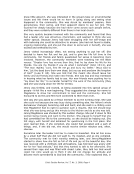
of an outside party saves the critic‘s life from an angry mob of devotees (Alex., 44–45). In
another instance, Lucian himself meets with Alexander and insists upon calling the religious
figure by name instead of the title, ‗Prophet.‘ Moreover, when Alexander offers his hand for
Lucian to kiss, Lucian bites it instead. Alexander‘s attendants are outraged and begin
―strangling me and beating me,‖ but Alexander gets them to desist and then dismisses
them from the room. One-on-one, Alexander focuses his energies on trying to convert
Lucian, his opponent. Rather soon, Lucian becomes worried because he is in the presence of
Alexander alone, so he departs as quickly as he can, pretending that Alexander has won his
friendship (Alex., 55).
Not long afterward, however, Lucian learns how vengeful Alexander is. Lucian has to
complete a move across a body of water. Alexander has arranged a ship and crew for the
journey, and he also sends Lucian many parting gifts. Lucian thinks that Alexander simply is
being ―decent and kindly‖ toward him. Only when Lucian is in open water does he learn that
Alexander has contracted with the crew to throw him overboard, which would have
happened if not for the pleadings of the captain, who is proud of his blameless life and does
not then want to blemish it with murder (Alex., 56–57).
Lucian reflects upon the impact of his brush with death:
After that I began to arm myself against him, and to use every effort in my
desire to get my own back [i.e., revenge]. Even before his plot against me I
loathed him and regarded him as a bitter enemy because of his foul
character. So I set out to prosecute him, in which I was joined by many
others…. (Alex., 57)
Eventually Lucian curbs his efforts, however, after the governor has said that, because of
Alexander‘s connections with Rutilianus, ―he could not punish Alexander, however clearly his
guilt was proved‖ (Alex., 57). Through his daughter‘s marriage to the important Roman
official, and because of the interest that several prominent politicians pay to the Glycon cult,
Alexander is simply too well connected to be prosecuted.
All the while, Alexander‘s self-promotion continues. He even attempts to get the state to
mint a coin with his image on it (Alex., 58).13 At least Lucian lives to see his enemy die a
painful and undignified death (which occurred no later than 175 but probably earlier [Jones
1986, 134 n. 6]), with his leg fatally putrefying and doctors having to remove his wig in
order to attempt their unsuccessful treatment (Alex., 59). After his death, however,
Alexander‘s accomplices fight over who will continue their late master‘s practices and
possess the oracle (Alex., 60).
Alexander the Narcissist
At the conclusion of his chapter on Lucian‘s description of Alexander, C. P. Jones seemingly
throws up his hands and relates, ‖The question whether Alexander was ‗really‘ fraudulent or
sincere is unanswerable, and perhaps beside the point‖ (Jones 1986, 148).14 Then again,
perhaps it is not. The introduction of psychological and psychiatric research into the
historical record allows us to suggest that he most likely believed his own embellishments
and self-glorifications because he was afflicted with a particular form of narcissism.
Research on narcissists in general and some specific sectarian narcissists in particular
(Anderson 1999 Clark 1988) indicate that they most likely believe in their own grandiosity,
so it is entirely probable that Alexander does, too. Bold (and admittedly unverifiable) as this
claim may be, its logic will become clear as we examine Alexander through the lens of
contemporary research on narcissistic personality disorder.
Three features sum up Alexander, as Lucian portrays him: ―a pervasive pattern of
grandiosity, need for admiration, and lack of empathy…‖ (American Psychiatric Association
2000), which also happen to be the features that characterize people with narcissistic
of an outside party saves the critic‘s life from an angry mob of devotees (Alex., 44–45). In
another instance, Lucian himself meets with Alexander and insists upon calling the religious
figure by name instead of the title, ‗Prophet.‘ Moreover, when Alexander offers his hand for
Lucian to kiss, Lucian bites it instead. Alexander‘s attendants are outraged and begin
―strangling me and beating me,‖ but Alexander gets them to desist and then dismisses
them from the room. One-on-one, Alexander focuses his energies on trying to convert
Lucian, his opponent. Rather soon, Lucian becomes worried because he is in the presence of
Alexander alone, so he departs as quickly as he can, pretending that Alexander has won his
friendship (Alex., 55).
Not long afterward, however, Lucian learns how vengeful Alexander is. Lucian has to
complete a move across a body of water. Alexander has arranged a ship and crew for the
journey, and he also sends Lucian many parting gifts. Lucian thinks that Alexander simply is
being ―decent and kindly‖ toward him. Only when Lucian is in open water does he learn that
Alexander has contracted with the crew to throw him overboard, which would have
happened if not for the pleadings of the captain, who is proud of his blameless life and does
not then want to blemish it with murder (Alex., 56–57).
Lucian reflects upon the impact of his brush with death:
After that I began to arm myself against him, and to use every effort in my
desire to get my own back [i.e., revenge]. Even before his plot against me I
loathed him and regarded him as a bitter enemy because of his foul
character. So I set out to prosecute him, in which I was joined by many
others…. (Alex., 57)
Eventually Lucian curbs his efforts, however, after the governor has said that, because of
Alexander‘s connections with Rutilianus, ―he could not punish Alexander, however clearly his
guilt was proved‖ (Alex., 57). Through his daughter‘s marriage to the important Roman
official, and because of the interest that several prominent politicians pay to the Glycon cult,
Alexander is simply too well connected to be prosecuted.
All the while, Alexander‘s self-promotion continues. He even attempts to get the state to
mint a coin with his image on it (Alex., 58).13 At least Lucian lives to see his enemy die a
painful and undignified death (which occurred no later than 175 but probably earlier [Jones
1986, 134 n. 6]), with his leg fatally putrefying and doctors having to remove his wig in
order to attempt their unsuccessful treatment (Alex., 59). After his death, however,
Alexander‘s accomplices fight over who will continue their late master‘s practices and
possess the oracle (Alex., 60).
Alexander the Narcissist
At the conclusion of his chapter on Lucian‘s description of Alexander, C. P. Jones seemingly
throws up his hands and relates, ‖The question whether Alexander was ‗really‘ fraudulent or
sincere is unanswerable, and perhaps beside the point‖ (Jones 1986, 148).14 Then again,
perhaps it is not. The introduction of psychological and psychiatric research into the
historical record allows us to suggest that he most likely believed his own embellishments
and self-glorifications because he was afflicted with a particular form of narcissism.
Research on narcissists in general and some specific sectarian narcissists in particular
(Anderson 1999 Clark 1988) indicate that they most likely believe in their own grandiosity,
so it is entirely probable that Alexander does, too. Bold (and admittedly unverifiable) as this
claim may be, its logic will become clear as we examine Alexander through the lens of
contemporary research on narcissistic personality disorder.
Three features sum up Alexander, as Lucian portrays him: ―a pervasive pattern of
grandiosity, need for admiration, and lack of empathy…‖ (American Psychiatric Association
2000), which also happen to be the features that characterize people with narcissistic