Cultic Studies Review, Vol. 7, No. 3, 2008, Page 16
5. When Jenny/Magdalene was beaten for ―sin,‖ she believed she deserved it because
the cult leader told her she was ―sinful‖ and bad. As she was beaten, she
dissociated and felt as if she was sitting outside the room looking in at them
beating her. As a result of doing this, Jenny could feel nothing in respect to the
beatings. As she allowed herself to integrate this dissociated part, and her feelings
began to be ―in her body‖ instead of outside of the room, she became deeply upset.
But she had more of herself available to continue the healing journey as she
chewed over and digested the introjected belief that ―God‖ required her to be
beaten because she had been so ―sinful.‖ She came to see that the beating was
another way of the cult exerting control over her and had nothing to do with sin or
her actually being bad.
Conclusion
I have investigated the question: ―What is the cult pseudo-personality, and how does it
form?‖ I have concluded that the cult pseudo-personality is not doubling, a false self, simply
adaptation, or dissociation. While mimicking a dissociated part, it is actually an introjected
foreign part that needs chewing over in order to discern which bits are nourishing and
should be kept and which bits need digesting and eliminating.
The cult pseudo-personality develops as the whole person introjects the cult‘s culture,
beliefs, and behaviours.
I acknowledge that dissociation may also occur in the cult, but I believe that the dissociated
part is not the cult pseudo-personality it is a response to trauma.
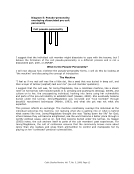
I propose that it is important to be clear about how the cult pseudo-personality is
conceptualised because this conceptualisation will affect how ex-cult members are
approached in terms of their recovery process. If the cult pseudo-personality is seen as
dissociation, individuals will be encouraged to integrate their cult pseudo-personality. I
propose, instead, that their cult pseudo-personality needs chewing over. Then a decision
regarding what needs digesting and eliminating and what needs to be kept can be made.
Through this process, the ex-members can then ―get rid of‖ the cult pseudo-personality,
and return to their pre-cult personality, while taking what is positive with them as they
move on in life.
Note
1 Because of the international nature of this journal, we accommodate the spelling conventions of the
author‘s country.
References
Bowlby, J. (1969). Attachment. Karnac: London.
Cialdini, R. B. (2001). Influence: Science and Practice. Allyn and Bacon: London.
DSM-IV-TR: Diagnostic and Statistical Manual of Mental Disorders (2000, 4th Edition). American
Psychiatric Association: Washington, DC.
Gerhardt, S. (2004). Why Love Matters: How Affection Shapes a Baby‟s Brain. Routledge: London &
New York.
Goldberg, Lorna. (1993), Guidelines for Therapists, in Recovery from Cults, Langone, M. L. (Ed.).
W.W. Norton &Company: London
Hassan, S. (2000). Releasing the Bonds: Empowering People to Think for Themselves. Freedom of
Mind Press: Sommerville, MA.
Herman, J. L. (1992). Trauma and Recovery: From Domestic Abuse to Political Terror. Pandora:
London.
Holmes, J. (1996). Attachment, Intimacy, Autonomy: Using Attachment Theory in Adult
Psychotherapy. Aronson: Northvale, NJ.
Johnson, S. M. (1985). Characterological Transformation: The Hard Work Miracle. W. W. Norton &
Company. London.
5. When Jenny/Magdalene was beaten for ―sin,‖ she believed she deserved it because
the cult leader told her she was ―sinful‖ and bad. As she was beaten, she
dissociated and felt as if she was sitting outside the room looking in at them
beating her. As a result of doing this, Jenny could feel nothing in respect to the
beatings. As she allowed herself to integrate this dissociated part, and her feelings
began to be ―in her body‖ instead of outside of the room, she became deeply upset.
But she had more of herself available to continue the healing journey as she
chewed over and digested the introjected belief that ―God‖ required her to be
beaten because she had been so ―sinful.‖ She came to see that the beating was
another way of the cult exerting control over her and had nothing to do with sin or
her actually being bad.
Conclusion
I have investigated the question: ―What is the cult pseudo-personality, and how does it
form?‖ I have concluded that the cult pseudo-personality is not doubling, a false self, simply
adaptation, or dissociation. While mimicking a dissociated part, it is actually an introjected
foreign part that needs chewing over in order to discern which bits are nourishing and
should be kept and which bits need digesting and eliminating.
The cult pseudo-personality develops as the whole person introjects the cult‘s culture,
beliefs, and behaviours.
I acknowledge that dissociation may also occur in the cult, but I believe that the dissociated
part is not the cult pseudo-personality it is a response to trauma.
I propose that it is important to be clear about how the cult pseudo-personality is
conceptualised because this conceptualisation will affect how ex-cult members are
approached in terms of their recovery process. If the cult pseudo-personality is seen as
dissociation, individuals will be encouraged to integrate their cult pseudo-personality. I
propose, instead, that their cult pseudo-personality needs chewing over. Then a decision
regarding what needs digesting and eliminating and what needs to be kept can be made.
Through this process, the ex-members can then ―get rid of‖ the cult pseudo-personality,
and return to their pre-cult personality, while taking what is positive with them as they
move on in life.
Note
1 Because of the international nature of this journal, we accommodate the spelling conventions of the
author‘s country.
References
Bowlby, J. (1969). Attachment. Karnac: London.
Cialdini, R. B. (2001). Influence: Science and Practice. Allyn and Bacon: London.
DSM-IV-TR: Diagnostic and Statistical Manual of Mental Disorders (2000, 4th Edition). American
Psychiatric Association: Washington, DC.
Gerhardt, S. (2004). Why Love Matters: How Affection Shapes a Baby‟s Brain. Routledge: London &
New York.
Goldberg, Lorna. (1993), Guidelines for Therapists, in Recovery from Cults, Langone, M. L. (Ed.).
W.W. Norton &Company: London
Hassan, S. (2000). Releasing the Bonds: Empowering People to Think for Themselves. Freedom of
Mind Press: Sommerville, MA.
Herman, J. L. (1992). Trauma and Recovery: From Domestic Abuse to Political Terror. Pandora:
London.
Holmes, J. (1996). Attachment, Intimacy, Autonomy: Using Attachment Theory in Adult
Psychotherapy. Aronson: Northvale, NJ.
Johnson, S. M. (1985). Characterological Transformation: The Hard Work Miracle. W. W. Norton &
Company. London.