Cultic Studies Review, Vol. 7, No. 3, 2008, Page 7
People differ in their temperaments, interests, talents, and abilities. However, cult groups
ignore these differences. Instead, they are focused on a goal or vision to which members
must conform…‖ (p. 122).
Once Jenny had contact with the community, she was groomed and seduced [sometimes
called love bombed (Langone, 1993)] into what appeared to be a truly spiritual, loving,
exciting, forward-thinking, caring, and trustworthy group of people. But later she came to
realise that the community was hiding its true nature. Initially, because she did not have all
the information, she idealised them. As Langone (1993, p. 7) states:
Contemporary cults, which operate in open society ...cannot forcibly restrain
prospects and run them through a debilitating regimen. Instead they must
fool them. They must persuade prospects that the group is beneficial in some
way that appeals to the targeted individual.
Jenny brought her natural vulnerabilities—for example, her sense of not being attractive
enough, and her spiritual hunger—but her personality was destabilised by the shock of the
sudden and prolonged change in behaviour when the members of the community ended up
shouting at, beating, and punishing her. She had to adjust to this in order to remain a part
of the community, and over time her personality changed almost beyond recognition,
developing as a cult pseudo-personality, created in the interaction between Jenny, the new
recruit, and the cult environment.
Lifton‘s eight components of thought reform (Lifton, 1989) are helpful in explaining why the
processes that occur in cult members ensure this change in behaviour. For example, the
―demand for purity‖ mixed with the ―cult of confession‖ ensures that cult members believe
their former self, which may be understood as their pre-cult personality, is not good
enough, whilst the cult of confession maintains the cult personality as the members confess
their ―sins‖ or independent thought, ensuring that they continue to be compliant and
submissive.
The experience of ex-cult members endorses this view (quotations with permission):
The cult personality is superficial. What I mean is that it does go deep
because it has been there a long time (23 years) and it has affected my core,
my deep personality. But it is not me it overlays me. I was forced to be who
they wanted me to be.
And ―The cult self overlays me I need to break out.‖
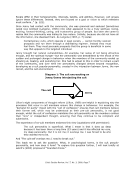
This leads me to ask the question: What, in psychological terms, is the cult pseudo-
personality, and how does it form? To explore this question further, I will look briefly at
Lalich‘s (2004) proposal of ―bounded choice.‖
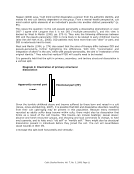
The cult
Jenny
Diagram 1: The cult encroaching on
Jenny/Jenny introjecting the cult
People differ in their temperaments, interests, talents, and abilities. However, cult groups
ignore these differences. Instead, they are focused on a goal or vision to which members
must conform…‖ (p. 122).
Once Jenny had contact with the community, she was groomed and seduced [sometimes
called love bombed (Langone, 1993)] into what appeared to be a truly spiritual, loving,
exciting, forward-thinking, caring, and trustworthy group of people. But later she came to
realise that the community was hiding its true nature. Initially, because she did not have all
the information, she idealised them. As Langone (1993, p. 7) states:
Contemporary cults, which operate in open society ...cannot forcibly restrain
prospects and run them through a debilitating regimen. Instead they must
fool them. They must persuade prospects that the group is beneficial in some
way that appeals to the targeted individual.
Jenny brought her natural vulnerabilities—for example, her sense of not being attractive
enough, and her spiritual hunger—but her personality was destabilised by the shock of the
sudden and prolonged change in behaviour when the members of the community ended up
shouting at, beating, and punishing her. She had to adjust to this in order to remain a part
of the community, and over time her personality changed almost beyond recognition,
developing as a cult pseudo-personality, created in the interaction between Jenny, the new
recruit, and the cult environment.
Lifton‘s eight components of thought reform (Lifton, 1989) are helpful in explaining why the
processes that occur in cult members ensure this change in behaviour. For example, the
―demand for purity‖ mixed with the ―cult of confession‖ ensures that cult members believe
their former self, which may be understood as their pre-cult personality, is not good
enough, whilst the cult of confession maintains the cult personality as the members confess
their ―sins‖ or independent thought, ensuring that they continue to be compliant and
submissive.
The experience of ex-cult members endorses this view (quotations with permission):
The cult personality is superficial. What I mean is that it does go deep
because it has been there a long time (23 years) and it has affected my core,
my deep personality. But it is not me it overlays me. I was forced to be who
they wanted me to be.
And ―The cult self overlays me I need to break out.‖
This leads me to ask the question: What, in psychological terms, is the cult pseudo-
personality, and how does it form? To explore this question further, I will look briefly at
Lalich‘s (2004) proposal of ―bounded choice.‖
The cult
Jenny
Diagram 1: The cult encroaching on
Jenny/Jenny introjecting the cult