Cultic Studies Review, Vol. 7, No. 3, 2008, Page 8
Bounded Choice
Lalich (2004) suggests that the choices made by cult members make perfect sense within
the cult setting and belief system (p. 2). She explains how cult members reach this state of
mind, and the process of conversion or worldview shift (p. 15), which she suggests might be
responsible for the change of personality. She notes that:
Belief and coercion are at the heart of the change.
Conversion requires ―charismatic commitment.‖
This shift takes root quickly ―so that people become easily enmeshed and in some
cases trapped, at least psychologically.‖
The transformation is deeply felt.
The transformation is intensely troubling because of the resultant changes in
personality, attitudes, and behaviors.
There is a loss of sense of self.
The outcome of conversion is a firm believer, a new person.
Identification and internalization complete the loss of pre-group identity (p. 270)
because they have in a sense become the organization (pp. 15–17).
Lalich states:
This process … of transformation involves a reorganization of the person‘s
inner identity or sense of self. Typically it occurs through a mixture of
emotional appeals, rituals, instruction, self-examination, confession, and
rejection, all in a context that deftly combines stress and harmony. Most often
guilt, shame, and anxiety are integral to this process. Responding to the
demands can be exhausting and stressful, for it requires repeated acts of self-
renunciation at the same time, the person experiences relief at having
―found the answer,‖ which is associated with a kind of personal freedom. (p.
16)
This change in personality, attitude, and behaviour is illustrated by Jenny/Magdalene‘s
experience Magdalene had been willing to do anything they asked her, and she had lost
Jenny‘s pre-cult individuality. At least four possible explanations of the cult pseudo-
personality have been put forward: doubling, false self, adaptation, or dissociation.
Doubling
Lifton (2000), in his research into the mentality of the Nazi doctors working in concentration
camps, interviewed some of the surviving Nazi doctors who had had the power of life and
death over prisoners and also continued to live a ―normal‖ life outside of the camps. He
suggests that doubling is the psychological vehicle used to describe this phenomenon, which
explains how they could live with themselves and commit such atrocities.
Lifton notes that, unlike in dissociation and Dissociative Identity Disorder (DID) (in which
parts split off from each other— see below), in doubling there is both autonomy and
connection between the Auschwitz (concentration camp) self and the prior self. He states
that there is a dialogue between the two selves. The Nazi doctor needed his Auschwitz self
to function psychologically in an environment so antithetical to his previous ethical
standards, and he needed his prior self in order to continue to see himself as a humane
physician, husband, and father. The Auschwitz self, therefore, had to be both autonomous
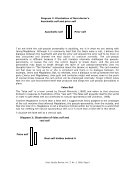
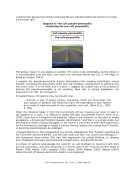
and connected to the Prior self that gave rise to it. I visualise the split in doubling as a
vertical split with a connection:
Bounded Choice
Lalich (2004) suggests that the choices made by cult members make perfect sense within
the cult setting and belief system (p. 2). She explains how cult members reach this state of
mind, and the process of conversion or worldview shift (p. 15), which she suggests might be
responsible for the change of personality. She notes that:
Belief and coercion are at the heart of the change.
Conversion requires ―charismatic commitment.‖
This shift takes root quickly ―so that people become easily enmeshed and in some
cases trapped, at least psychologically.‖
The transformation is deeply felt.
The transformation is intensely troubling because of the resultant changes in
personality, attitudes, and behaviors.
There is a loss of sense of self.
The outcome of conversion is a firm believer, a new person.
Identification and internalization complete the loss of pre-group identity (p. 270)
because they have in a sense become the organization (pp. 15–17).
Lalich states:
This process … of transformation involves a reorganization of the person‘s
inner identity or sense of self. Typically it occurs through a mixture of
emotional appeals, rituals, instruction, self-examination, confession, and
rejection, all in a context that deftly combines stress and harmony. Most often
guilt, shame, and anxiety are integral to this process. Responding to the
demands can be exhausting and stressful, for it requires repeated acts of self-
renunciation at the same time, the person experiences relief at having
―found the answer,‖ which is associated with a kind of personal freedom. (p.
16)
This change in personality, attitude, and behaviour is illustrated by Jenny/Magdalene‘s
experience Magdalene had been willing to do anything they asked her, and she had lost
Jenny‘s pre-cult individuality. At least four possible explanations of the cult pseudo-
personality have been put forward: doubling, false self, adaptation, or dissociation.
Doubling
Lifton (2000), in his research into the mentality of the Nazi doctors working in concentration
camps, interviewed some of the surviving Nazi doctors who had had the power of life and
death over prisoners and also continued to live a ―normal‖ life outside of the camps. He
suggests that doubling is the psychological vehicle used to describe this phenomenon, which
explains how they could live with themselves and commit such atrocities.
Lifton notes that, unlike in dissociation and Dissociative Identity Disorder (DID) (in which
parts split off from each other— see below), in doubling there is both autonomy and
connection between the Auschwitz (concentration camp) self and the prior self. He states
that there is a dialogue between the two selves. The Nazi doctor needed his Auschwitz self
to function psychologically in an environment so antithetical to his previous ethical
standards, and he needed his prior self in order to continue to see himself as a humane
physician, husband, and father. The Auschwitz self, therefore, had to be both autonomous
and connected to the Prior self that gave rise to it. I visualise the split in doubling as a
vertical split with a connection: