Cultic Studies Review, Vol. 7, No. 3, 2008, Page 13
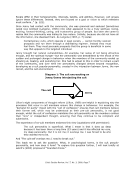
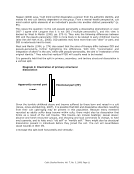
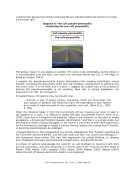
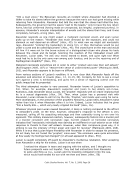
I envision the pseudo-personality overlaying the pre-cult personality like tarmac on a road,
a horizontal split:
Diagram 6: The cult pseudo-personality
overlaying the pre-cult personality
Cult pseudo-personality
Pre-cult personality
The tarmac ―takes‖ to one degree or another. For some it sits comfortably, but for others it
is uncomfortable from the start and when the individual leaves the cult, it will begin to
break up (Singer, 2003).
I suggest the pseudo-personality mimics dissociation—the machine relentlessly moves
forward, overlaying the personality of the new cult members, causing them to adjust to this
new world view—it is not them and it is them. I suggest the greater part of the process of
forming the pseudo-personality is not doubling, false self, or simply adaptation, not
dissociation nor DID, but introjection.
In Gestalt theory, introjection may be thought of as
...material—a way of acting, feeling, evaluating—which you have taken into
your system of behavior but which you have not assimilated in such fashion
as to make it a genuine part of your organism—your self. (Perls et al., 1951,
p. 189)
When the individual takes in from the environment without chewing over what is taken in
(as happens in a cult), it is difficult to digest and gain nourishment from it. Perls et al.
(1951) state that in introjection the organism ―takes in the ‗material‘ on the basis of forced
acceptance, a forced (and therefore pseudo) identification,‖ and that it is a foreign body, but
the organism resists it being dislodged. In the case of a cult, there is often little opportunity
for the individual to dislodge or digest it without leaving, getting into a great deal of trouble,
or becoming psychologically de-stabilised.
I suggest that Jenny, the unsuspecting new recruit, idealised her new ―friends‖ (and they let
her) and their attractive beliefs, and she took them and their cult culture and ideology in—
she introjected them—whole. She had little opportunity for critical thinking, or chewing
over: Magdalene therefore developed and overlaid Jenny, who became buried.
A number of authors acknowledge the need for ex-cult members to reconnect with their
pre-cult personality, and that doing this is a crucial part of the recovery process (West &
Martin, 1994 Martin, 1993 Langone, 1993 Singer, 2000 Hassan, 2000). Hassan (2000)
states the split-off pseudo-personality needs to be integrated.
I envision the pseudo-personality overlaying the pre-cult personality like tarmac on a road,
a horizontal split:
Diagram 6: The cult pseudo-personality
overlaying the pre-cult personality
Cult pseudo-personality
Pre-cult personality
The tarmac ―takes‖ to one degree or another. For some it sits comfortably, but for others it
is uncomfortable from the start and when the individual leaves the cult, it will begin to
break up (Singer, 2003).
I suggest the pseudo-personality mimics dissociation—the machine relentlessly moves
forward, overlaying the personality of the new cult members, causing them to adjust to this
new world view—it is not them and it is them. I suggest the greater part of the process of
forming the pseudo-personality is not doubling, false self, or simply adaptation, not
dissociation nor DID, but introjection.
In Gestalt theory, introjection may be thought of as
...material—a way of acting, feeling, evaluating—which you have taken into
your system of behavior but which you have not assimilated in such fashion
as to make it a genuine part of your organism—your self. (Perls et al., 1951,
p. 189)
When the individual takes in from the environment without chewing over what is taken in
(as happens in a cult), it is difficult to digest and gain nourishment from it. Perls et al.
(1951) state that in introjection the organism ―takes in the ‗material‘ on the basis of forced
acceptance, a forced (and therefore pseudo) identification,‖ and that it is a foreign body, but
the organism resists it being dislodged. In the case of a cult, there is often little opportunity
for the individual to dislodge or digest it without leaving, getting into a great deal of trouble,
or becoming psychologically de-stabilised.
I suggest that Jenny, the unsuspecting new recruit, idealised her new ―friends‖ (and they let
her) and their attractive beliefs, and she took them and their cult culture and ideology in—
she introjected them—whole. She had little opportunity for critical thinking, or chewing
over: Magdalene therefore developed and overlaid Jenny, who became buried.
A number of authors acknowledge the need for ex-cult members to reconnect with their
pre-cult personality, and that doing this is a crucial part of the recovery process (West &
Martin, 1994 Martin, 1993 Langone, 1993 Singer, 2000 Hassan, 2000). Hassan (2000)
states the split-off pseudo-personality needs to be integrated.