Cultic Studies Review, Vol. 7, No. 3, 2008, Page 2
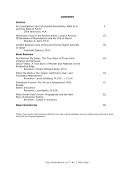
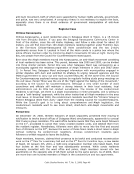
CONTENTS
Articles
An Investigation into Cult Pseudo-Personality: What Is It 3
and How Does It Form?
Gillie Jenkinson, M.A.
Narcissistic Fraud in the Ancient World: Lucian‘s Account 19
Of Alexander of Abonuteichos and the Cult of Glycon
Stephen A. Kent, Ph.D.
Conflict Between Aum Critics and Human Rights Activists 35
In Japan
Yoshihide Sakurai, Ph.D.
Book Reviews
Not Without My Sister: The True Story of Three Girls 49
Violated and Betrayed
Jesus Freaks: A True Story of Murder and Madness on the
Evangelical Edge
Reviewer: Miriam Williams Boeri, Ph.D.
When the Body is the Target: Self-Harm, Pain, and 53
Traumatic Attachments
Reviewer: Lorna Goldberg, M.S.W., L.C.S.W.
Shattered Dreams: My Life as a Polygamist‘s Wife 57
Escape
Stolen Innocence
Reviewer: Livia Bardin, M.S.W.
What Orwell Didn‘t Know: Propaganda and the New 62
Face of American Politics
Reviewer: Joseph P. Szimhart
News Summaries 68
*Note: these pages referenced are different than the original published journal. Please check the end of each
article for the original pagination.