Cultic Studies Review, Vol. 7, No. 3, 2008, Page 15
cult, cult, and ―authentic‖ identities (p. 184). My proposal of chewing over and digesting or
eliminating introjects supports this view.
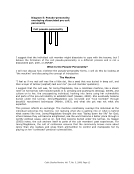
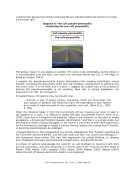
To summarise this section, I suggest that the pseudo-personality is not a dissociated part
that needs integrating nor is it doubling, false self, or simply adaptation. Instead, it is an
introjected part that needs chewing over and digesting, allowing what is nourishing to
remain and eliminating the rest.
Treatment Implications
How both ex-cult members and their helpers or therapists conceptualise the problem of
recovery is vitally important. I suggest that the concepts of introjection, chewing over, and
digestion might be more helpful than dissociation and integration.
I now will give four case examples of what I mean by chewing over, digesting, and
eliminating the cult pseudo-personality, and one example of integrating dissociation and
then chewing over, digesting, and eliminating the cult-pseudo personality:
1. Jenny became judgmental, religious, serious, and compliant as she introjected the
cult personality, Magdalene. As Jenny/Magdalene moved away from the cult, and
chewed over the beliefs of the cult and what she had become, she returned to her
pre-cult personality, exhibiting humour, playfulness, assertiveness, and
compassion. She decided that this way of being was more consistent with her own
view of Christianity as opposed to the cult‘s view. And so she chose to take a
nonjudgmental stance rather than the judgmental stance she had learned in the
cult.
2. Magdalene had to sleep with men—i.e., prostitute herself—for the sake of fulfilling
the aims of the cult. Jenny did not need to integrate the part of Magdalene that did
these things, but she needed to be compassionate with herself, to see these actions
as part of the ―bounded choice‖ (Lalich, 2004) that made sense within the cult, and
to make her own decision about her actions in the future regarding sleeping with
men (chewing over and digestion). She also needed a good deal of support in order
to recover from the trauma of it all, including the resulting post-traumatic stress
and her negative self-image.
3. A male heterosexual client in his 30s joined a Buddhist cult and discovered the
leader was homosexual and expected all the men to be the same. The client
complied with this because, as it was explained to him, doing so was more
spiritual—his ―bounded choice‖ (Lalich 2004). When he left the cult, he thought
through carefully (chewed over), with my support, whether he was actually
homosexual, and he realised that he had known since he was a teenager that he
was not. Hence, he reverted to being heterosexual. He did not integrate this
homosexual part but rather chewed over and challenged the cult‘s view. In
digesting his experience and deciding what he wanted to be in the future, he
―eliminated‖ the cult‘s view and reverted to his pre-cult stance on his sexuality.
4. A woman in her 40s had been told by the cult that her father had sexually abused
her, and this affected her deeply, causing her terrible trauma and resulting in a
severe split within the family. When she came to me for therapy, we explored this
possibility. As she chewed the issue over, she realised she had no memories at all
of being abused by her father. She checked the claim out with him and her mother,
and they confirmed that he had not abused her. She did not need to integrate this
belief she needed to chew it over, digest it, eliminate it, and return to her pre-cult
view of her parents and reconnect with them.
cult, cult, and ―authentic‖ identities (p. 184). My proposal of chewing over and digesting or
eliminating introjects supports this view.
To summarise this section, I suggest that the pseudo-personality is not a dissociated part
that needs integrating nor is it doubling, false self, or simply adaptation. Instead, it is an
introjected part that needs chewing over and digesting, allowing what is nourishing to
remain and eliminating the rest.
Treatment Implications
How both ex-cult members and their helpers or therapists conceptualise the problem of
recovery is vitally important. I suggest that the concepts of introjection, chewing over, and
digestion might be more helpful than dissociation and integration.
I now will give four case examples of what I mean by chewing over, digesting, and
eliminating the cult pseudo-personality, and one example of integrating dissociation and
then chewing over, digesting, and eliminating the cult-pseudo personality:
1. Jenny became judgmental, religious, serious, and compliant as she introjected the
cult personality, Magdalene. As Jenny/Magdalene moved away from the cult, and
chewed over the beliefs of the cult and what she had become, she returned to her
pre-cult personality, exhibiting humour, playfulness, assertiveness, and
compassion. She decided that this way of being was more consistent with her own
view of Christianity as opposed to the cult‘s view. And so she chose to take a
nonjudgmental stance rather than the judgmental stance she had learned in the
cult.
2. Magdalene had to sleep with men—i.e., prostitute herself—for the sake of fulfilling
the aims of the cult. Jenny did not need to integrate the part of Magdalene that did
these things, but she needed to be compassionate with herself, to see these actions
as part of the ―bounded choice‖ (Lalich, 2004) that made sense within the cult, and
to make her own decision about her actions in the future regarding sleeping with
men (chewing over and digestion). She also needed a good deal of support in order
to recover from the trauma of it all, including the resulting post-traumatic stress
and her negative self-image.
3. A male heterosexual client in his 30s joined a Buddhist cult and discovered the
leader was homosexual and expected all the men to be the same. The client
complied with this because, as it was explained to him, doing so was more
spiritual—his ―bounded choice‖ (Lalich 2004). When he left the cult, he thought
through carefully (chewed over), with my support, whether he was actually
homosexual, and he realised that he had known since he was a teenager that he
was not. Hence, he reverted to being heterosexual. He did not integrate this
homosexual part but rather chewed over and challenged the cult‘s view. In
digesting his experience and deciding what he wanted to be in the future, he
―eliminated‖ the cult‘s view and reverted to his pre-cult stance on his sexuality.
4. A woman in her 40s had been told by the cult that her father had sexually abused
her, and this affected her deeply, causing her terrible trauma and resulting in a
severe split within the family. When she came to me for therapy, we explored this
possibility. As she chewed the issue over, she realised she had no memories at all
of being abused by her father. She checked the claim out with him and her mother,
and they confirmed that he had not abused her. She did not need to integrate this
belief she needed to chew it over, digest it, eliminate it, and return to her pre-cult
view of her parents and reconnect with them.