Cultic Studies Review, Vol. 7, No. 3, 2008, Page 10
Adaptation
Adaptation is, in social psychology and sociology, ―a shift in sociological or cultural
disposition. Thus, one is said to ‗adapt‘ to a new environment‖ (Reber &Reber, 2001, p.
11).
It could be said that joining a cult is simply an adaptation: Individuals are choosing to be
the way the cult wants them to be, and they want to change. This suggests that the
individual has a choice, and free will. Even though there probably is an adaptation occurring
in the individual when he or she first joins the group, there is, in many cases, a more
fundamental, enforced change (my conceptualisation of the machine in the next section),
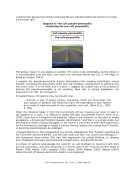
which I suggest is therefore not just adaptation. The pseudo-personality is much more than
adaptation. An adapting personality is not split into a Jenny and a Magdalene, for example
it maintains inner coherence while exhibiting external change. The pseudopersonality of
cult joiners, on the other hand, is changed centrally, rather than peripherally (Ofshe &
Singer, 1986), as in adaptation.
Dissociation
The idea that parts of a single personality can be divided, or dissociated, is not a new one.
Van der Hart, Nijenhuis, and Steele (2006) state, in relation to patients with PTSD and other
trauma-related disorders (p.28-29), that ―...dissociation is a division among ‗systems of
ideas and functions that constitute the personality,‘‖ that these parts are self-conscious, and
that each part involves its own separate sense of self.
The Diagnostic and Statistical Manual of Mental Disorders (DSM IV) states that ―The
essential feature of the Dissociative Disorders is a disruption in the usually integrated
functions of consciousness, memory, identity, or perception. The disturbance may be
sudden or gradual, transient or chronic.‖
The Dictionary of Psychology states that the term dissociation is
Used generally to characterize the process (or its result) whereby a
coordinated set of activities, thoughts, attitudes, or emotions becomes
separated from the rest of the person‘s personality and functions
independently. Mild forms are seen in compartmentalization ...more extreme
forms are observed in the dissociative disorders. (Reber &Reber, 2001)
Dissociation therefore occurs on a continuum, and we all dissociate to some degree (West &
Martin, 1994). At one end of the continuum, we may experience the sensation, for example,
of driving a familiar route and not recalling the journey. At the other end is complete
memory loss, and there is much in between. At the more serious end of the continuum, Van
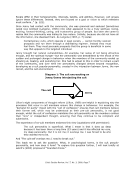
der Hart et al. (2006) propose the following conceptualisation of dissociative disorders. The
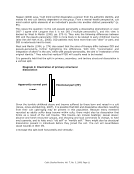
simplest division of the personality in traumatised individuals is primary structural
dissociation, wherein there is a single split—one apparently normal part (ANP) and one
emotional part (EP) of the personality [see diagram 4 following], also sometimes referred to
as alter personalities (Putnam, 1989). Secondary structural dissociation, as a result of
prolonged and repeated traumatisation, has a wide range of complexity and involves one
ANP and a number of EPs. Tertiary structural dissociation is characteristic of Dissociative
Identity Disorder (DID), previously known as Multiple-Personality Disorder (MPD), in which
there are multiple ANP and EP parts of the personality.
Jenny/Magdalene‘s experience supports Langone‘s assertion that many members end up
―proclaim[ing] great happiness yet hide great suffering.‖ He states that this is a ―state of
dissociation in which members are ‗split‘ but not ‗multiple.‘‖ (1993, p. 9). They do not
exhibit an alter, as in structural dissociation.
Adaptation
Adaptation is, in social psychology and sociology, ―a shift in sociological or cultural
disposition. Thus, one is said to ‗adapt‘ to a new environment‖ (Reber &Reber, 2001, p.
11).
It could be said that joining a cult is simply an adaptation: Individuals are choosing to be
the way the cult wants them to be, and they want to change. This suggests that the
individual has a choice, and free will. Even though there probably is an adaptation occurring
in the individual when he or she first joins the group, there is, in many cases, a more
fundamental, enforced change (my conceptualisation of the machine in the next section),
which I suggest is therefore not just adaptation. The pseudo-personality is much more than
adaptation. An adapting personality is not split into a Jenny and a Magdalene, for example
it maintains inner coherence while exhibiting external change. The pseudopersonality of
cult joiners, on the other hand, is changed centrally, rather than peripherally (Ofshe &
Singer, 1986), as in adaptation.
Dissociation
The idea that parts of a single personality can be divided, or dissociated, is not a new one.
Van der Hart, Nijenhuis, and Steele (2006) state, in relation to patients with PTSD and other
trauma-related disorders (p.28-29), that ―...dissociation is a division among ‗systems of
ideas and functions that constitute the personality,‘‖ that these parts are self-conscious, and
that each part involves its own separate sense of self.
The Diagnostic and Statistical Manual of Mental Disorders (DSM IV) states that ―The
essential feature of the Dissociative Disorders is a disruption in the usually integrated
functions of consciousness, memory, identity, or perception. The disturbance may be
sudden or gradual, transient or chronic.‖
The Dictionary of Psychology states that the term dissociation is
Used generally to characterize the process (or its result) whereby a
coordinated set of activities, thoughts, attitudes, or emotions becomes
separated from the rest of the person‘s personality and functions
independently. Mild forms are seen in compartmentalization ...more extreme
forms are observed in the dissociative disorders. (Reber &Reber, 2001)
Dissociation therefore occurs on a continuum, and we all dissociate to some degree (West &
Martin, 1994). At one end of the continuum, we may experience the sensation, for example,
of driving a familiar route and not recalling the journey. At the other end is complete
memory loss, and there is much in between. At the more serious end of the continuum, Van
der Hart et al. (2006) propose the following conceptualisation of dissociative disorders. The
simplest division of the personality in traumatised individuals is primary structural
dissociation, wherein there is a single split—one apparently normal part (ANP) and one
emotional part (EP) of the personality [see diagram 4 following], also sometimes referred to
as alter personalities (Putnam, 1989). Secondary structural dissociation, as a result of
prolonged and repeated traumatisation, has a wide range of complexity and involves one
ANP and a number of EPs. Tertiary structural dissociation is characteristic of Dissociative
Identity Disorder (DID), previously known as Multiple-Personality Disorder (MPD), in which
there are multiple ANP and EP parts of the personality.
Jenny/Magdalene‘s experience supports Langone‘s assertion that many members end up
―proclaim[ing] great happiness yet hide great suffering.‖ He states that this is a ―state of
dissociation in which members are ‗split‘ but not ‗multiple.‘‖ (1993, p. 9). They do not
exhibit an alter, as in structural dissociation.