Cultic Studies Review, Vol. 1, No. 2, 2002, Page 92
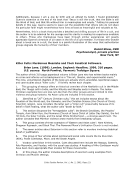
full disclosure to the Watchtower elders, or a prospective mate. The Watchtower notes an
exception to the rule that one should provide full disclosure is one
that the Christian must ever bear in mind. As a soldier of Christ he is in
theocratic warfare and he must exercise added caution when dealing with
God’s foes. Thus the scriptures show that for the purpose of protecting the
interests of God’s cause, it is proper to hide the truth from God‘s enemies.
(Watchtower January 1, 1960, emphasis mine).
The Watchtower article adds that in a court situation ―when faced with the alternative of
speaking and betraying his brothers or not speaking and being held in contempt of court,
the ...[Watchtower follower] will put the welfare of his brothers ahead of his own‖
(Watchtower January 1, 1960, emphasis mine). The Watchtower defines lies as ―untruths
told for selfish reasons and which work injury to others‖ (Watchtower May 1, 1957). This
article says nothing about life and death situations as claimed by Kobil, but speaks only
about ―betraying his brothers.‖
The expert witnesses possessed copies of these Watchtower publications on the stand and
paraphrased from one of them. They indicate, given the court‘s definition of lying: ―the
whole truth and nothing but the truth and using words with an intent to deceive,‖ that lying
was involved in this case (Lewis and Saarni, 1993, p. 156).
A review of the background of the rule the court used to reverse the juries decision, rule No.
610, indicates that this rule has little bearing on this case. The rule historically refers to, for
example, using the belief that one was healed of an illness to ridicule a court witness‘s
personal faith in areas not related to the case, or the belief of an atheist that some may try
to use to impugn the credibility of a court witness who happens to hold this belief (Ratcliffe,
1941). The testimony in this case involved not a belief or opinion, but a doctrine openly
taught in official Watchtower publications, a doctrine that must be accepted and practiced
under pain of being cut off from the church (Franz, 1983). Of note is the fact that Mr. Kobil
ridiculed Emma Kriston‘s religious beliefs in his brief as witness for the plaintiff, stating her
testimony ―reached the incredible‖ because she claimed her ―45 year emphysema was cured
by a prayer request to the Wings of Hearing [sic-healing] radio station‖ (Kobil testimony,
pp. 23-24). Kobil added that her testimony ―was so far out that it did not satisfy the basic
requirement of competent, credible testimony.‖ Today millions of people believe that faith
can heal, and this kind of response appears to be exactly what evid. 610 is designed to
prevent (Ratcliffe, 1941).
This rule derives from the once common belief that only a fear of supernatural punishment
can make a witness faithful to his oath (Ratcliffe, 1941, p. 339). It is for this reason that a
line of questioning that reveals a witness is an atheist (or professes another religion) is
forbidden (Malek v. Federal Ins. Co. 994 F.2d 49 (2nd Cir. 1993). In this case, the religious
beliefs of both Kobil and Schabow were a major part of the case that had to be raised in the
court trial.
A Utah statute and a New York court opinion provided that persons shall not be excluded
from testimony on account of their opinions on religion, but those opinions can be used to
question the credibility of a witness (Ratcliffe, 1941, pp. 336-337). Although in Stanbro v.
Hopkins (28 Barb (N.Y.) 265 (1859)), the court ruled that questions on religion can be
asked to help evaluate a witness‘s character and honesty, more recently the courts have
usually held that religious beliefs or unbeliefs cannot be used as part of cross examination
to question a witness‘s credibility (Ratcliffe, 1941 Chadbourn, 1930). The justification often
given for this rule is that theological orthodoxy is not to be used as a test of truth, and if a
witness holds views different from the jury, this line of questioning could cause the jury to
discount the testimony presented.
full disclosure to the Watchtower elders, or a prospective mate. The Watchtower notes an
exception to the rule that one should provide full disclosure is one
that the Christian must ever bear in mind. As a soldier of Christ he is in
theocratic warfare and he must exercise added caution when dealing with
God’s foes. Thus the scriptures show that for the purpose of protecting the
interests of God’s cause, it is proper to hide the truth from God‘s enemies.
(Watchtower January 1, 1960, emphasis mine).
The Watchtower article adds that in a court situation ―when faced with the alternative of
speaking and betraying his brothers or not speaking and being held in contempt of court,
the ...[Watchtower follower] will put the welfare of his brothers ahead of his own‖
(Watchtower January 1, 1960, emphasis mine). The Watchtower defines lies as ―untruths
told for selfish reasons and which work injury to others‖ (Watchtower May 1, 1957). This
article says nothing about life and death situations as claimed by Kobil, but speaks only
about ―betraying his brothers.‖
The expert witnesses possessed copies of these Watchtower publications on the stand and
paraphrased from one of them. They indicate, given the court‘s definition of lying: ―the
whole truth and nothing but the truth and using words with an intent to deceive,‖ that lying
was involved in this case (Lewis and Saarni, 1993, p. 156).
A review of the background of the rule the court used to reverse the juries decision, rule No.
610, indicates that this rule has little bearing on this case. The rule historically refers to, for
example, using the belief that one was healed of an illness to ridicule a court witness‘s
personal faith in areas not related to the case, or the belief of an atheist that some may try
to use to impugn the credibility of a court witness who happens to hold this belief (Ratcliffe,
1941). The testimony in this case involved not a belief or opinion, but a doctrine openly
taught in official Watchtower publications, a doctrine that must be accepted and practiced
under pain of being cut off from the church (Franz, 1983). Of note is the fact that Mr. Kobil
ridiculed Emma Kriston‘s religious beliefs in his brief as witness for the plaintiff, stating her
testimony ―reached the incredible‖ because she claimed her ―45 year emphysema was cured
by a prayer request to the Wings of Hearing [sic-healing] radio station‖ (Kobil testimony,
pp. 23-24). Kobil added that her testimony ―was so far out that it did not satisfy the basic
requirement of competent, credible testimony.‖ Today millions of people believe that faith
can heal, and this kind of response appears to be exactly what evid. 610 is designed to
prevent (Ratcliffe, 1941).
This rule derives from the once common belief that only a fear of supernatural punishment
can make a witness faithful to his oath (Ratcliffe, 1941, p. 339). It is for this reason that a
line of questioning that reveals a witness is an atheist (or professes another religion) is
forbidden (Malek v. Federal Ins. Co. 994 F.2d 49 (2nd Cir. 1993). In this case, the religious
beliefs of both Kobil and Schabow were a major part of the case that had to be raised in the
court trial.
A Utah statute and a New York court opinion provided that persons shall not be excluded
from testimony on account of their opinions on religion, but those opinions can be used to
question the credibility of a witness (Ratcliffe, 1941, pp. 336-337). Although in Stanbro v.
Hopkins (28 Barb (N.Y.) 265 (1859)), the court ruled that questions on religion can be
asked to help evaluate a witness‘s character and honesty, more recently the courts have
usually held that religious beliefs or unbeliefs cannot be used as part of cross examination
to question a witness‘s credibility (Ratcliffe, 1941 Chadbourn, 1930). The justification often
given for this rule is that theological orthodoxy is not to be used as a test of truth, and if a
witness holds views different from the jury, this line of questioning could cause the jury to
discount the testimony presented.