Cultic Studies Review, Vol. 1, No. 2, 2002, Page 4
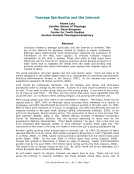
Teenage Spirituality and the Internet
Alison Lutz
Candler School of Theology
Rev. Dean Borgman
Center for Youth Studies
Gordon-Conwell Theological Seminary
Abstract
Literature related to teenage spirituality and the Internet is reviewed. Teen
use of the Internet for purposes related to religion is clearly increasing.
Although teens demonstrate some discernment regarding the evaluation of
information on the Web, their capacity to critically evaluate religious
information on the Web is lacking. Those who want to help teens more
effectively use the Internet for religious purposes should develop programs to
teach teens how to separate the wheat from the chafe and develop and
promote credible and useful information sites dealing with religious topics of
interest to teens.
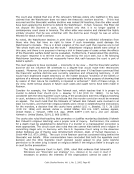
The youth population will grow rapidly over the next twenty years. There are close to 30
million teenagers in the United States today (U.S. Department of Commerce and Economic
Statistics Administration Bureau of the Census, 2002). In this decade that number is
expected to expand to 35 million (La Ferle, 2000).
Teen trends are notoriously transient: the hot brands, cool shows, and must-have
accessories seem to change by the minute. A priest at a local church summed it up when
he said, ―If you want to stay young, hang out with young people. If you want to die young,
try to keep up with them.‖ Yet there are two trends that seem more significant than the
usual teen fad: an increase in teens seeking religion, and growing teen Internet use.
More young people than ever seem to be interested in religion. The Gallup Youth Survey
reports that in 1997, 64% of American teens surveyed were members of a church or
synagogue, and 42% had attended services for religious worship in the past week. In 1999,
68% of teens were members of a church or synagogue, and 46% had attended services for
religious worship in the past week (George Gallup International Institute, 2000). In an
article for Newsweek, Sharon Begley writes, ―this generation of teens is more spiritual than
their parents‖ (Begley, 2000, p. 55). William Damon, Director of Stanford University‘s
Center for Adolescents, believes that the spiritual searching of teens may be the
generation‘s defining characteristic. ―Their belief systems,‖ he says, ―are in the long run
more important than fashions, tastes, or even behavior‖ (Leland, 2000, page 63). The
importance of this trend in the long run makes it more than just a passing adolescent fad.
Another rapidly growing trend among teens is Internet use. In 1994, 50 percent of teens
reported that it‘s in to be online that number jumped to 88 percent in 1997 (Tapscott, cited
in La Ferle, 2000). In 1998, Jupiter Communications estimated that 8.4 million teens were
online (Nash, 1999). By the year 2000 11 million teens were online (Capone, 2000).
Though this growth is impressive, it shows no signs of slowing. Jupiter Communications
predicts that by the year 2005, 19.8 million teens will be surfing the Web (Capone, 2000).
This trend is by no means unique to the U.S. By 2005, there will be an estimated 15.3
million European teens online (Ebenkamp, 2000).
As with teens‘ search for religion, Internet use seems here to stay. Teens are not only
using the Internet in growing numbers, but those already online show every sign of
Teenage Spirituality and the Internet
Alison Lutz
Candler School of Theology
Rev. Dean Borgman
Center for Youth Studies
Gordon-Conwell Theological Seminary
Abstract
Literature related to teenage spirituality and the Internet is reviewed. Teen
use of the Internet for purposes related to religion is clearly increasing.
Although teens demonstrate some discernment regarding the evaluation of
information on the Web, their capacity to critically evaluate religious
information on the Web is lacking. Those who want to help teens more
effectively use the Internet for religious purposes should develop programs to
teach teens how to separate the wheat from the chafe and develop and
promote credible and useful information sites dealing with religious topics of
interest to teens.
The youth population will grow rapidly over the next twenty years. There are close to 30
million teenagers in the United States today (U.S. Department of Commerce and Economic
Statistics Administration Bureau of the Census, 2002). In this decade that number is
expected to expand to 35 million (La Ferle, 2000).
Teen trends are notoriously transient: the hot brands, cool shows, and must-have
accessories seem to change by the minute. A priest at a local church summed it up when
he said, ―If you want to stay young, hang out with young people. If you want to die young,
try to keep up with them.‖ Yet there are two trends that seem more significant than the
usual teen fad: an increase in teens seeking religion, and growing teen Internet use.
More young people than ever seem to be interested in religion. The Gallup Youth Survey
reports that in 1997, 64% of American teens surveyed were members of a church or
synagogue, and 42% had attended services for religious worship in the past week. In 1999,
68% of teens were members of a church or synagogue, and 46% had attended services for
religious worship in the past week (George Gallup International Institute, 2000). In an
article for Newsweek, Sharon Begley writes, ―this generation of teens is more spiritual than
their parents‖ (Begley, 2000, p. 55). William Damon, Director of Stanford University‘s
Center for Adolescents, believes that the spiritual searching of teens may be the
generation‘s defining characteristic. ―Their belief systems,‖ he says, ―are in the long run
more important than fashions, tastes, or even behavior‖ (Leland, 2000, page 63). The
importance of this trend in the long run makes it more than just a passing adolescent fad.
Another rapidly growing trend among teens is Internet use. In 1994, 50 percent of teens
reported that it‘s in to be online that number jumped to 88 percent in 1997 (Tapscott, cited
in La Ferle, 2000). In 1998, Jupiter Communications estimated that 8.4 million teens were
online (Nash, 1999). By the year 2000 11 million teens were online (Capone, 2000).
Though this growth is impressive, it shows no signs of slowing. Jupiter Communications
predicts that by the year 2005, 19.8 million teens will be surfing the Web (Capone, 2000).
This trend is by no means unique to the U.S. By 2005, there will be an estimated 15.3
million European teens online (Ebenkamp, 2000).
As with teens‘ search for religion, Internet use seems here to stay. Teens are not only
using the Internet in growing numbers, but those already online show every sign of