Cultic Studies Review, Vol. 1, No. 2, 2002, Page 28
Cults, Conversion, Science, &Harm
Michael D. Langone, Ph.D.
Executive Director, AFF
Editor, Cultic Studies Review
An introductory paper presented to AFF's 2001 Annual Conference, “Cults,
Conversion, Science &Harm,” Holiday Inn, Newark, NJ Airport, May 4-5,
2001
Abstract
Personal vs. social (intrinsic vs. extrinsic), sudden vs. gradual, and inner-
generated vs. outer-generated aspects of conversion experience are
discussed in order to illuminate the complexity and variability of conversions
associated with cultic groups. Negative aspects of conversion are discussed in
relationship to psychological, ethical, social, and theological concerns. The
importance of differentiating these concerns and studying the varied ways in
which harm manifests in cultic groups is stressed.
Cults and Conversion
In his classic work, The Varieties of Religious Experience, William James defines religion as
―the feelings, acts, and experiences of individual men in their solitude, so far as they
apprehend themselves to stand in relation to whatever they may consider the divine‖
(James, 1961, p. 42). James's definition of religion is useful when one focuses on the
experiences of men and women earnestly seeking a deeper personal relationship with God
or the ground of being. His definition is compatible with what Gordon Allport, a pioneer in
the psychology of religion, called ―intrinsic religion‖ — that is, "faith as a supreme value in
its own right" (Hood, Spilka, Hunsberger, &Gorsuch, 1996, p. 11). But James and many
others with an interest in religion often overlook the less compelling kinds of religious
experience that Allport categorized as ―extrinsic religion‖: ―religion that is strictly utilitarian
useful for the self in granting safety, social standing, solace, and endorsement of one‘s
chosen way of life‖ (Hood, et al., 1996, p. 11).
An especially interesting variety of experience that is often, though not necessarily, religious
is conversion. The Compact Edition of the Oxford English Dictionary (1971) defines
conversion as ―the action of converting or fact of being converted to some opinion, belief,
party, etc.‖ (p. 546). This definition implies a useful distinction between ―converting‖ and
―being converted‖ — what I have sometimes referred to respectively as ―inner-generated‖
and ―outer-generated‖ conversions. The people about whom James wrote typically had
sudden, inner-generated conversions that were highly personal. Some contemporaries of
James, however, studied gradual conversions that had much more prominent social, or
outer-generated, aspects. J. B. Pratt, for example, claimed that the born-again experiences
in American fundamentalism were largely a result of social expectations: Adolescents were
―born again‖ because their social world expected them to be ―born again‖ (Pratt, 1920).
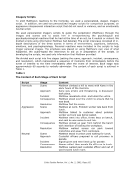
We have, then, several dimensions of conversion experience to consider:
Personal vs. social (intrinsic vs. extrinsic)
Sudden vs. gradual
Inner-generated vs. outer-generated.
These dimensions should be viewed as continua, or even as intersecting dimensions, not as
dichotomies. Extrinsic, social conversions might have profound personal aspects, just as
profoundly personal conversions might have extrinsic, utilitarian aspects.
Cults, Conversion, Science, &Harm
Michael D. Langone, Ph.D.
Executive Director, AFF
Editor, Cultic Studies Review
An introductory paper presented to AFF's 2001 Annual Conference, “Cults,
Conversion, Science &Harm,” Holiday Inn, Newark, NJ Airport, May 4-5,
2001
Abstract
Personal vs. social (intrinsic vs. extrinsic), sudden vs. gradual, and inner-
generated vs. outer-generated aspects of conversion experience are
discussed in order to illuminate the complexity and variability of conversions
associated with cultic groups. Negative aspects of conversion are discussed in
relationship to psychological, ethical, social, and theological concerns. The
importance of differentiating these concerns and studying the varied ways in
which harm manifests in cultic groups is stressed.
Cults and Conversion
In his classic work, The Varieties of Religious Experience, William James defines religion as
―the feelings, acts, and experiences of individual men in their solitude, so far as they
apprehend themselves to stand in relation to whatever they may consider the divine‖
(James, 1961, p. 42). James's definition of religion is useful when one focuses on the
experiences of men and women earnestly seeking a deeper personal relationship with God
or the ground of being. His definition is compatible with what Gordon Allport, a pioneer in
the psychology of religion, called ―intrinsic religion‖ — that is, "faith as a supreme value in
its own right" (Hood, Spilka, Hunsberger, &Gorsuch, 1996, p. 11). But James and many
others with an interest in religion often overlook the less compelling kinds of religious
experience that Allport categorized as ―extrinsic religion‖: ―religion that is strictly utilitarian
useful for the self in granting safety, social standing, solace, and endorsement of one‘s
chosen way of life‖ (Hood, et al., 1996, p. 11).
An especially interesting variety of experience that is often, though not necessarily, religious
is conversion. The Compact Edition of the Oxford English Dictionary (1971) defines
conversion as ―the action of converting or fact of being converted to some opinion, belief,
party, etc.‖ (p. 546). This definition implies a useful distinction between ―converting‖ and
―being converted‖ — what I have sometimes referred to respectively as ―inner-generated‖
and ―outer-generated‖ conversions. The people about whom James wrote typically had
sudden, inner-generated conversions that were highly personal. Some contemporaries of
James, however, studied gradual conversions that had much more prominent social, or
outer-generated, aspects. J. B. Pratt, for example, claimed that the born-again experiences
in American fundamentalism were largely a result of social expectations: Adolescents were
―born again‖ because their social world expected them to be ―born again‖ (Pratt, 1920).
We have, then, several dimensions of conversion experience to consider:
Personal vs. social (intrinsic vs. extrinsic)
Sudden vs. gradual
Inner-generated vs. outer-generated.
These dimensions should be viewed as continua, or even as intersecting dimensions, not as
dichotomies. Extrinsic, social conversions might have profound personal aspects, just as
profoundly personal conversions might have extrinsic, utilitarian aspects.