Cultic Studies Review, Vol. 1, No. 2, 2002, Page 114
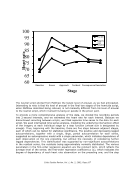
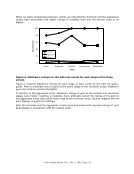
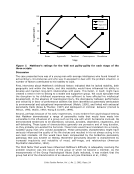
Figure 7. Matthew’s ratings for the VAS not guilty-guilty for each stage of the
three scripts.
Discussion
The case presented here was of a young man with average intelligence who found himself in
extraordinary circumstances and who was ill-equipped to deal with the problem situation. A
number of factors contributed to his inability to cope.
First, interviews about Matthew‘s childhood history indicated that he lacked stability, both
geographic and within the family, and this instability would have influenced his ability to
develop and maintain long-term relationships with peers. This factor, in itself, might have
created a need in him to belong to a stable and supportive group. We could speculate that
the disruption to his childhood experiences was sufficient to have affected his intellectual
development. In the absence of neurological injury, the discrepancy between performance
and verbal IQ in favor of performance abilities has been identified as potentially attributable
to environmental and educational impoverishment (Walsh, 1990), and linked with antisocial
personality traits (Snow &Thurber, 1997) and delinquent or criminal behavior (Cornell &
Wilson, 1992 Walsh, 1992 Wong &Cornell, 1999).
Second, perhaps because of his early experiences, it was evident from psychological testing
that Matthew demonstrated a range of personality traits that would have made him
vulnerable to the influences of a group such as the one with which he became involved. He
demonstrated tendencies to be depressive, schizoid, avoidant, dependent, negativistic, and
self-defeating. These types of characteristics generally are pervasive and of long duration,
so they probably pre-existed the homicide. These traits would have translated into a moody,
isolated young man who craved acceptance. These personality characteristics might have
seriously influenced the quality of his life choices and resulted in his not always acting in his
own best interests. All this would have been compounded by the borderline personality
pathology that was evident on testing. Borderline personality disorder is characterized by
increased impulsivity and instability of mood, self-image, and relationships (American
Psychiatric Association, 1994).
The third factor that would have influenced Matthew‘s difficulty in adequately resolving the
problem situation was the nature of the group of which he became a member. As the
measurements of the Group Psychological Abuse Scale indicated, it was evident that the
group had all of the characteristics of an abusive cult (see Chambers et al., 1994).
0
20
40
60
80
100
Scene Approach Incident Consequence Resolution
Stage
Murder
Aggression
Neutral
Not
guilty/guilty
Figure 7. Matthew’s ratings for the VAS not guilty-guilty for each stage of the
three scripts.
Discussion
The case presented here was of a young man with average intelligence who found himself in
extraordinary circumstances and who was ill-equipped to deal with the problem situation. A
number of factors contributed to his inability to cope.
First, interviews about Matthew‘s childhood history indicated that he lacked stability, both
geographic and within the family, and this instability would have influenced his ability to
develop and maintain long-term relationships with peers. This factor, in itself, might have
created a need in him to belong to a stable and supportive group. We could speculate that
the disruption to his childhood experiences was sufficient to have affected his intellectual
development. In the absence of neurological injury, the discrepancy between performance
and verbal IQ in favor of performance abilities has been identified as potentially attributable
to environmental and educational impoverishment (Walsh, 1990), and linked with antisocial
personality traits (Snow &Thurber, 1997) and delinquent or criminal behavior (Cornell &
Wilson, 1992 Walsh, 1992 Wong &Cornell, 1999).
Second, perhaps because of his early experiences, it was evident from psychological testing
that Matthew demonstrated a range of personality traits that would have made him
vulnerable to the influences of a group such as the one with which he became involved. He
demonstrated tendencies to be depressive, schizoid, avoidant, dependent, negativistic, and
self-defeating. These types of characteristics generally are pervasive and of long duration,
so they probably pre-existed the homicide. These traits would have translated into a moody,
isolated young man who craved acceptance. These personality characteristics might have
seriously influenced the quality of his life choices and resulted in his not always acting in his
own best interests. All this would have been compounded by the borderline personality
pathology that was evident on testing. Borderline personality disorder is characterized by
increased impulsivity and instability of mood, self-image, and relationships (American
Psychiatric Association, 1994).
The third factor that would have influenced Matthew‘s difficulty in adequately resolving the
problem situation was the nature of the group of which he became a member. As the
measurements of the Group Psychological Abuse Scale indicated, it was evident that the
group had all of the characteristics of an abusive cult (see Chambers et al., 1994).
0
20
40
60
80
100
Scene Approach Incident Consequence Resolution
Stage
Murder
Aggression
Neutral
Not
guilty/guilty