Cultic Studies Review, Vol. 1, No. 2, 2002, Page 108
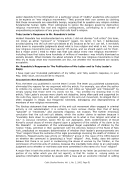
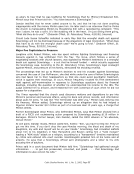
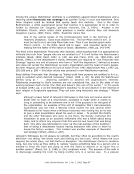
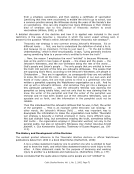
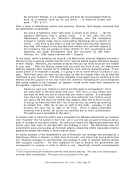
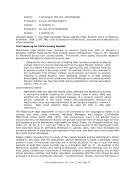
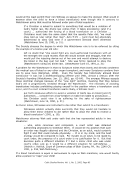
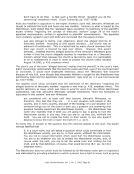
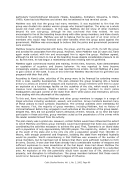
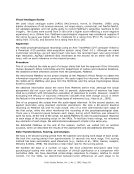
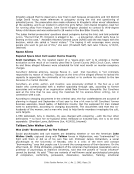
size omega (1) to omega (5). Table 4 shows the estimated values of these parameters and
the associated t tests for statistical significance for the three scripts.
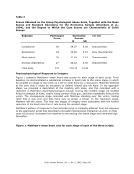
Table 4
Parameters in the First-Order Autoregression Model for the Time Series
Representation of Heart-Rate Responses to the Neutral, Aggression, and Homicide
Scripts
Homicide script
Aggression script Neutral script
(N=267) (N=287) (N=224)
Param. t(260) Param. t(280) Param. t(217)
Constant 75.64 40.29** 81.53 59.94** 69.33 36.09**
p (1) 0.52 9.40** 0.45 8.36** 0.53 9.15**
omega (1) 15.05 6.37** 9.26 5.30** 10.21 4.10**
omega (2) -4.51 -2.20* -2.55 -1.63 -2.91 -1.22
omega (3) -2.65 -1.27 1.21 0.76 2.01 0.87
omega (4) -3.91 -1.76 -1.25 -0.72 2.17 0.96
omega (5) 0.28 0.12 -2.72 -1.43 -4.09 -1.75
Note. Omega (1) to omega (5) constitute steps in heart rate between adjacent stages:
baseline, setting the scene, approach, incident, consequence, resolution.
*p .05, **p .01.
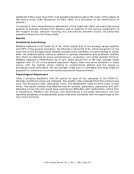
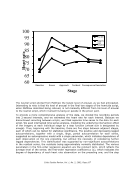
For all scripts, the imagery produced a significant overall increase in Matthew‘s heart rate.
In the homicide script, this increase was followed by a significant reduction in the rate from
the scene to the approach, with a further reduction in rate that approached significance
from the consequence to the resolution stages. For the aggression script and neutral script,
there were no significant steps after the first. A trend analysis demonstrated a substantial
and significant decreasing linear trend across the stages of the homicide script from the
scene stage to the resolution stage, t(263) =6.19, p.001. There was a smaller but
significant decreasing trend across the same stages of the aggression script, t(283) =2.94,
p.01. The peaking of arousal at the beginning of the homicide script is an interesting
manifestation of Matthew‘s reaction to the imagery.
Psychological Response to Imagery
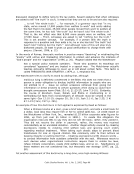
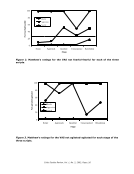
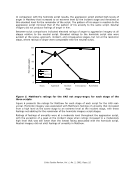
Figure 2 presents the ratings for the VAS not fearful-fearful for each stage of each script.
Matthew reported intense fear in the time leading up to the homicide and during the
homicidal act itself. The relief that Matthew reported during the consequence stage when he
realized that his problem was solved gave way to increased fear when he realized that
supporters of the victim might be waiting to attack him and that he needed to leave the
scene.
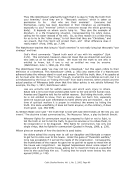
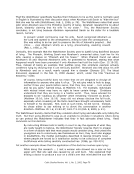
Matthew‘s pattern of response to the homicide script was noticeably different from that
associated with the aggression script. Although the distressing nature of the aggressive
interaction elevated his fear ratings, these ratings were only moderate at the highest level,
at the incident stage when he imaged expressing his anger about a work colleague.
size omega (1) to omega (5). Table 4 shows the estimated values of these parameters and
the associated t tests for statistical significance for the three scripts.
Table 4
Parameters in the First-Order Autoregression Model for the Time Series
Representation of Heart-Rate Responses to the Neutral, Aggression, and Homicide
Scripts
Homicide script
Aggression script Neutral script
(N=267) (N=287) (N=224)
Param. t(260) Param. t(280) Param. t(217)
Constant 75.64 40.29** 81.53 59.94** 69.33 36.09**
p (1) 0.52 9.40** 0.45 8.36** 0.53 9.15**
omega (1) 15.05 6.37** 9.26 5.30** 10.21 4.10**
omega (2) -4.51 -2.20* -2.55 -1.63 -2.91 -1.22
omega (3) -2.65 -1.27 1.21 0.76 2.01 0.87
omega (4) -3.91 -1.76 -1.25 -0.72 2.17 0.96
omega (5) 0.28 0.12 -2.72 -1.43 -4.09 -1.75
Note. Omega (1) to omega (5) constitute steps in heart rate between adjacent stages:
baseline, setting the scene, approach, incident, consequence, resolution.
*p .05, **p .01.
For all scripts, the imagery produced a significant overall increase in Matthew‘s heart rate.
In the homicide script, this increase was followed by a significant reduction in the rate from
the scene to the approach, with a further reduction in rate that approached significance
from the consequence to the resolution stages. For the aggression script and neutral script,
there were no significant steps after the first. A trend analysis demonstrated a substantial
and significant decreasing linear trend across the stages of the homicide script from the
scene stage to the resolution stage, t(263) =6.19, p.001. There was a smaller but
significant decreasing trend across the same stages of the aggression script, t(283) =2.94,
p.01. The peaking of arousal at the beginning of the homicide script is an interesting
manifestation of Matthew‘s reaction to the imagery.
Psychological Response to Imagery
Figure 2 presents the ratings for the VAS not fearful-fearful for each stage of each script.
Matthew reported intense fear in the time leading up to the homicide and during the
homicidal act itself. The relief that Matthew reported during the consequence stage when he
realized that his problem was solved gave way to increased fear when he realized that
supporters of the victim might be waiting to attack him and that he needed to leave the
scene.
Matthew‘s pattern of response to the homicide script was noticeably different from that
associated with the aggression script. Although the distressing nature of the aggressive
interaction elevated his fear ratings, these ratings were only moderate at the highest level,
at the incident stage when he imaged expressing his anger about a work colleague.