Cultic Studies Review, Vol. 1, No. 2, 2002, Page 6
are x-rated or have sexual content 25% reported seeing sites with information about hate
groups and 14% reported seeing sites that teach how to build bombs (Buechner et al,
1999).
Librarians and educators also try to assess adolescent Internet use so that they can help
young adults find what they need where they are looking for it, namely, on the Web. Mary
Arnold, president of the Young Adult Library Services in Cuyahoga County, near Cleveland,
Ohio, says ―students have an idea when they come into the library that everything they
need is on the Internet‖ (Leibovich, 2000, p. G6). John Lubans Jr., deputy university
librarian at Duke University found in a research study of college freshmen that more than
two-thirds said they use the Web for school-related research ―because the Internet helped
them find more sources‖ (Lubans, 1999, How often do they use the Web? Section, para. 2).
How Do Teens Relate to the Web?
In order to understand teen Internet use, market researchers are studying why teens go
online and why they frequent certain sites. In her study analyzing how young adults use
media, La Ferle explains that teens use media to meet two fundamental adolescent needs:
socialization and identity formation. Through radio, television, and the Internet teens can
explore the world around them. They can access information that helps them form their
values, i.e., what is important to them, how they want to live, what groups they want to
join, etc. Summarizing teen use of the Internet, La Ferle asserts, ―teens are looking to the
media for relevant information that will impact their lives. […S]ites that provide for teens‘
needs are more likely to be visited‖ (La Ferle, 2000, p. 62). Thus, it is very important to
understand that young people are not surfing the Net merely because it is in or cool they
are using the Internet to fulfill fundamental needs. Web sites that respond accordingly are
sites teens will visit.
However, since adolescence is a time for forming independence and identity, teens do not
want to be told what to think or what to do. They want quality resources that will let them
decide for themselves. As Lubans points out, ―students want freedom, but they want
guidance‖ (Lubans, 1999, Introduction section, para. 6). In his study of students aged 14-
19, Lubans found that almost all were strongly in favor of having live Internet links in the
library catalog. The majority of the students, for example, agreed with the proposition,
―librarians should provide access to all relevant information.‖ Yet as one focus group
member pointed out, ―If it‘s in the catalog, that means it‘s a worthwhile source‖ (Lubans,
1999, What students want from librarians section, para. 4). Teens do not want just to be
led to more sources of information they want those sources to be relevant and worthwhile
sources.
How teens determine whether information from the Web is relevant and worthwhile is a
complex question. A Time/CNN poll of teens shows that young adults have a healthy
skepticism regarding the information they receive on the Web. Only 13% of teens surveyed
said they trusted information from the Internet a great deal, compared to the 83% who
trusted information from their parents a great deal. Information from teachers, religious
leaders, friends, and traditional forms of media is more trustworthy than information from
the Internet (Buechner et al., 1999). It must, of course, be taken into consideration that
the Internet is a relatively new source (La Ferle, 2000). Therefore, the fact that many teens
do not use the Internet or have been using it for only a short time may have a lot to do with
why only 13% of American teens trust information on the Internet a great deal.
Whether or not they trust the information they find online, many teens demonstrate some
skills for evaluating Web resources, suggesting that even if they trust information on the
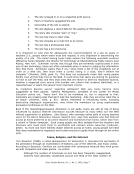
Web, they do not trust it blindly. Lubans (1999, How they judge sites section, para. 2)
found that students view the following criteria as most important for evaluating a Web site
(in descending order):
are x-rated or have sexual content 25% reported seeing sites with information about hate
groups and 14% reported seeing sites that teach how to build bombs (Buechner et al,
1999).
Librarians and educators also try to assess adolescent Internet use so that they can help
young adults find what they need where they are looking for it, namely, on the Web. Mary
Arnold, president of the Young Adult Library Services in Cuyahoga County, near Cleveland,
Ohio, says ―students have an idea when they come into the library that everything they
need is on the Internet‖ (Leibovich, 2000, p. G6). John Lubans Jr., deputy university
librarian at Duke University found in a research study of college freshmen that more than
two-thirds said they use the Web for school-related research ―because the Internet helped
them find more sources‖ (Lubans, 1999, How often do they use the Web? Section, para. 2).
How Do Teens Relate to the Web?
In order to understand teen Internet use, market researchers are studying why teens go
online and why they frequent certain sites. In her study analyzing how young adults use
media, La Ferle explains that teens use media to meet two fundamental adolescent needs:
socialization and identity formation. Through radio, television, and the Internet teens can
explore the world around them. They can access information that helps them form their
values, i.e., what is important to them, how they want to live, what groups they want to
join, etc. Summarizing teen use of the Internet, La Ferle asserts, ―teens are looking to the
media for relevant information that will impact their lives. […S]ites that provide for teens‘
needs are more likely to be visited‖ (La Ferle, 2000, p. 62). Thus, it is very important to
understand that young people are not surfing the Net merely because it is in or cool they
are using the Internet to fulfill fundamental needs. Web sites that respond accordingly are
sites teens will visit.
However, since adolescence is a time for forming independence and identity, teens do not
want to be told what to think or what to do. They want quality resources that will let them
decide for themselves. As Lubans points out, ―students want freedom, but they want
guidance‖ (Lubans, 1999, Introduction section, para. 6). In his study of students aged 14-
19, Lubans found that almost all were strongly in favor of having live Internet links in the
library catalog. The majority of the students, for example, agreed with the proposition,
―librarians should provide access to all relevant information.‖ Yet as one focus group
member pointed out, ―If it‘s in the catalog, that means it‘s a worthwhile source‖ (Lubans,
1999, What students want from librarians section, para. 4). Teens do not want just to be
led to more sources of information they want those sources to be relevant and worthwhile
sources.
How teens determine whether information from the Web is relevant and worthwhile is a
complex question. A Time/CNN poll of teens shows that young adults have a healthy
skepticism regarding the information they receive on the Web. Only 13% of teens surveyed
said they trusted information from the Internet a great deal, compared to the 83% who
trusted information from their parents a great deal. Information from teachers, religious
leaders, friends, and traditional forms of media is more trustworthy than information from
the Internet (Buechner et al., 1999). It must, of course, be taken into consideration that
the Internet is a relatively new source (La Ferle, 2000). Therefore, the fact that many teens
do not use the Internet or have been using it for only a short time may have a lot to do with
why only 13% of American teens trust information on the Internet a great deal.
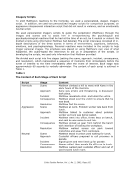
Whether or not they trust the information they find online, many teens demonstrate some
skills for evaluating Web resources, suggesting that even if they trust information on the
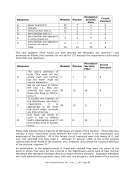
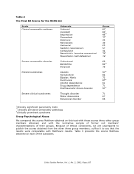
Web, they do not trust it blindly. Lubans (1999, How they judge sites section, para. 2)
found that students view the following criteria as most important for evaluating a Web site
(in descending order):