Cultic Studies Review, Vol. 1, No. 2, 2002, Page 31
descriptions of conversion to groups typically viewed as controversial. We need to look at
the entire panorama of conversion — to nonreligious as well as religious groups, to benign
as well as destructive group experiences — to understand the field well enough to make
balanced judgments concerning what to do about the ―true ‗bad‘ things‖ to which Dr. Barker
refers in the quote above.
Harm and Science
There is an appropriate vagueness about the term ―bad,‖ which Dr. Barker uses. Different
observers will object to different groups or to different aspects of the same group. What the
observers have in common is a sense that the group inflicts harm on or inflicts offense to
people, within or outside the group. In a paper I gave at our annual conference in Minnesota
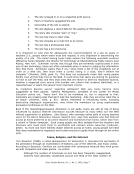
two years ago, I described four kinds of concern that cultic and related groups stimulate:
1. Psychological concerns (e.g., high stress resulting from members‘ being placed in
demanding double binds) [A number of research presentations in this conference
address psychological harm. Several programs address issues of recovery and
healing.]
2. Ethical concerns (e.g., the use of deceit and manipulation to persuade people to
attend an introductory seminar)
3. Social concerns (e.g., breaking laws, medical neglect of children)
4. Theological concerns (e.g., whether or not a translation of a sacred text is accurate,
whether or not a group's claim to belong to a particular religious tradition is valid)
If one is to maintain one‘s intellectual integrity as a critic, it is important not to confuse or
blend together these concerns, and it is especially important not to presume that the
presence of one concern makes the group ―bad‖ and, by imputation, infected by the other
concerns. I suspect, for example, that some large-group-awareness training programs
might be vulnerable to ethical critiques, even though no strong scientific evidence of
widespread psychological harm exists.
Although research is far from definitive, it does suggest that a sizeable minority, if not a
majority, of former members of cultic groups (those characterized by high levels of
manipulation and exploitation) suffer measurable psychological distress. Research (e.g.,
Lottick, 1993) also suggests that approximately 1% to 2% of the population has had at
least a transient involvement with a cultic group, and that several hundred thousand people
in the Western democracies probably enter and leave cultic groups each year.
These numbers represent a significant level of harm that, however much we might dispute
its causes, is likely to motivate some people to take action and to try to persuade
governments to take action. Several programs in this conference address international
dimensions of the cult phenomenon. Others address counseling and related helping efforts.
Activists and professionals concerned about cults see their primary obligations as providing
assistance and education, as helping hurting people and forewarning those who might
become entangled with dubious groups in the future. As with helpers in other fields, these
individuals cannot wait for the kinds of definitive scientific research that warm the hearts of
academicians. They must act with incomplete knowledge because persons needing help now
can't wait for science to advance.
This conflict results in a competition between action and research, both of which demand
more resources than society is willing to commit to the cult issue. Sometimes action
dominates and research is neglected or ignored. Sometimes research dominates and the
needs of hurting people are ignored or neglected. Sometimes — and I hope this is true for
AFF — action and research have a dynamic relationship in which the latter informs and
descriptions of conversion to groups typically viewed as controversial. We need to look at
the entire panorama of conversion — to nonreligious as well as religious groups, to benign
as well as destructive group experiences — to understand the field well enough to make
balanced judgments concerning what to do about the ―true ‗bad‘ things‖ to which Dr. Barker
refers in the quote above.
Harm and Science
There is an appropriate vagueness about the term ―bad,‖ which Dr. Barker uses. Different
observers will object to different groups or to different aspects of the same group. What the
observers have in common is a sense that the group inflicts harm on or inflicts offense to
people, within or outside the group. In a paper I gave at our annual conference in Minnesota
two years ago, I described four kinds of concern that cultic and related groups stimulate:
1. Psychological concerns (e.g., high stress resulting from members‘ being placed in
demanding double binds) [A number of research presentations in this conference
address psychological harm. Several programs address issues of recovery and
healing.]
2. Ethical concerns (e.g., the use of deceit and manipulation to persuade people to
attend an introductory seminar)
3. Social concerns (e.g., breaking laws, medical neglect of children)
4. Theological concerns (e.g., whether or not a translation of a sacred text is accurate,
whether or not a group's claim to belong to a particular religious tradition is valid)
If one is to maintain one‘s intellectual integrity as a critic, it is important not to confuse or
blend together these concerns, and it is especially important not to presume that the
presence of one concern makes the group ―bad‖ and, by imputation, infected by the other
concerns. I suspect, for example, that some large-group-awareness training programs
might be vulnerable to ethical critiques, even though no strong scientific evidence of
widespread psychological harm exists.
Although research is far from definitive, it does suggest that a sizeable minority, if not a
majority, of former members of cultic groups (those characterized by high levels of
manipulation and exploitation) suffer measurable psychological distress. Research (e.g.,
Lottick, 1993) also suggests that approximately 1% to 2% of the population has had at
least a transient involvement with a cultic group, and that several hundred thousand people
in the Western democracies probably enter and leave cultic groups each year.
These numbers represent a significant level of harm that, however much we might dispute
its causes, is likely to motivate some people to take action and to try to persuade
governments to take action. Several programs in this conference address international
dimensions of the cult phenomenon. Others address counseling and related helping efforts.
Activists and professionals concerned about cults see their primary obligations as providing
assistance and education, as helping hurting people and forewarning those who might
become entangled with dubious groups in the future. As with helpers in other fields, these
individuals cannot wait for the kinds of definitive scientific research that warm the hearts of
academicians. They must act with incomplete knowledge because persons needing help now
can't wait for science to advance.
This conflict results in a competition between action and research, both of which demand
more resources than society is willing to commit to the cult issue. Sometimes action
dominates and research is neglected or ignored. Sometimes research dominates and the
needs of hurting people are ignored or neglected. Sometimes — and I hope this is true for
AFF — action and research have a dynamic relationship in which the latter informs and