Cultic Studies Review, Vol. 1, No. 2, 2002, Page 14
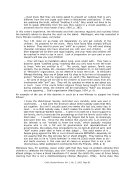
battle...The borderline separating racialist Odinism and National Socialism is
exceedingly thin, and much of the material produced by racialist Odinism
contains explicit odes to Hitler and to the Third Reich.
Odinists differ from Ásatrúers in another way as well: their powerful sense of
conspiratorialism. For Odinists, there is no doubt as to the identity of the
enemy...it is the Jew.‖ (Kaplan, 1997, pp. 85-86)
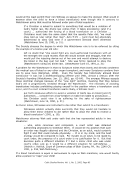
There are, of course, self-proclaimed Ásatrúar who are ideologically Odinists, and vice
versa. Gerald Baumgarten of the Southern Poverty Law Center of the Ant-Defamation
League recognizes this discrepancy in stating, ―While there may be Odinists who are not
part of neo-Nazi or other groups, Odinism has been a pseudo-religious strain of American
neo-Nazi activity and propaganda‖ (personal communication, March 16, 2001). It would be
a mistake to draw inferences to individuals‘ belief systems by judging the label they
prescribe to themselves. The compartmentalization of these terms is mine alone, and is for
discussion purposes only.
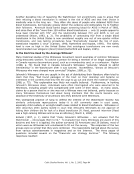
A third group that should be separated from both Ásatrúar and Odinists are the
Reconstructionalists. These individuals hold no religious belief in the Aesir pantheon, nor do
they proclaim racialism or terrorist ideologies. In fact, they concern themselves with Ásatrú
on a purely superficial, aesthetic level, and are seen by many Ásatrúar as something along
the spectrum between curiosity and anathema. Reconstructionalism will not be covered
below, simply due to the fact that it has no place in a discussion of Ásatrú. Those interested
in generic Reconstructionalism are encouraged to pursue literature concerning groups such
as the Society for Creative Anachronism. For an exploration of the truly obscure extreme of
the Reconstructionalist spectrum, specific to Ásatrú, readers are referred to the Kingdom of
Uberheim (Uberheim, 2002), which advertises itself as ―a Private ‗Event based‘ Wagnerian
Society subculture which is a unique mixture of Medievalism /Fantasy and Norse /
Germanic Mythology.‖ (Uberheim, 2002, http://cybergaard.tripod.com/index1.html)
Aesir, Asynjor, and Vanir
A second group of terms to be defined and differentiated are Aesir, Asynjor, and Vanir. For
the purposes of this discussion, the term Aesir will be used to refer to these three terms
collectively. Ásatrú is a polytheistic faith, and Ásatrúar are, as their name implies, people
who are faithful to their pantheon of deities, the Aesir. There have been attempts to further
diversify the religion through organizational dedication to specific patron deity(ies) a move
towards micro-compartmentalization that has only served to segregate adherents from one
another.
The term Asa, or As, is the singular form of Aesir, and is often used as a prefix when
indicating an individual deity (i.e., Asa Thor). There are two main bodies of deities, the
Aesir and Vanir, overseeing government and fertility respectively, although these classes of
deities are sometimes obscured or confused. The prefix Van, like Asa, is sometimes used to
denote an individual Vanir deity (i.e., Van Njord). Asynjor refers specifically to the
goddesses, but is used more rarely in Ásatrú vernacular. Ásatrú is predominantly a
patriarchal faith, with Asa Othin reigning as the chieftain of the Aesir. He is known by many
names, each descriptive of a definitive characteristic, but All Father is his chief title. Othin
rules the Aesir, and the Vanir as well, as a result of his supreme wisdom. The Aesir‘s
purview extends across government, war, strategy, aristocracy, litigation, commerce, and
civilization. The Vanir‘s purview encompasses agriculture, fertility, sexual prowess, and the
natural cycle of life, death and rebirth.
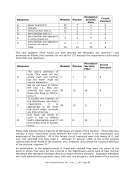
Among the Aesir pantheon are:
battle...The borderline separating racialist Odinism and National Socialism is
exceedingly thin, and much of the material produced by racialist Odinism
contains explicit odes to Hitler and to the Third Reich.
Odinists differ from Ásatrúers in another way as well: their powerful sense of
conspiratorialism. For Odinists, there is no doubt as to the identity of the
enemy...it is the Jew.‖ (Kaplan, 1997, pp. 85-86)
There are, of course, self-proclaimed Ásatrúar who are ideologically Odinists, and vice
versa. Gerald Baumgarten of the Southern Poverty Law Center of the Ant-Defamation
League recognizes this discrepancy in stating, ―While there may be Odinists who are not
part of neo-Nazi or other groups, Odinism has been a pseudo-religious strain of American
neo-Nazi activity and propaganda‖ (personal communication, March 16, 2001). It would be
a mistake to draw inferences to individuals‘ belief systems by judging the label they
prescribe to themselves. The compartmentalization of these terms is mine alone, and is for
discussion purposes only.
A third group that should be separated from both Ásatrúar and Odinists are the
Reconstructionalists. These individuals hold no religious belief in the Aesir pantheon, nor do
they proclaim racialism or terrorist ideologies. In fact, they concern themselves with Ásatrú
on a purely superficial, aesthetic level, and are seen by many Ásatrúar as something along
the spectrum between curiosity and anathema. Reconstructionalism will not be covered
below, simply due to the fact that it has no place in a discussion of Ásatrú. Those interested
in generic Reconstructionalism are encouraged to pursue literature concerning groups such
as the Society for Creative Anachronism. For an exploration of the truly obscure extreme of
the Reconstructionalist spectrum, specific to Ásatrú, readers are referred to the Kingdom of
Uberheim (Uberheim, 2002), which advertises itself as ―a Private ‗Event based‘ Wagnerian
Society subculture which is a unique mixture of Medievalism /Fantasy and Norse /
Germanic Mythology.‖ (Uberheim, 2002, http://cybergaard.tripod.com/index1.html)
Aesir, Asynjor, and Vanir
A second group of terms to be defined and differentiated are Aesir, Asynjor, and Vanir. For
the purposes of this discussion, the term Aesir will be used to refer to these three terms
collectively. Ásatrú is a polytheistic faith, and Ásatrúar are, as their name implies, people
who are faithful to their pantheon of deities, the Aesir. There have been attempts to further
diversify the religion through organizational dedication to specific patron deity(ies) a move
towards micro-compartmentalization that has only served to segregate adherents from one
another.
The term Asa, or As, is the singular form of Aesir, and is often used as a prefix when
indicating an individual deity (i.e., Asa Thor). There are two main bodies of deities, the
Aesir and Vanir, overseeing government and fertility respectively, although these classes of
deities are sometimes obscured or confused. The prefix Van, like Asa, is sometimes used to
denote an individual Vanir deity (i.e., Van Njord). Asynjor refers specifically to the
goddesses, but is used more rarely in Ásatrú vernacular. Ásatrú is predominantly a
patriarchal faith, with Asa Othin reigning as the chieftain of the Aesir. He is known by many
names, each descriptive of a definitive characteristic, but All Father is his chief title. Othin
rules the Aesir, and the Vanir as well, as a result of his supreme wisdom. The Aesir‘s
purview extends across government, war, strategy, aristocracy, litigation, commerce, and
civilization. The Vanir‘s purview encompasses agriculture, fertility, sexual prowess, and the
natural cycle of life, death and rebirth.
Among the Aesir pantheon are: