Cultic Studies Review, Vol. 1, No. 2, 2002, Page 91
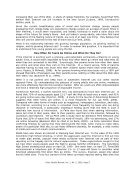
don‘t have to do that. Is that such a terrible thing? Wouldn‘t you do the
same thing? (emphasis mine). (Court Transcript, pp. 1037-1038)
Kobil also testified in opposition to the expert witness‘s claim that Jehovah‘s Witnesses are
taught to withhold the truth and hence are less credible. Contrary to what is taught by the
Watchtower, Kobil stated that the ―appellant takes exception‖ to testimony of the plaintiff‘s
expert witness ―regarding the concept of theocratic warfare‖ (page 29 of the Kobil's
appellant memorandum, written in opposition to plaintiffs‘ memorandum). The appellate
court evidently agreed in part with Kobil and concluded that the expert witness
was also allowed to testify, over objections, about the alleged doctrine of
theocratic warfare. According to [the expert witness]..., the church was an
adherent of isolationism. This is a belief held by many church members that
their own church is favored by God over others. However, [the expert
witness]... testified that the alleged doctrine of the Jehovah‘s Witnesses goes
further in that the church allegedly teaches its members that at a ‗theocratic
ministry school‘ that, because the church is favored by God, it is permissible
to lie to nonbelievers in court in order to protect the church (entry decided
August 14,1992, p. A15 emphasis mine).
The court‘s use of the term ―alleged doctrine‖ implies that the plaintiff, in the court‘s view,
didn‘t convincingly demonstrate that the doctrine exists and that, even if the court had been
so convinced, it would have disallowed testimony about the Theocratic War Doctrine
because of rule 610, even though that theocratic Warfare is taught by the Watchtower was
admitted by Kobil and the Appellants (See appellents' reply brief pp. 2-3 and trial transcript
pp. 1037-1038).
The appeals court ruling concluded that the admission of the testimony ―regarding the
alleged doctrine of theocratic warfare‖ requires a new trial (p. A19, emphasis mine). The
specific testimony at issue, which was close to word for word from the official Watchtower
publications, was that Jehovah‘s Witnesses consider themselves ―more like foreigners or
sojourners in this country‖ and non-Witnesses
are considered evil, at least until they become Jehovah‘s Witnesses, so
therefore, they feel that they are. ..in a war situation with people in this
country, and in every country, and part of the strategy of a war situation is if
someone brings you on the stand or asks you a question and answering that
question honestly would hurt the Watchtower Society, ...the Watchtower has
ruled very explicitly that if what you are going to say is going to hurt the
Watchtower society in any way, then you are to, as they say, withhold the
truth. You are not to reveal the truth, in their words, to one who doesn‘t
deserve to know the truth or learn the truth (R.T. p. 412).
To clarify this, in answer to the question how this doctrine applies to the court, the expert
witness testified that
if, in a court room, you are asked a question which could incriminate or hurt
the Watchtower society, you are to, in their words, withhold the information.
You are not to reveal information which could hurt the Watchtower society.
You are to do whatever you can to protect the Watchtower society, and, of
course under the oath, you are to tell the whole truth and nothing but the
truth, and by that definition, of course, that would be lying (R.T. pp. 413-414
emphasis mine).
The Watchtower doctrine (which must be followed by all Witnesses under pain of expulsion)
was elaborated by providing situations in which a person has a right to know, such as giving
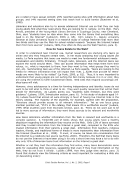
don‘t have to do that. Is that such a terrible thing? Wouldn‘t you do the
same thing? (emphasis mine). (Court Transcript, pp. 1037-1038)
Kobil also testified in opposition to the expert witness‘s claim that Jehovah‘s Witnesses are
taught to withhold the truth and hence are less credible. Contrary to what is taught by the
Watchtower, Kobil stated that the ―appellant takes exception‖ to testimony of the plaintiff‘s
expert witness ―regarding the concept of theocratic warfare‖ (page 29 of the Kobil's
appellant memorandum, written in opposition to plaintiffs‘ memorandum). The appellate
court evidently agreed in part with Kobil and concluded that the expert witness
was also allowed to testify, over objections, about the alleged doctrine of
theocratic warfare. According to [the expert witness]..., the church was an
adherent of isolationism. This is a belief held by many church members that
their own church is favored by God over others. However, [the expert
witness]... testified that the alleged doctrine of the Jehovah‘s Witnesses goes
further in that the church allegedly teaches its members that at a ‗theocratic
ministry school‘ that, because the church is favored by God, it is permissible
to lie to nonbelievers in court in order to protect the church (entry decided
August 14,1992, p. A15 emphasis mine).
The court‘s use of the term ―alleged doctrine‖ implies that the plaintiff, in the court‘s view,
didn‘t convincingly demonstrate that the doctrine exists and that, even if the court had been
so convinced, it would have disallowed testimony about the Theocratic War Doctrine
because of rule 610, even though that theocratic Warfare is taught by the Watchtower was
admitted by Kobil and the Appellants (See appellents' reply brief pp. 2-3 and trial transcript
pp. 1037-1038).
The appeals court ruling concluded that the admission of the testimony ―regarding the
alleged doctrine of theocratic warfare‖ requires a new trial (p. A19, emphasis mine). The
specific testimony at issue, which was close to word for word from the official Watchtower
publications, was that Jehovah‘s Witnesses consider themselves ―more like foreigners or
sojourners in this country‖ and non-Witnesses
are considered evil, at least until they become Jehovah‘s Witnesses, so
therefore, they feel that they are. ..in a war situation with people in this
country, and in every country, and part of the strategy of a war situation is if
someone brings you on the stand or asks you a question and answering that
question honestly would hurt the Watchtower Society, ...the Watchtower has
ruled very explicitly that if what you are going to say is going to hurt the
Watchtower society in any way, then you are to, as they say, withhold the
truth. You are not to reveal the truth, in their words, to one who doesn‘t
deserve to know the truth or learn the truth (R.T. p. 412).
To clarify this, in answer to the question how this doctrine applies to the court, the expert
witness testified that
if, in a court room, you are asked a question which could incriminate or hurt
the Watchtower society, you are to, in their words, withhold the information.
You are not to reveal information which could hurt the Watchtower society.
You are to do whatever you can to protect the Watchtower society, and, of
course under the oath, you are to tell the whole truth and nothing but the
truth, and by that definition, of course, that would be lying (R.T. pp. 413-414
emphasis mine).
The Watchtower doctrine (which must be followed by all Witnesses under pain of expulsion)
was elaborated by providing situations in which a person has a right to know, such as giving