Cultic Studies Review, Vol. 1, No. 2, 2002, Page 19
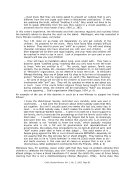
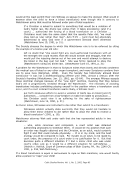
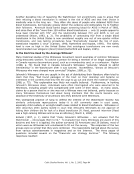
This insistence on personal and Kindred autonomy is a mainstay of Ásatrú. It remains today
a recurring theme throughout kindred literature and is one of the significant distinctions
between Ásatrú and the cultic mentality.
In a cultic situation:
no withdrawal is permitted and no time for private consideration...is allowed.
Thus...the basic assumptions of ―dependency‖ and ―fight-flight‖ replace
individual expression and personal autonomy...[cultic activity] reinforces the
merging of the individual within a ―horde‖ or ―mob‖ whose leader can then
use his/her authority to undermine the individual‘s autonomy. (Halperin,
1983b, p. 229)
If there is blasphemy in Ásatrú, this surrendering of autonomy is it. The ―relationship to a
controlling and charismatic leader‖ (Halperin, 1983, p. 231) that characterizes a cultic group
is anathema to Ásatrúar, who appreciate the strength of the individual and his or her will.
The following excerpts from the literature of individual Ásatrú groups illustrate this
appreciation.
Asatru is an independent faith... We worship the Aesir and Vanir not in
submission, but standing upright… (Gladsheim Kindred, 2002, Retreived from
the World Wide Web: http://www.gladsheim.org/whatis.html)
...Ásatrúars are fiercely independant (sic)...we are not ―sheep,‖ and I would
not see Ásatrúars made into them. (member posting on asatru-
FORN_SED@egroups.com, February 19, 2001)
We recognize the strength of Ásatrú to be in its diversity...and consider the
individual and his or her family to be the most important unit of Ásatrú...We
believe that organizations should exist to support the growth of individuals in
their faith and that leadership positions on any level should be a matter of
responsibility, not privilege (sic)...Ásatrú places the highest value [on]
human freedom and individuality. (Irminsul Aettir, Retrieved February 7,
2001 from http://www.irminsul.org/ir/ir.html)
Wodan‘s Kindred [is] a religious/cultural fraternity of free men &women.
(Wodanesdag Press, 2001, ¶ 1)
Suffice to say, the principle of autonomy is of extreme importance to Ásatrúar.
Although not all Ásatrúar accept them as tenets, Ásatrú professes the Nine Noble Virtues as
a guide to daily morality and a standard by which to measure one‘s actions. In this way
Ásatrú represents a ―healthy religious affiliation [in that it] confirms the individual‘s
autonomy by providing him with an integrated, internalized ability to judge and explore the
moral implications of his acts and those of others‖ (Halperin, 1983a, p. xxi). The Nine
Noble Virtues are Honor, Fidelity, Hospitality, Industriousness, Self-Reliance, Perseverance,
Courage, Truth, and Discipline/Self-Rule. (Irminsul Aettir, 2001). This code of ethics comes
largely from The Havamal (―The Sayings of Har‖), a poetic work included in the Poetic Edda
(Hollander, 1996), which, along with the Prose Edda (Young, 1966), represent the closest
thing Ásatrúar have to a holy text. In The Havamal, Odin imparts wisdom and advice on a
wide array of subjects, including being or receiving a guest, interactions with friend and foe,
and the knowledge of runic magic.
The common term for an Ásatrú group is a Kindred, although many other names exist,
including Felagid, Freehold, and Hof. Formed in these Kindreds, Ásatrú currently spans the
whole of the United States, portions of South America, Canada, and the whole of Iceland.
Normally conducted annually, Ásatrúar meet at an AlThing, or a meeting of Kindreds where
This insistence on personal and Kindred autonomy is a mainstay of Ásatrú. It remains today
a recurring theme throughout kindred literature and is one of the significant distinctions
between Ásatrú and the cultic mentality.
In a cultic situation:
no withdrawal is permitted and no time for private consideration...is allowed.
Thus...the basic assumptions of ―dependency‖ and ―fight-flight‖ replace
individual expression and personal autonomy...[cultic activity] reinforces the
merging of the individual within a ―horde‖ or ―mob‖ whose leader can then
use his/her authority to undermine the individual‘s autonomy. (Halperin,
1983b, p. 229)
If there is blasphemy in Ásatrú, this surrendering of autonomy is it. The ―relationship to a
controlling and charismatic leader‖ (Halperin, 1983, p. 231) that characterizes a cultic group
is anathema to Ásatrúar, who appreciate the strength of the individual and his or her will.
The following excerpts from the literature of individual Ásatrú groups illustrate this
appreciation.
Asatru is an independent faith... We worship the Aesir and Vanir not in
submission, but standing upright… (Gladsheim Kindred, 2002, Retreived from
the World Wide Web: http://www.gladsheim.org/whatis.html)
...Ásatrúars are fiercely independant (sic)...we are not ―sheep,‖ and I would
not see Ásatrúars made into them. (member posting on asatru-
FORN_SED@egroups.com, February 19, 2001)
We recognize the strength of Ásatrú to be in its diversity...and consider the
individual and his or her family to be the most important unit of Ásatrú...We
believe that organizations should exist to support the growth of individuals in
their faith and that leadership positions on any level should be a matter of
responsibility, not privilege (sic)...Ásatrú places the highest value [on]
human freedom and individuality. (Irminsul Aettir, Retrieved February 7,
2001 from http://www.irminsul.org/ir/ir.html)
Wodan‘s Kindred [is] a religious/cultural fraternity of free men &women.
(Wodanesdag Press, 2001, ¶ 1)
Suffice to say, the principle of autonomy is of extreme importance to Ásatrúar.
Although not all Ásatrúar accept them as tenets, Ásatrú professes the Nine Noble Virtues as
a guide to daily morality and a standard by which to measure one‘s actions. In this way
Ásatrú represents a ―healthy religious affiliation [in that it] confirms the individual‘s
autonomy by providing him with an integrated, internalized ability to judge and explore the
moral implications of his acts and those of others‖ (Halperin, 1983a, p. xxi). The Nine
Noble Virtues are Honor, Fidelity, Hospitality, Industriousness, Self-Reliance, Perseverance,
Courage, Truth, and Discipline/Self-Rule. (Irminsul Aettir, 2001). This code of ethics comes
largely from The Havamal (―The Sayings of Har‖), a poetic work included in the Poetic Edda
(Hollander, 1996), which, along with the Prose Edda (Young, 1966), represent the closest
thing Ásatrúar have to a holy text. In The Havamal, Odin imparts wisdom and advice on a
wide array of subjects, including being or receiving a guest, interactions with friend and foe,
and the knowledge of runic magic.
The common term for an Ásatrú group is a Kindred, although many other names exist,
including Felagid, Freehold, and Hof. Formed in these Kindreds, Ásatrú currently spans the
whole of the United States, portions of South America, Canada, and the whole of Iceland.
Normally conducted annually, Ásatrúar meet at an AlThing, or a meeting of Kindreds where