Cultic Studies Review, Vol. 1, No. 2, 2002, Page 84
Another deceptive line of reasoning the Watchtower not uncommonly uses to argue that
their refusing a blood transfusion is rational is the risk of AIDS and that their choice is
medically wise in the long run. They often cite cases of people who obtained AIDS from
blood transfusions, but typically grossly distort the evidence and deliberately try to frighten
their followers. American blood banks began screening blood for AIDS in March of 1985,
and since then of the ―more than 120-million blood transfusions ...only 21 people appear to
have been infected with HIV‖ and the relationship between HIV and AIDS is not yet
understood (Nixon, 1993, p. 3). The probability of contracting HIV from a single blood
transfusion in the United States is now considered roughly one out of one-quarter million
transfusions, and new testing procedures have ―dramatically lowered the risk of post-
transfusion hepatitis C virus‖ (Carlson, 1996 Rutherford and Kaplan, 1995). The safety
level is now so high in the United States that autologous transfusions are now rarely
recommended over allogenic (donor) blood (Rutherford and Kaplan, 1995).
Is the Doctrine Used by the Average Witness?
Many historical studies of the Witnesses movement record examples of common Witnesses
using theocratic warfare. To convict a person for being a member of an illegal organization
in Canada requires documentary proof, such as a membership card, or a confession. Kaplan
(1988, p. 70) found that in Canada Jehovah‘s Witnesses ―generally refused to admit
membership‖ in the Watchtower after it was banned. Nonetheless, ―almost all Jehovah‘s
Witnesses who were charged were convicted‖ (Kaplan, 1988, p. 72).
Jehovah‘s Witnesses who are caught in the act of distributing their literature often tried to
claim that they ―had found packages of the tract on their doorstep and became so
interested in the contents that they felt the urge to go out and share the material‖ (Kaplan,
1988, p. 75). This explanation was likely not readily believed. Furthermore, in hunting
Jehovah‘s Witnesses down, individuals were often interrogated who were assumed to be
Witnesses, including people who sympathized with some of their ideas. In many cases,
claims by a person that he or she was not a Witness were not believed, partly because so
many Witnesses themselves lied about being members that the courts became very
skeptical of the testimony of all persons who they believed were Witnesses.
This widespread practice of lying to defend the interest of the Watchtower Society has
similarly unfortunate repercussions today—it is still commonly seen in court cases,
especially child custody or wrongful death cases related to blood transfusions. Witnesses or
their attorneys often openly stated in court that Jehovah‘s Witnesses do not approve of
letting their children die for lack of a blood transfusion (R. Reed, personal interview [Reed
was a high-ranking Witness and is now an attorney], March 3, 1999).
Kotwall (1997, p. 1) claims that ―many Jehovah‘s Witnesses … are unaware that the
Watchtower … encourages them to lie.‖ To evaluate how many Witnesses are aware of this
doctrine and how it is applied, the author surveyed 92 Americans and 39 Italians, most of
whom were ex-Witnesses and volunteered to fill out the survey. The responses of the two
groups were so similar that they were combined. The respondents learned about the survey
from various advertisements in magazines and on the Internet. The three pages of
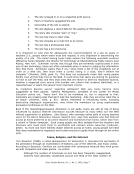
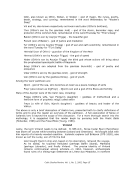
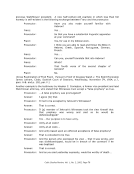
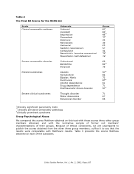
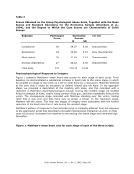
questions included several on the ―theocratic war strategy doctrine.‖ The following
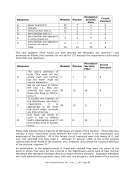
responses resulted:
Another deceptive line of reasoning the Watchtower not uncommonly uses to argue that
their refusing a blood transfusion is rational is the risk of AIDS and that their choice is
medically wise in the long run. They often cite cases of people who obtained AIDS from
blood transfusions, but typically grossly distort the evidence and deliberately try to frighten
their followers. American blood banks began screening blood for AIDS in March of 1985,
and since then of the ―more than 120-million blood transfusions ...only 21 people appear to
have been infected with HIV‖ and the relationship between HIV and AIDS is not yet
understood (Nixon, 1993, p. 3). The probability of contracting HIV from a single blood
transfusion in the United States is now considered roughly one out of one-quarter million
transfusions, and new testing procedures have ―dramatically lowered the risk of post-
transfusion hepatitis C virus‖ (Carlson, 1996 Rutherford and Kaplan, 1995). The safety
level is now so high in the United States that autologous transfusions are now rarely
recommended over allogenic (donor) blood (Rutherford and Kaplan, 1995).
Is the Doctrine Used by the Average Witness?
Many historical studies of the Witnesses movement record examples of common Witnesses
using theocratic warfare. To convict a person for being a member of an illegal organization
in Canada requires documentary proof, such as a membership card, or a confession. Kaplan
(1988, p. 70) found that in Canada Jehovah‘s Witnesses ―generally refused to admit
membership‖ in the Watchtower after it was banned. Nonetheless, ―almost all Jehovah‘s
Witnesses who were charged were convicted‖ (Kaplan, 1988, p. 72).
Jehovah‘s Witnesses who are caught in the act of distributing their literature often tried to
claim that they ―had found packages of the tract on their doorstep and became so
interested in the contents that they felt the urge to go out and share the material‖ (Kaplan,
1988, p. 75). This explanation was likely not readily believed. Furthermore, in hunting
Jehovah‘s Witnesses down, individuals were often interrogated who were assumed to be
Witnesses, including people who sympathized with some of their ideas. In many cases,
claims by a person that he or she was not a Witness were not believed, partly because so
many Witnesses themselves lied about being members that the courts became very
skeptical of the testimony of all persons who they believed were Witnesses.
This widespread practice of lying to defend the interest of the Watchtower Society has
similarly unfortunate repercussions today—it is still commonly seen in court cases,
especially child custody or wrongful death cases related to blood transfusions. Witnesses or
their attorneys often openly stated in court that Jehovah‘s Witnesses do not approve of
letting their children die for lack of a blood transfusion (R. Reed, personal interview [Reed
was a high-ranking Witness and is now an attorney], March 3, 1999).
Kotwall (1997, p. 1) claims that ―many Jehovah‘s Witnesses … are unaware that the
Watchtower … encourages them to lie.‖ To evaluate how many Witnesses are aware of this
doctrine and how it is applied, the author surveyed 92 Americans and 39 Italians, most of
whom were ex-Witnesses and volunteered to fill out the survey. The responses of the two
groups were so similar that they were combined. The respondents learned about the survey
from various advertisements in magazines and on the Internet. The three pages of
questions included several on the ―theocratic war strategy doctrine.‖ The following
responses resulted: