Cultic Studies Review, Vol. 1, No. 2, 2002, Page 29
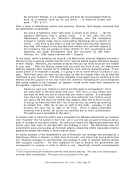
Perhaps I reveal only my own bias, but I believe that a general tendency exists to view
personal, inner-generated conversions as more authentic than outer-generated, social
conversions. Suddenness in a conversion can make it especially interesting, as it did for
James, but suddenness might also make the conversion suspect, if there appear to be
psychopathological or utilitarian motivations for the conversion. Outer-generated
conversions might also stimulate skepticism, although the skepticism is likely to be blunted
when the person is converted to a belief system shared by those judging the conversion.
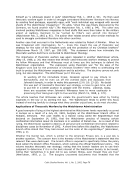
Cults and other groups, including some large-group-awareness trainings, have generated
controversy in large part because they are often viewed as ―engineering‖ conversions. The
highly sophisticated programs of the Moonies in the 1970s were for a long time viewed as
the archetypal cult conversion. These conversions were relatively sudden, outer-generated
or ―engineered,‖ and, at least to skeptical outside observers, crassly utilitarian. Similarities
to research about ―brainwashing‖ from the Korean War were easy to see.
Cult converts, however, were not the empty-headed zombies that sensationalized media
reports made them out to be. Despite the powerful social forces shaping their conversion,
converts often did have profound personal experiences of their relationship to a divine,
transcendent reality. The biases I mentioned earlier tended to make most of us recoil from
the possibility that people could be manipulated into having such highly personal and
psychologically deep experiences of conversion. But some observers, such as Dr. John
Clark, one of the pioneering mental health professionals in this field, saw the depth of the
personal change in these ―engineered‖ conversions as the most striking and fascinating
aspect of the phenomenon. In various talks Dr. Clark called cult conversion an
―impermissible experiment‖ on the reshaping of personality, impermissible because no
ethical researcher would ever do what cults routinely did. He did not see the conversions as
superficial or simplistically extrinsic — and neither did most of the terrified parents who
consulted him about their children involved in cultic groups, whether religious, political,
psychological, or even commercial in nature. Dr. Clark emphasized that the engineering of
personality change is not limited to religion (Clark, 1979). Moreover, he maintained that
even when such ―engineering‖ has beneficial effects, it should be subject and subordinated
to ethical evaluations.
Other observers, mainly academicians in sociology or religious studies, saw the personal
depth of these conversions as self-validating. They disdained the sensationalized media
accounts and objected to the simplistic brainwashing models that some activists used to
justify deprogramming, which the academicians passionately opposed. An ideological
antipathy toward the so-called ―medical model‖ seemed to make some of these
academicians oppose in a knee-jerk manner any theories, however sophisticated, that
suggested that the conversions they observed were engineered or exploitative. The
academic cult wars, which continue to this day, had begun.
I don't have time in this paper to elaborate upon the academic cult wars (see Amitrani &Di
Marzio, 2000a and 2000b and Langone, 2000). Suffice it to say that both sides of the
debate, cult critics and sympathizers (or what has less flatteringly been termed ―anti-
cultists‖ and ―pro-cultists‖), were partly correct.
Conversions can be engineered, but converts are not the passive pawns they appear to be
in some critics‘ portrayals. Interactive models are necessary to properly understand even
the most manipulative of conversions. (See ―Sex, Lies, and Grand Schemes of Thought in
Closed Groups‖ by A Collective of Women in the special Cultic Studies Journal issue,
―Women Under the Influence,‖ for an insightful analysis of how intelligent, thoughtful, and
independent adults become "loyal and dedicated to our own undoing." [A Collective of
Women, 1997]).
Perhaps I reveal only my own bias, but I believe that a general tendency exists to view
personal, inner-generated conversions as more authentic than outer-generated, social
conversions. Suddenness in a conversion can make it especially interesting, as it did for
James, but suddenness might also make the conversion suspect, if there appear to be
psychopathological or utilitarian motivations for the conversion. Outer-generated
conversions might also stimulate skepticism, although the skepticism is likely to be blunted
when the person is converted to a belief system shared by those judging the conversion.
Cults and other groups, including some large-group-awareness trainings, have generated
controversy in large part because they are often viewed as ―engineering‖ conversions. The
highly sophisticated programs of the Moonies in the 1970s were for a long time viewed as
the archetypal cult conversion. These conversions were relatively sudden, outer-generated
or ―engineered,‖ and, at least to skeptical outside observers, crassly utilitarian. Similarities
to research about ―brainwashing‖ from the Korean War were easy to see.
Cult converts, however, were not the empty-headed zombies that sensationalized media
reports made them out to be. Despite the powerful social forces shaping their conversion,
converts often did have profound personal experiences of their relationship to a divine,
transcendent reality. The biases I mentioned earlier tended to make most of us recoil from
the possibility that people could be manipulated into having such highly personal and
psychologically deep experiences of conversion. But some observers, such as Dr. John
Clark, one of the pioneering mental health professionals in this field, saw the depth of the
personal change in these ―engineered‖ conversions as the most striking and fascinating
aspect of the phenomenon. In various talks Dr. Clark called cult conversion an
―impermissible experiment‖ on the reshaping of personality, impermissible because no
ethical researcher would ever do what cults routinely did. He did not see the conversions as
superficial or simplistically extrinsic — and neither did most of the terrified parents who
consulted him about their children involved in cultic groups, whether religious, political,
psychological, or even commercial in nature. Dr. Clark emphasized that the engineering of
personality change is not limited to religion (Clark, 1979). Moreover, he maintained that
even when such ―engineering‖ has beneficial effects, it should be subject and subordinated
to ethical evaluations.
Other observers, mainly academicians in sociology or religious studies, saw the personal
depth of these conversions as self-validating. They disdained the sensationalized media
accounts and objected to the simplistic brainwashing models that some activists used to
justify deprogramming, which the academicians passionately opposed. An ideological
antipathy toward the so-called ―medical model‖ seemed to make some of these
academicians oppose in a knee-jerk manner any theories, however sophisticated, that
suggested that the conversions they observed were engineered or exploitative. The
academic cult wars, which continue to this day, had begun.
I don't have time in this paper to elaborate upon the academic cult wars (see Amitrani &Di
Marzio, 2000a and 2000b and Langone, 2000). Suffice it to say that both sides of the
debate, cult critics and sympathizers (or what has less flatteringly been termed ―anti-
cultists‖ and ―pro-cultists‖), were partly correct.
Conversions can be engineered, but converts are not the passive pawns they appear to be
in some critics‘ portrayals. Interactive models are necessary to properly understand even
the most manipulative of conversions. (See ―Sex, Lies, and Grand Schemes of Thought in
Closed Groups‖ by A Collective of Women in the special Cultic Studies Journal issue,
―Women Under the Influence,‖ for an insightful analysis of how intelligent, thoughtful, and
independent adults become "loyal and dedicated to our own undoing." [A Collective of
Women, 1997]).