Cultic Studies Review, Vol. 1, No. 2, 2002, Page 66
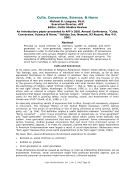
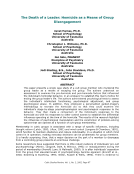
Lying in Court and Religion: An Analysis of the Theocratic
Warfare Doctrine of the Jehovah's Witnesses
Jerry Bergman, Ph.D.
Northwest State College
Archbold, Ohio
Abstract
This review of the problem of religious justified lying in court focuses on the
Jehovah‘s Witnesses and their theocratic war doctrine. The history of the
development of this doctrine and the problems of lying in society are
reviewed. Also discussed are examples of the use of this doctrine in court and
a survey of active and former Witnesses designed to determine the awareness
level of this doctrine among the average Witness. It is concluded that the
longer someone is a Witness, and the higher the attained rank in the
Watchtower, the more likely the person is to understand and to use the
doctrine.
Introduction
Honesty is a central Western value, and so important that fully 95% of Americans agree
with the statement, ―a primary goal of schools is to teach honesty and the importance of
telling the truth‖ (Johnson and Immerwhr, 1994, p. 24). Honesty is also critical for the court
process to function properly, and one of the most common impediments to determining
truth is lying by court witnesses. In Judge Schwelb‘s (1989, p. 3) words, ―if witnesses lie
successfully, the blindfold over the eyes of Justice will not serve its intended benign
purpose.‖ Judge Schwelb stated he has encountered ―many hundreds of instances of
perjury or deception‖ in his thirty years as a lawyer (1989, p.3). He found that lying is
especially common in domestic cases and if the deception is not exposed, liars can profit
from their fabrications.
Cases involving other motivations for lying are more complex, such as when lying defined as
a violation of the oath to tell ―the whole truth and nothing but the truth‖ occurs because of
deeply held religious convictions. Even lying that is exposed requires evaluating a variety of
issues, such as whether so-called white lies, stretching the truth, or exaggerations
constitute perjury (Stewart, 1986, p. 84). Lying also normally includes employing words ―to
obscure communication‖ so as to ―manipulate‖ others for one‘s own advantage (Wolk and
Henley 1970 pp. 90-94, 232). The whole truth and nothing but the truth requirement in
court was historically designed to avoid the problem of a court witness, for example,
claiming that he honestly "didn't steal" from his employer when in his mind he meant he
"didn't steal‖ from him yesterday, but to listeners he implied that he never stole because
the yesterday remains unsaid. The whole truth is that he has stolen from his employer in
the past (Bok, 1978).
The Case of Jehovah’s Witnesses
Until recently the Jehovah‘s Witnesses were one of the fastest growing religions in the
world. Their ruling body, the Watchtower Society, claims that almost 15.4 million people
are now associated with the church (Watchtower, Jan. 1, 2002, p. 22), and according to
their Dun and Bradstreet report (a credit report available only from Dun and Bradstreet by
request), their American income in 1992 alone was over 1.2 billion dollars. Founded in
1879 by C. T. Russell, they are best known for their legal conflicts over the flag salute and
other government requirements.
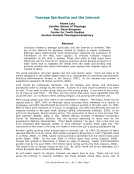
Lying in Court and Religion: An Analysis of the Theocratic
Warfare Doctrine of the Jehovah's Witnesses
Jerry Bergman, Ph.D.
Northwest State College
Archbold, Ohio
Abstract
This review of the problem of religious justified lying in court focuses on the
Jehovah‘s Witnesses and their theocratic war doctrine. The history of the
development of this doctrine and the problems of lying in society are
reviewed. Also discussed are examples of the use of this doctrine in court and
a survey of active and former Witnesses designed to determine the awareness
level of this doctrine among the average Witness. It is concluded that the
longer someone is a Witness, and the higher the attained rank in the
Watchtower, the more likely the person is to understand and to use the
doctrine.
Introduction
Honesty is a central Western value, and so important that fully 95% of Americans agree
with the statement, ―a primary goal of schools is to teach honesty and the importance of
telling the truth‖ (Johnson and Immerwhr, 1994, p. 24). Honesty is also critical for the court
process to function properly, and one of the most common impediments to determining
truth is lying by court witnesses. In Judge Schwelb‘s (1989, p. 3) words, ―if witnesses lie
successfully, the blindfold over the eyes of Justice will not serve its intended benign
purpose.‖ Judge Schwelb stated he has encountered ―many hundreds of instances of
perjury or deception‖ in his thirty years as a lawyer (1989, p.3). He found that lying is
especially common in domestic cases and if the deception is not exposed, liars can profit
from their fabrications.
Cases involving other motivations for lying are more complex, such as when lying defined as
a violation of the oath to tell ―the whole truth and nothing but the truth‖ occurs because of
deeply held religious convictions. Even lying that is exposed requires evaluating a variety of
issues, such as whether so-called white lies, stretching the truth, or exaggerations
constitute perjury (Stewart, 1986, p. 84). Lying also normally includes employing words ―to
obscure communication‖ so as to ―manipulate‖ others for one‘s own advantage (Wolk and
Henley 1970 pp. 90-94, 232). The whole truth and nothing but the truth requirement in
court was historically designed to avoid the problem of a court witness, for example,
claiming that he honestly "didn't steal" from his employer when in his mind he meant he
"didn't steal‖ from him yesterday, but to listeners he implied that he never stole because
the yesterday remains unsaid. The whole truth is that he has stolen from his employer in
the past (Bok, 1978).
The Case of Jehovah’s Witnesses
Until recently the Jehovah‘s Witnesses were one of the fastest growing religions in the
world. Their ruling body, the Watchtower Society, claims that almost 15.4 million people
are now associated with the church (Watchtower, Jan. 1, 2002, p. 22), and according to
their Dun and Bradstreet report (a credit report available only from Dun and Bradstreet by
request), their American income in 1992 alone was over 1.2 billion dollars. Founded in
1879 by C. T. Russell, they are best known for their legal conflicts over the flag salute and
other government requirements.