Cultic Studies Review, Vol. 1, No. 2, 2002, Page 71
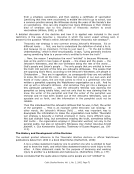
from a smallpox vaccination, and then signing a certificate of vaccination
[certifying that they were vaccinated] to enable the child to go to school, was
a common practice among the Witnesses during the years of the Society‘s ban
on vaccinations. One can only imagine how many Witnesses or their children
died of smallpox due to this practice of theocratic warfare to avoid
vaccinations (Wilson, 2002, p. 180).
A detailed discussion of the doctrine and how it is applied was included in the court
testimony in the case Gouvitsa v. Gouvitsa in which the sworn expert witness said, in
answer to the question ―What is within Jehovah‘s Witness‘ theocratic war strategy?‖:
Theocratic war strategy is very common among Jehovah‘s Witnesses. It‘s on
different levels ...first, one has to understand the definition of what a lie is.
And because it‘s so important, I‘d like to just read it ...―In the Aid to Bible
Understanding,‖ which is their encyclopedia, it says, ―Lying generally involves
saying something false to a person who is entitled to know the truth.‖
...Now, the reason I emphasize the word ―entitled‖ is because Witnesses …
look at the world in two types of people ...the sheep and the goats ...the
Jehovah‘s Witnesses, and the non-Christians being the rest of the world ...
God‘s people and Satan‘s people ...The only people that are entitled to know
the truth 100 percent of the time are Jehovah‘s Witnesses. The people that
are opposing God‘s Word, according to the Jehovah‘s Witnesses, are people in
Christendom … They are in opposition, so consequently they are not entitled
to know the truth all the time … We have met people in our own work and
heard of many cases, the one that comes to mind is a gentleman who had
written a pamphlet exposing the Watchtower organization as a cult. And he
met up with a Jehovah‘s Witness. And somehow they got into a dialogue on
this particular pamphlet ...And the Jehovah‘s Witness was downing the
pamphlet as being totally false, and not only that he was claiming that he
knew the writer of the pamphlet and that the writer of the pamphlet was
immoral and he had been kicked out of the Jehovah‘s Witnesses, was an
apostate and so forth, and the information in the pamphlet could not be
reliable.
Then this individual told the Jehovah‘s Witness that he was, in fact, the writer
of the pamphlet ...That is an example called theocratic war strategy. In
other words, the Jehovah‘s Witness [felt] ...what was important was to
downgrade the information to make the organization look better. Theocratic
war strategy is basically a method employed in many, many different ways.
Not just outright lying, but sometimes evading the truth, sometimes telling
half truths … the organization employs it [theocratic warfare] not only to the
general public, but also on Jehovah‘s Witnesses (Joy Hutton Gouvitsa Arnold
plaintiff, v. Gus Konstantine Gouvitsa, Testimony of Duane Magnani, pp. 109-
113).
The History and Development of the Doctrine
The earliest printed reference to the Theocratic Warfare doctrine in official Watchtower
publications dates from 1936 in a book titled Riches (Rutherford, 1936):
A lie is a false statement made by one to another one who is entitled to hear
and to know the truth, and which false statement tends to work injury to the
other. A false statement made for the purpose of deceiving and working
injury to another is a deliberate and malicious lie. (Rutherford, 1936, p. 177)
Raines concludes that the quote above implies some people are not ―entitled‖ to
from a smallpox vaccination, and then signing a certificate of vaccination
[certifying that they were vaccinated] to enable the child to go to school, was
a common practice among the Witnesses during the years of the Society‘s ban
on vaccinations. One can only imagine how many Witnesses or their children
died of smallpox due to this practice of theocratic warfare to avoid
vaccinations (Wilson, 2002, p. 180).
A detailed discussion of the doctrine and how it is applied was included in the court
testimony in the case Gouvitsa v. Gouvitsa in which the sworn expert witness said, in
answer to the question ―What is within Jehovah‘s Witness‘ theocratic war strategy?‖:
Theocratic war strategy is very common among Jehovah‘s Witnesses. It‘s on
different levels ...first, one has to understand the definition of what a lie is.
And because it‘s so important, I‘d like to just read it ...―In the Aid to Bible
Understanding,‖ which is their encyclopedia, it says, ―Lying generally involves
saying something false to a person who is entitled to know the truth.‖
...Now, the reason I emphasize the word ―entitled‖ is because Witnesses …
look at the world in two types of people ...the sheep and the goats ...the
Jehovah‘s Witnesses, and the non-Christians being the rest of the world ...
God‘s people and Satan‘s people ...The only people that are entitled to know
the truth 100 percent of the time are Jehovah‘s Witnesses. The people that
are opposing God‘s Word, according to the Jehovah‘s Witnesses, are people in
Christendom … They are in opposition, so consequently they are not entitled
to know the truth all the time … We have met people in our own work and
heard of many cases, the one that comes to mind is a gentleman who had
written a pamphlet exposing the Watchtower organization as a cult. And he
met up with a Jehovah‘s Witness. And somehow they got into a dialogue on
this particular pamphlet ...And the Jehovah‘s Witness was downing the
pamphlet as being totally false, and not only that he was claiming that he
knew the writer of the pamphlet and that the writer of the pamphlet was
immoral and he had been kicked out of the Jehovah‘s Witnesses, was an
apostate and so forth, and the information in the pamphlet could not be
reliable.
Then this individual told the Jehovah‘s Witness that he was, in fact, the writer
of the pamphlet ...That is an example called theocratic war strategy. In
other words, the Jehovah‘s Witness [felt] ...what was important was to
downgrade the information to make the organization look better. Theocratic
war strategy is basically a method employed in many, many different ways.
Not just outright lying, but sometimes evading the truth, sometimes telling
half truths … the organization employs it [theocratic warfare] not only to the
general public, but also on Jehovah‘s Witnesses (Joy Hutton Gouvitsa Arnold
plaintiff, v. Gus Konstantine Gouvitsa, Testimony of Duane Magnani, pp. 109-
113).
The History and Development of the Doctrine
The earliest printed reference to the Theocratic Warfare doctrine in official Watchtower
publications dates from 1936 in a book titled Riches (Rutherford, 1936):
A lie is a false statement made by one to another one who is entitled to hear
and to know the truth, and which false statement tends to work injury to the
other. A false statement made for the purpose of deceiving and working
injury to another is a deliberate and malicious lie. (Rutherford, 1936, p. 177)
Raines concludes that the quote above implies some people are not ―entitled‖ to