Cultic Studies Review, Vol. 1, No. 2, 2002, Page 121
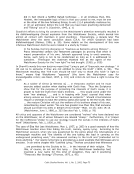
Additionally, because I am a Jew by birth and an atheist by belief, I found problematic
Guerra's assertion at the end of his book that ―Jesus is still the truth, that the Bible is still
the Word of God, and that life without Him is meaningless and empty.‖ Putting his personal
beliefs in this way, Guerra seems to leave out the possibility that others who do not share
his particular faith might nevertheless have lives at least as meaningful and valuable as his.
Nevertheless, this is a book that provides a detailed and chilling account of life in a cult, and
the author is to be admired for his courage and his clarity in making his experience available
to others. Those who themselves have been through similar experiences will greatly
appreciate Guerra‘s chronicle of 10 years in the life of a cult member. For those who wonder
about a loved one in a cult, the book is a painful illustration of the ways that authoritarian
groups degrade the humanity of their members.
Daniel Shaw, CSW
Psychoanalyst, private practice
New York, NY
Killer Cults: Murderous Messiahs and Their Fanatical Followers.
Brian Lane. (1996). London, England: Headline, 1996, 310 pages.
U.S. source: North Pomfret, Vermont: Trafalgar Square.
The author of this 310-page paperback volume is Brian Lane who has written books mainly
on crime and informs us his background is in ―fine art, theatre, and experimental music.‖
The nine, unnumbered chapters of the book are actually short, anecdotal-reportorial essays
and case studies about ―killer cults.‖ I‘ll briefly review each chapter.
1. This grouping of essays offers an historical overview of the Hashishin cult in the Middle
East, the Thuggi cult in India, and the Khlysty and Skoptsy sects in Russia. The Judeo-
Christian examples here are less cult-like than the other groups and are limited to mob
violence and group hysteria. No Asian cults are included in this section.
2. Identified as ―20th Century Christian cults,‖ this set includes essays about the
Fountain of the World sect, the Yahwehs, and the Christian Science (the Church of Christ,
Scientist) religion. Lane considers the latter sect a ―killer cult‖ presumably because of its
belief in faith healing, what the author calls ―death by faith.‖
3. This section discusses the ―Armageddon cults‖: the Branch Davidians, the Peoples‘
Temple, Aum Shinri Kyo, the Mormons (Church of Jesus Christ of Latter Day Saints), the Ant
Hill Kids, the Solar Temple, and the Great White Brotherhood --a strange assortment. The
author concedes that Mormon violence arose mainly from breakaway groups.
4. This group consists of three examples of ―Eastern and Asian cults‖: Hare Krishna,
Bhagwan Rajneesh, and Black Thai. The Reverend Moon‘s Unification Church is not included.
5. The seven articles about Satanism in this section refer to murders involving diabolical
belief or justification.
6. This group of four articles about political and social cults covers the Ku Klux Klan
(KKK), Posse Comitatus, Move, and the Death Angels.
7. Voodoo cults follow in this section. Cults discussed here include the Abaqua, Santeria,
Palo Mayombe, and Voodoo, with the usual case studies. A heading of Afro-Caribbean would
have been more appropriate than Voodoo for these movements.
8. In this group, the author includes descriptions of exorcism using examples from
Christian and Muslim settings.
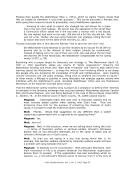
Additionally, because I am a Jew by birth and an atheist by belief, I found problematic
Guerra's assertion at the end of his book that ―Jesus is still the truth, that the Bible is still
the Word of God, and that life without Him is meaningless and empty.‖ Putting his personal
beliefs in this way, Guerra seems to leave out the possibility that others who do not share
his particular faith might nevertheless have lives at least as meaningful and valuable as his.
Nevertheless, this is a book that provides a detailed and chilling account of life in a cult, and
the author is to be admired for his courage and his clarity in making his experience available
to others. Those who themselves have been through similar experiences will greatly
appreciate Guerra‘s chronicle of 10 years in the life of a cult member. For those who wonder
about a loved one in a cult, the book is a painful illustration of the ways that authoritarian
groups degrade the humanity of their members.
Daniel Shaw, CSW
Psychoanalyst, private practice
New York, NY
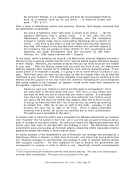
Killer Cults: Murderous Messiahs and Their Fanatical Followers.
Brian Lane. (1996). London, England: Headline, 1996, 310 pages.
U.S. source: North Pomfret, Vermont: Trafalgar Square.
The author of this 310-page paperback volume is Brian Lane who has written books mainly
on crime and informs us his background is in ―fine art, theatre, and experimental music.‖
The nine, unnumbered chapters of the book are actually short, anecdotal-reportorial essays
and case studies about ―killer cults.‖ I‘ll briefly review each chapter.
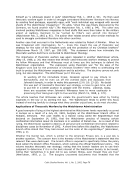
1. This grouping of essays offers an historical overview of the Hashishin cult in the Middle
East, the Thuggi cult in India, and the Khlysty and Skoptsy sects in Russia. The Judeo-
Christian examples here are less cult-like than the other groups and are limited to mob
violence and group hysteria. No Asian cults are included in this section.
2. Identified as ―20th Century Christian cults,‖ this set includes essays about the
Fountain of the World sect, the Yahwehs, and the Christian Science (the Church of Christ,
Scientist) religion. Lane considers the latter sect a ―killer cult‖ presumably because of its
belief in faith healing, what the author calls ―death by faith.‖
3. This section discusses the ―Armageddon cults‖: the Branch Davidians, the Peoples‘
Temple, Aum Shinri Kyo, the Mormons (Church of Jesus Christ of Latter Day Saints), the Ant
Hill Kids, the Solar Temple, and the Great White Brotherhood --a strange assortment. The
author concedes that Mormon violence arose mainly from breakaway groups.
4. This group consists of three examples of ―Eastern and Asian cults‖: Hare Krishna,
Bhagwan Rajneesh, and Black Thai. The Reverend Moon‘s Unification Church is not included.
5. The seven articles about Satanism in this section refer to murders involving diabolical
belief or justification.
6. This group of four articles about political and social cults covers the Ku Klux Klan
(KKK), Posse Comitatus, Move, and the Death Angels.
7. Voodoo cults follow in this section. Cults discussed here include the Abaqua, Santeria,
Palo Mayombe, and Voodoo, with the usual case studies. A heading of Afro-Caribbean would
have been more appropriate than Voodoo for these movements.
8. In this group, the author includes descriptions of exorcism using examples from
Christian and Muslim settings.